- WIADOMOŚCI
- ANALIZA
Russia stockpiles new tanks near NATO. Preparing for another war?

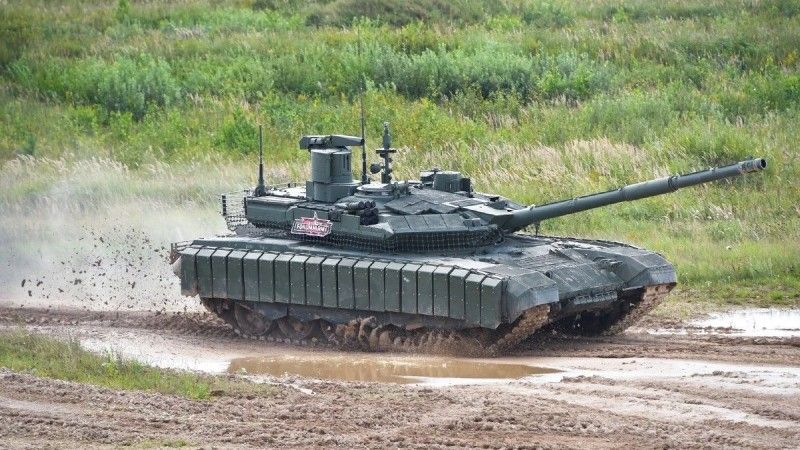
Photo. mil.ru
Russia is rebuilding its military capabilities while continuing its war against Ukraine. New satellite imagery shows Russian storage bases being replenished with T-90M tanks, armoured vehicles and artillery systems, including equipment that is not being sent directly to the Ukrainian front. However, these developments do not necessarily indicate preparations for an imminent confrontation with NATO. Moscow may instead be rebuilding its military potential for the coming years.
At the same time, Russia is expanding military infrastructure near NATO’s borders and preparing facilities that could accommodate tens of thousands of additional troops. These developments raise questions about Moscow’s long-term military plans, particularly in the Baltic and Nordic regions. However, Russia remains heavily committed to the war in Ukraine, which significantly limits its ability to open another conventional front.
According to an investigation published by Radio Free Europe/Radio Liberty on 16 October, Russia has begun replenishing military equipment storage facilities that were largely emptied following the full-scale invasion of Ukraine. Satellite images taken in October 2025 and October 2026 show significant changes at the 22nd Central Tank Reserve Base in Buy, Kostroma Oblast, approximately 500 kilometres from NATO territory. The equipment reportedly includes newly manufactured T-90M tanks and BTR-82A armoured personnel carriers. Importantly, some of these vehicles appear to be entering storage rather than being immediately deployed to Ukraine.
Similar developments have been identified at the 349th Central Tank Storage Base in Topchikha, Altai Krai. According to OSINT analyst Jonpy, the facility received up to 78 tanks and more than 100 infantry fighting vehicles during the summer, followed by further deliveries. The equipment reportedly includes refurbished T-72B3M tanks and BMP-2 infantry fighting vehicles. This is particularly interesting because Russia previously relied heavily on withdrawing Soviet-era equipment from storage to replace battlefield losses. Moscow is now also rebuilding reserves using newly manufactured and refurbished equipment.
Russia expands its military infrastructure near NATO
These developments coincide with the expansion of Russian military bases along NATO’s northern and eastern borders. An investigation conducted in June 2026 by Scandinavian and Baltic media identified new barracks, equipment storage facilities and military infrastructure in Karelia, near the Finnish border and in the Kaliningrad region. In the Petrozavodsk area, Russia is constructing a military base initially designed to accommodate approximately 4,000–6,000 personnel, with the potential for further expansion. The wider infrastructure development has been linked to estimates that Russia could eventually deploy up to 115,000 troops along NATO’s northern borders after the war in Ukraine.
However, infrastructure development should not be confused with the immediate deployment of combat-ready formations. Many Russian units remain involved in operations against Ukraine, while newly established formations still require personnel, equipment and training. Moscow is also restructuring parts of its armed forces, expanding brigades into larger divisions. These preparations could allow Russia to rebuild its military presence near NATO more rapidly once significant resources become available. This is a long-term process rather than evidence of an imminent military operation.
Another important factor is manpower. According to a September 2026 analysis by the Royal United Services Institute (RUSI), Russia has effectively transformed mobilisation into a continuous process. Putin’s September 2022 mobilisation decree has never been formally rescinded, while regional recruitment programmes, financial incentives and pressure on potential recruits continue to replenish the armed forces.
Approximately 71,000 contract soldiers were recruited during the first quarter of 2026, around 20% fewer than a year earlier, despite increasing enlistment payments. Russia is therefore developing its military infrastructure and equipment reserves while maintaining a recruitment system that does not require another publicly announced mass mobilisation.
115,000 Russian troops near NATO?
Reports about Russian preparations have also generated misleading claims. In September, social media accounts alleged that Russia had already concentrated between 50,000 and 80,000 soldiers near the borders of Latvia and Estonia. The Latvian National Armed Forces rejected these reports, while fact-checkers established that the satellite imagery used as evidence actually showed a Russian military facility near Finland.
The figure of 115,000 personnel refers to estimates of Russia’s potential future military deployment, not to a force already assembled and ready to attack NATO. This distinction is important because exaggerating immediate threats can undermine the assessment of genuine long-term military developments.
NATO should carefully monitor these developments. Russia is maintaining military production, rebuilding armoured reserves, expanding infrastructure and developing formations that could eventually be deployed towards Finland, Estonia, Latvia or other parts of the Alliance’s eastern flank.
A new tank storage facility does not automatically indicate preparations for an imminent attack. Neither does the construction of additional barracks or another recruitment campaign. Russia is systematically creating the military, industrial and logistical conditions that could support a future confrontation with NATO. It must be underlined that Moscow currently lacks the military capacity to open another major conventional front while continuing its war against Ukraine.

Hybrid warfare, including sabotage, cyberattacks, disinformation and destabilisation operations, remains a more realistic and effective instrument against NATO in the short term. The ongoing expansion of military infrastructure and equipment reserves could instead be part of preparations for rebuilding Russia’s military capabilities towards 2030 and beyond. The Alliance must therefore monitor Russia’s ability to rapidly form, equip and deploy new combat-ready units, while avoiding the assumption that every Russian military investment signals an approaching war. Russia is preparing for different scenarios, but preparing for war does not mean that Moscow has decided to start one.
Find out more here.