- WIADOMOŚCI
- ANALIZA
Kuwait’s defence dilemma. Modern weapons and vulnerable supply routes

Kuwait is investing in modern combat aircraft and ground-based air defence, but its security also depends on keeping that equipment operational. Access to spare parts, repairs and external support becomes particularly important when a crisis affects the entire region. At the same time, the country must retain its ability to export oil and receive supplies. The effectiveness of its defence therefore also depends on how long its economy and armed forces can continue functioning under pressure.
The US State Department’s October approval of a possible sale of Patriot missile repair and return services to Kuwait illustrates a less conspicuous dimension of military modernisation. The package has an estimated value of $400 million and also covers spare parts, transport, training and technical support. The approval concerns a potential transaction; it does not confirm that the services have been provided or that a new batch of missiles has been delivered.
The significance of the notification extends beyond its financial value. It shows that sustaining existing capabilities requires further decisions and continued cooperation with suppliers. It does not establish how many missiles remain serviceable, how many have been expended or whether shortages exist. The implication for assessing defence capability is narrower but important: an arsenal must be examined alongside the arrangements that sustain it.
The broader lesson of 1990
Iraq’s invasion on 2 August 1990 and Kuwait’s liberation by a US-led coalition in 1991 remain the fundamental historical reference points. They demonstrated the difference between securing international support and possessing forces able to stop aggression in its opening phase. They do not, however, establish that contemporary threats must take the same form.
Pressure can now be directed at the continuity of exports, the functioning of infrastructure or the ability to sustain operational readiness. In such a scenario, an adversary does not need to occupy territory to raise the costs of a government’s policies. Responding requires military protection to be combined with preparedness across public administration, infrastructure operators and businesses.
Kuwait was designated a US Major Non-NATO Ally in 2004. The status facilitates defence cooperation and access to certain military cooperation arrangements. It does not, in itself, create a US obligation to defend the designated country. This should not be read as evidence that Washington has no interest in Kuwait’s security. It is a distinction between a legal designation and specific decisions on assistance.
For defence planning, the substance of that assistance matters most: its scope, availability and sustainability during a crisis involving several US partners. Strong political relations facilitate cooperation, but they do not replace arrangements for supplies, maintenance and the reception of support.
Two fighter fleets, two support systems
Kuwait ordered 28 Eurofighter Typhoons in 2016 and 28 F/A-18E/F Super Hornets in 2018. The first two Typhoons were delivered in December 2021. These figures describe the scale of procurement programmes, rather than the number of aircraft available for operational missions in October 2026.
Diversifying suppliers provides access to different technologies and industrial partnerships. It also entails maintaining separate training, maintenance and supply arrangements. The benefit of acquiring two aircraft types therefore depends on the country’s ability to provide adequate support for both. Equipment diversity alone does not establish resilience to supply disruption.
In a statement issued on 25 September 2025, Leonardo announced an extension of support for Kuwait’s Eurofighters until December 2029. The services are to include local logistics support and training at Salem Al Sabah Base. At the time, the manufacturer stated that most of the aircraft on order had been delivered and were in service. That statement describes the position at the date of publication without establishing the fleet’s current operational availability.
In-country support can shorten some maintenance processes and facilitate training. It does not amount to full self-sufficiency. Component deliveries, access to specialist expertise and work requiring manufacturer involvement remain relevant. A useful measure of progress is therefore the range of tasks performed locally and the time required to return equipment to service.
Further procurement makes sense when the capacity to employ the equipment grows alongside it. An additional aircraft expands potential capability, but cannot substitute for a trained crew, effective support or available weapons. Any assessment of modernisation should account for these interdependencies.

Patriot depends on sustained support
The October package is not the only notification concerning the sustainment of Kuwait’s Patriot systems. On 14 January 2026, the US Defense Security Cooperation Agency announced approval of a possible sale of programme sustainment and follow-on technical support, together with related equipment. Its estimated value was $800 million.
These figures should not be added together as confirmed expenditure or treated as the price of new batteries. The notifications concern potential transactions with specified scopes. They nevertheless show that maintaining the system entails a financial and organisational commitment extending over many years.
For Kuwait, coordination between ground-based air defence, combat aviation and intelligence and surveillance capabilities is essential. The effectiveness of individual assets depends on the threat, the information available and the circumstances of each engagement. Possessing Patriot systems does not establish comprehensive territorial protection. Public procurement announcements also provide no basis for calculating how long the country can sustain its defence at a given intensity of attack.
Military protection must therefore be complemented by the ability to limit the consequences of strikes. Effective warning, emergency response and the restoration of services remain important even when some threats are successfully intercepted. Their quality helps determine whether an individual incident becomes a prolonged disruption to national life.
A secure terminal is not enough
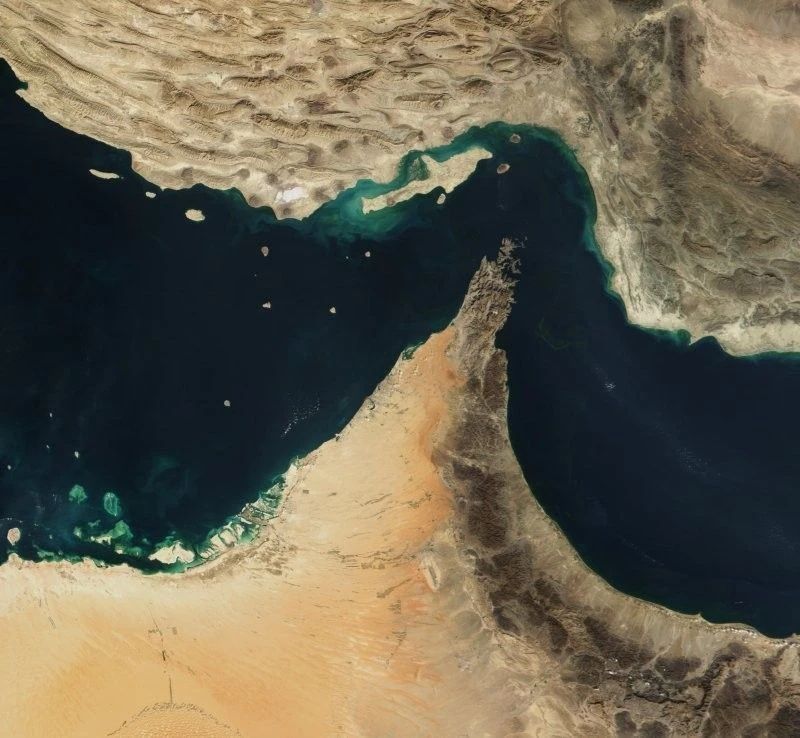
A second constraint on resilience lies beyond Kuwait’s territory. On 3 July 2026, Reuters reported that Saudi Arabia and the United Arab Emirates had diverted some exports through pipelines bypassing the Strait of Hormuz during the conflict, while Iraq and Kuwait had far more limited access to that option.
This creates a distinct strategic problem. Protecting installations and terminals is necessary, but does not ensure that cargo reaches its destination. Secure domestic infrastructure can coexist with disruption further along the route. Increasing the number of aircraft or air defence systems does not, by itself, remove this dependence.
Maritime cooperation is consequently part of Kuwait’s defence policy. Its significance encompasses information sharing, operational coordination and the conditions under which shipping companies are willing to sail. Even a reduction in the military threat does not necessarily produce an immediate return to regular commercial traffic.
There is a dual dependence: the state needs exports to sustain revenue, while the armed forces need supplies to remain effective. A transport crisis can place pressure on both simultaneously. Stockpiles and alternative transport arrangements should therefore be assessed in terms of the time they give the government and military to respond, alongside the practical ability to replenish supplies.
See also 

The political cost of interrupted supplies
For Kuwait, financing military support and securing its delivery during a crisis are different problems. American and European procurement programmes provide access to advanced capabilities, while leaving important maintenance and supply functions outside national control. Operating two fighter types also requires Kuwait to sustain two support systems. Splitting purchases between suppliers offers limited protection if access to the country becomes the common constraint.
The practical negotiation with suppliers concerns which repairs can be completed in Kuwait, which components need to be stocked there and how technical assistance will continue under attack. Extending a support contract is useful when it also reduces the work that must wait for personnel or parts to arrive from abroad. Local maintenance consequently has political value. It reduces the urgency with which Kuwait has to seek assistance while its partners are responding to demands elsewhere.
The dependence of oil exports on passage through Hormuz places a further limit on what national rearmament can achieve. Kuwait can improve the protection of its terminals and the availability of its forces, while access to overseas markets still depends on conditions farther down the Gulf. Maritime cooperation therefore deserves a place alongside procurement in defence diplomacy. Without reliable shipping, the country may preserve much of its arsenal and still face economic pressure strong enough to influence its political choices.