


- ANALIZA
- WIADOMOŚCI
Qatar’s gas exports at risk. What can its armed forces protect?

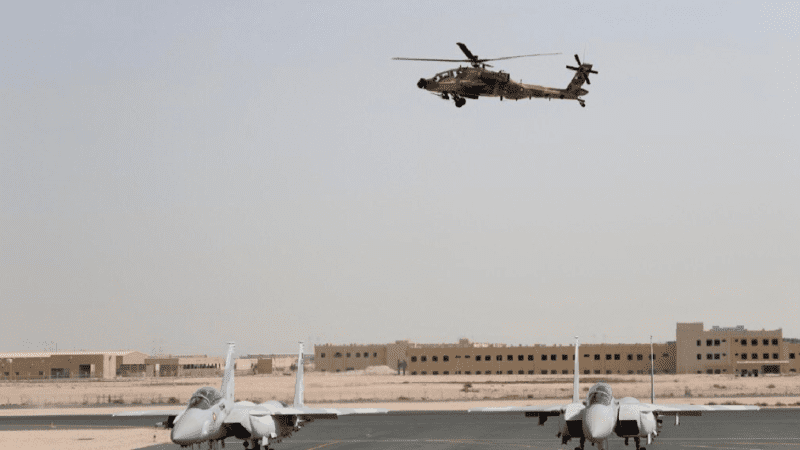
Qatar has built its defence around advanced combat aircraft, missile defence and close military partnerships. Yet the protection of its territory and the continuity of its gas exports are different strategic problems. An adversary does not need to defeat the Qatari armed forces to impose substantial economic costs. Disrupting a production facility, an export terminal or access to the Strait of Hormuz can generate pressure that survives the attack itself. Doha’s military modernisation must therefore be assessed against its ability to preserve the functioning of the state during a prolonged regional crisis.
The damage to Ras Laffan has made this distinction tangible. Reuters reported on 21 September 2026 that attacks had disabled 17 per cent of Qatar’s liquefied natural gas capacity. QatarEnergy President and Chief Executive Officer Saad bin Sherida Al Kaabi, who also serves as Minister of State for Energy Affairs, said repairs to the two affected production units could take three years. He also warned that disruption in the Strait of Hormuz was preventing equipment needed for expansion from reaching the country.
This creates a demanding relationship between defence and recovery. Preventing further damage preserves industrial capacity, but restoring output also requires access to specialist equipment, technical personnel and maritime transport. Even an improvement in air defence cannot, by itself, resolve these constraints.
Qatar consequently faces a broader task than acquiring enough weapons to repel individual attacks. It must sustain military operations while keeping essential economic functions available and retaining access to external assistance. The central issue is how its armed forces and partnerships work together under pressure.
Three fighter programmes and the burden of sustaining them
The expansion of Qatari combat aviation illustrates both the ambition of this approach and its organisational cost. Its principal modern fighter programmes are the American F-15QA, French Rafale and Eurofighter Typhoon. Boeing’s original programme covered 36 F-15QA aircraft. Dassault confirms that Qatar acquired 36 Rafales, with deliveries completed in 2022. The initial British-led Typhoon package provided for 24 fighters, nine Hawk advanced trainers and support services.
These procurement figures describe the foundations of the expansion. They do not establish how many aircraft are currently available for combat, how many crews can maintain continuous operations or how long a particular rate of flying can be sustained. Adding aircraft from separate contracts gives a procurement total, which does not establish either the current inventory or wartime endurance.

Maintaining three fighter types diversifies Qatar’s relationships with suppliers and gives it access to different training and support networks. It also creates parallel requirements for maintenance, technical qualifications, spare parts and weapons support. A technician qualified on one aircraft does not automatically provide the same capacity on another. Nor can a replacement component or a weapon cleared for one configuration necessarily be transferred across the fleet.
The strategic return therefore depends on the depth of the supporting organisation. Aircraft need to remain serviceable after repeated sorties, crews need relief, and damaged equipment needs a repair route. When several squadrons face sustained demand, the availability of trained personnel and maintenance capacity can become more consequential than the number of additional aircraft ordered.
Qatar has addressed part of this requirement through partnerships that extend into everyday force development. Boeing’s support arrangements included aircrew and maintenance training, local spares and logistics. Cooperation with Britain includes joint Typhoon and Hawk squadrons. On 22 January 2026, the British Ministry of Defence announced that 12 Squadron, the joint UK–Qatar Typhoon unit, had deployed to the Gulf for defensive purposes at Doha’s invitation.
Such arrangements provide practical advantages. Shared training can improve familiarity between crews and reduce the preparation needed for combined activity. However, their value during a prolonged crisis depends on whether partner personnel, contractors and supplies remain available as demand rises elsewhere. Supplier diversification reduces some dependencies while leaving Qatar reliant on the continuity of several external support relationships.
Air defence is also a question of replenishment
Qatar’s ground-based air defence includes Patriot and the National Advanced Surface-to-Air Missile System, or NASAMS. Their presence gives Doha different options for engaging aerial threats. It does not establish that every important installation receives equivalent protection or that all sensors and weapons operate as a single, fully integrated system.
The scale of replenishment sought in 2026 is significant. A US notification delivered to Congress on 1 May 2026 described a possible Patriot package with an estimated value of USD 4.01 billion. It included 200 PAC-2 GEM-T interceptors and 300 PAC-3 MSE interceptors, alongside associated support. These are the Guidance Enhanced Missile-Tactical and Missile Segment Enhancement variants of the Patriot Advanced Capability family.
A separate notification, also delivered on 1 May 2026, covered a possible USD 992.4 million package containing 10,000 complete Advanced Precision Kill Weapon System II rounds, known as APKWS II. These are proposed sale quantities and package estimates. The notifications establish neither completed deliveries nor current stocks or final expenditure.
The distinction matters because replenishment operates on a different timescale from interception. Money can finance an order, but manufacturing, allocation, transport and acceptance determine when the weapons become available. During a regional conflict, several customers may require similar equipment at the same time.
This also changes how the economics of air defence should be understood. The relevant comparison extends beyond the price of an incoming weapon and the interceptor used against it. A costly interception can be justified when it protects an installation whose prolonged loss carries much greater consequences. The harder problem arises when repeated attacks force the defender to expend scarce weapons faster than replacements arrive.
A sustainable system therefore requires appropriate choices between different defensive means, reliable threat identification and sufficient stocks for the most demanding engagements. The proposed APKWS II package cannot, on its own, demonstrate a completed Qatari counter-drone capability. Its effect depends on the equipment on which the weapons are integrated, trained operators and the conditions in which they can be employed.
For Doha, procurement announcements are consequently only one indicator of resilience. Replenishment schedules, maintenance support and the ability to sustain defensive activity are more useful measures of whether protection can endure beyond the opening phase of a crisis.

What the American commitment provides
Qatar’s security relationship with Washington has an explicit political foundation. Executive Order 14353, signed on 29 September 2025, states that the United States will regard an armed attack on Qatar’s territory, sovereignty or critical infrastructure as a threat to American peace and security. It provides for lawful and appropriate measures, including military action if necessary, and calls for joint contingency planning.
The wording is significant for an economy dependent on major energy installations. It extends the stated American concern beyond the security of US personnel and facilities. However, the order leaves the choice of response dependent on circumstances and applicable law. It does not prescribe the same military action for every attack.
Practical coordination has also developed. On 12 January 2026, US Central Command and regional partners opened the Middle Eastern Air Defense – Combined Defense Operations Cell within the Combined Air Operations Center at Al Udeid Air Base. Its stated functions include sharing information and threat warnings, planning exercises and responding to contingencies.
For Qatar, participation in this structure offers access to a broader operational picture and established channels for cooperation. Its importance lies in connecting national defence to regional warning and planning. Public descriptions of the cell do not establish that participating states have transferred authority over every engagement to a common command.
The distinction between coordination and political authority remains central. An ally can help detect an attack, reinforce protection and organise a response while retaining its own judgement about escalation. Qatar must therefore prepare for cooperation whose practical scope may vary between incidents.
Al Udeid also connects Doha’s security to wider American operations in the region. The foreign presence can increase the consequences an attacker must consider, but it also means Qatar’s exposure is partly shaped by confrontations it does not control. A credible partnership must address both the protection of the base and the continued functioning of the host state.

Several partners, different contributions
British and Turkish cooperation adds depth to Qatar’s external relationships. The joint flying arrangements with Britain support training and the preparation of air forces for combined activity. Türkiye maintains a separate military relationship through the Qatar–Türkiye Combined Joint Force Command in Doha.
These partnerships should be assessed according to the functions they can support. Training, ground-force cooperation, air defence coordination and access to reinforcement are related activities, but they are not interchangeable. The existence of several partners does not mean that each can substitute for the others in every mission.
Their political value nevertheless extends beyond equipment. Regular military cooperation creates institutional familiarity and channels through which assistance can be arranged. It can also make the costs of instability in Qatar more immediate for partner governments.
The challenge is to turn this network into reliable support without assuming that all partners will make identical decisions. Doha needs workable arrangements for reinforcement, maintenance and information exchange before an emergency develops. During a crisis, disagreement over the wider conflict can coexist with a shared interest in defending Qatari territory.
Diplomacy remains relevant within this structure. Communication with an adversary can help clarify intentions and create opportunities to limit escalation, but its protective effect depends on the other side’s calculations. Qatar’s defence policy must remain viable when those channels fail to prevent an attack.
A larger navy cannot remove the Hormuz constraint
Qatar’s naval expansion has given it a more substantial basis for protecting its maritime approaches. The programme contracted with Fincantieri in 2016 comprised four corvettes, two offshore patrol vessels and an amphibious ship. In December 2025, the company described all seven vessels as delivered. The original agreement also included long-term support in Qatar.
The programme matters because energy security extends beyond installations on land. Offshore activity, port approaches and the movement of merchant shipping require surveillance, coordination and a capacity to respond at sea. A more capable fleet gives Doha additional means to contribute to these tasks and to operate with partners.
Its strategic limits are equally important. Protecting access to a Qatari port and securing passage through the Strait of Hormuz are different undertakings. The latter depends on a much wider operating environment, including decisions by coastal states, the availability of international naval forces and the willingness of commercial operators to sail.
Warships can contribute to maritime security without guaranteeing regular commercial traffic. A shipping company still has to assess the safety of its vessel and crew. Insurers and charterers make separate decisions about exposure and cost. Restoring confidence can therefore take longer than establishing a temporary naval presence.
For an exporter of liquefied natural gas, this separates three conditions that must coincide: production must be available, ships must be able to load, and the onward route must be usable. Strengthening one part of that chain improves resilience only to the extent that the others continue to function.
The army has a different role. Qatar’s 2013 contracts with Krauss-Maffei Wegmann covered 62 Leopard 2 tanks and 24 PzH 2000 artillery systems, together with support and training. Those contract figures establish the scale of a major acquisition, rather than today’s ready force. Heavy land equipment contributes to the capacity to resist a ground threat, but cannot substitute for protecting airspace, industrial facilities and maritime access. Modernisation must preserve that distinction when allocating personnel and resources.
Industrial recovery belongs in defence planning
The prospect of additional gas production brings this problem into sharper focus. On 7 October 2026, Reuters reported, citing two people familiar with the plans, that the first North Field East production train was expected to be ready to begin start-up in November 2026, with liquefied natural gas production anticipated in the first quarter of 2027. QatarEnergy had not responded to the agency’s request for comment at the time of publication.
Even if the schedule holds, the strategic benefit depends on conditions beyond construction. Additional capacity creates export revenue only when the supporting infrastructure and transport arrangements permit sustained deliveries. Expansion and protection therefore need to be considered together.
The same principle applies to recovery after an attack. Military planners usually concentrate on preventing further strikes and keeping forces operational. Energy companies concentrate on technical safety, repair and the resumption of production. For Qatar, the sequence of decisions in each area can affect the other. Access for specialist personnel, the availability of replacement equipment and the restoration of supporting services all influence the duration of economic disruption.
This gives civil preparedness a direct role in national defence. Emergency repair arrangements, replacement components, alternative communications and continuity plans can reduce the consequences of damage that active defences fail to prevent. Their contribution is less visible than a new combat aircraft, but it can determine how long an attack affects state revenues and contractual obligations.
The objective is to prevent a limited military success by an adversary from becoming prolonged economic leverage. If essential operations recover quickly, Doha gains time to assess its response. If disruption persists, pressure to accept an unfavourable political settlement can grow even while the armed forces remain capable of fighting.

The cost of an unfinished recovery
An ally can regard a defensive mission as successful while Qatar is still unable to resume normal gas exports. For Doha, that difference has political consequences. Once the immediate threat recedes, partner governments may turn their attention elsewhere, although damaged production facilities and disrupted shipping continue to impose costs on Qatar. The urgency behind military assistance can weaken before the conditions that made it necessary have been fully resolved.
Ras Laffan brings this problem into Qatar’s defence diplomacy. Restoring production requires access to specialist equipment and protection against further damage. Deliveries also depend on passage through Hormuz. Additional aircraft and interceptors can support that recovery, but decisions about their deployment do not settle how industrial supplies will reach Qatar or how maritime cooperation will be sustained. Doha needs commitments covering the period between containing the attacks and restoring regular exports.
The breadth of Qatar’s military relationships gives it several channels through which to negotiate such arrangements. Their usefulness depends on governments agreeing to maintain support while facing demands elsewhere. That discussion belongs in the preparation of the initial response, when the purpose and expected duration of assistance are being decided. A request made later may be treated as reconstruction assistance and referred to institutions working to different priorities.
For Doha, the distinction matters because economic pressure can persist without further attacks. Protecting the country through the opening phase of a conflict leaves a substantial task unfinished if disrupted exports continue to constrain its choices. Qatar’s partners may be ready to end an emergency deployment well before Qatar is ready to bear the remaining costs alone.


