












- ANALIZA
- WIADOMOŚCI
Gulf security with Iran: What is Qatar proposing?

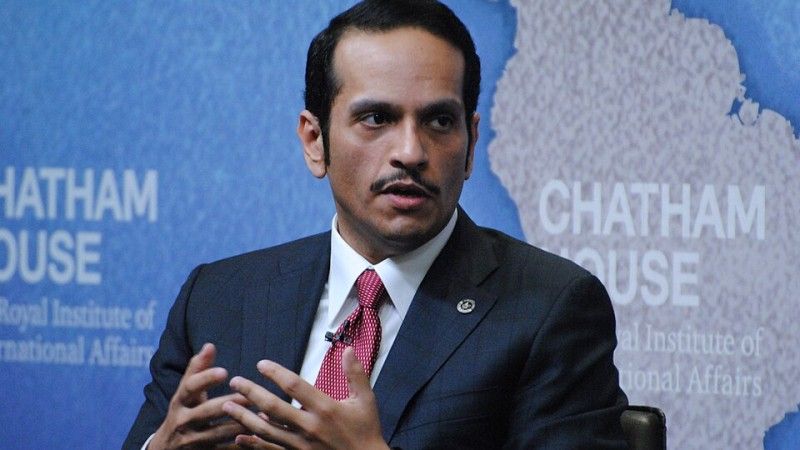
Photo. Chatham House / CC BY 2.0 / Wikimedia Commons
Qatar is proposing a regional security framework based on non-aggression and coexistence with Iran. For Doha, both national security and the reliability of gas exports are at stake. The initiative’s success would depend on reducing the risk of Iran’s conflict with the United States and Israel spilling over into other countries in the region. Dialogue with Tehran is developing alongside defence cooperation with Washington.
On 20 September, Qatar’s Prime Minister and Foreign Minister, Mohammed bin Abdulrahman Al Thani, called in New York for a common security framework bringing together the Gulf states and Iran. He stressed respect for sovereignty and the need for relations in which no state threatened another. In his official remarks, he linked regional stability to conditions for trade and investment.
On 29 September, Qatari Foreign Ministry spokesperson Majed bin Mohammed Al Ansari elaborated on these proposals, citing coexistence, non-aggression and good-neighbourly relations. He identified the first step as securing assurances that countries in the region would not be targeted in future escalations. He also confirmed that meetings and exchanges of messages were continuing as part of mediation between the United States and Iran.
These statements set out a political direction. They do not themselves establish a treaty or a mechanism for enforcing commitments. Doha seeks to ensure that the security of Iran’s neighbours does not depend solely on the course of Tehran’s confrontation with Washington and Israel. Talks to end the current war could open the way to such arrangements, but a lasting agreement would require reducing the risk of the Gulf states being drawn into conflict again.
See also 

Why Doha needs predictability
Qatar’s dependence on the Strait of Hormuz gives the initiative a clear economic dimension. According to the US Energy Information Administration, approximately one-fifth of global trade in liquefied natural gas passed through the strait in 2024, primarily from Qatar. Protecting production facilities and export terminals is therefore only one aspect of the exporter’s security. The ability to meet delivery schedules after an LNG carrier leaves port is equally important.
According to a Reuters report dated 2 October, S&P Global Energy recorded 19 LNG cargoes leaving the Strait of Hormuz in September, while Kpler counted 21. The figures point to a recovery in shipments, but do not establish whether it can be sustained. Buyers need to be able to plan subsequent deliveries.
On 28 September, Italy’s Edison said it would not receive Qatari LNG cargoes until early December. Increased traffic through the strait can therefore coexist with continued disruption to contractual deliveries. Prolonged uncertainty encourages buyers to seek replacement supplies, while recurring disruption may affect future contracting decisions.
For Doha, the implications extend beyond current export revenues. Even effective defence of energy installations cannot eliminate the cost of delays along the shipping route. From Qatar’s perspective, the value of regional arrangements would therefore also depend on whether they enable regular exports. Security of supply requires the ability to plan shipments without making each passage contingent on political concessions.
Dialogue with Iran and US security guarantees
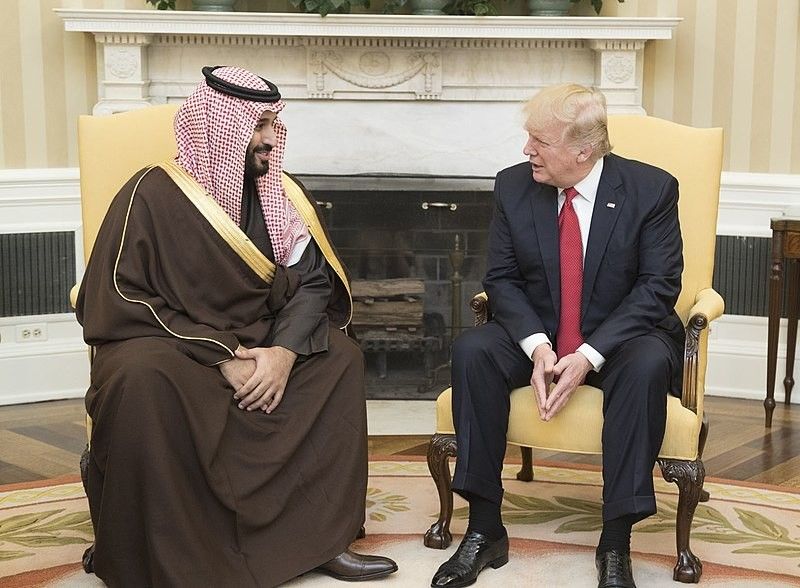
Qatar is advancing the proposal while maintaining close military ties to the United States. Under the US executive order of 29 September 2025, any armed attack on Qatar’s territory, sovereignty or critical infrastructure is to be regarded as a threat to the peace and security of the United States. The order provides for lawful diplomatic, economic and, if necessary, military measures, as well as joint contingency planning. The US authorities therefore retain discretion over the form of their response.
Cooperation also has an operational dimension. In January 2026, a cell was established at Al Udeid Air Base to coordinate air and missile defence between the United States and regional partners. Its responsibilities include information sharing, threat warnings and preparations for joint action. Qatar’s diplomatic efforts are thus being pursued alongside continued military cooperation with Washington.
This combination could strengthen Doha’s negotiating position. Defence capabilities reduce vulnerability to pressure, while agreements with a neighbour may reduce how often those capabilities have to be used. Maintaining freedom to cooperate on defence therefore matters as dialogue with Iran develops.
Iran’s proposal for ending the war, reported by Reuters on 28 September, illustrates the limits of Qatari mediation. It linked reopening the Strait of Hormuz to, among other measures, lifting the US blockade of Iranian ports and sanctions on Iranian oil. Doha can seek a compromise, but it does not control these instruments. Regional arrangements would therefore need to be accompanied by measures to resolve the US-Iran dispute, which the Gulf states cannot settle on their own.

Accountability for violations
Bringing Iran into such a framework would also require rebuilding trust on the Qatari side. As recently as 17 July, Qatar’s Foreign Ministry condemned renewed Iranian attacks on its own territory and neighbouring countries, holding Tehran responsible and reserving the right to respond. The September initiative should therefore be seen as an attempt to establish a framework for relations strained by direct conflict.
Turning declarations of non-aggression into an effective agreement would require procedures for clarifying incidents and responding to violations. Consultation channels and rules for sharing information could reduce the risk of misinterpreting an attack. Their effectiveness would nevertheless depend on the parties’ willingness to apply them even when the findings were unfavourable to one side.
The activities of non-state groups would pose a particular challenge. Commitments concerning support for such groups and procedures following attacks not directly attributed to state forces would need to be defined. Political influence does not necessarily amount to full operational control. Leaving this issue outside the agreement could complicate the attribution of responsibility for attacks and the enforcement of commitments.

Conditions for success
One possible approach would be to begin with narrower arrangements covering crisis communication, the protection of civilian infrastructure and shipping. Compliance would help establish whether there was a basis for a broader agreement. This would reduce the risk of building elaborate institutions before the participants had demonstrated a willingness to observe basic rules.
Divergent interests remain an obstacle. Qatar needs lasting freedom to export, while Tehran’s ability to influence traffic through Hormuz may provide an instrument of pressure in its dispute with the United States. Curtailing that instrument would require an agreement whose benefits made compliance more attractive to Iran than renewed escalation. A declaration of good-neighbourly relations alone would not resolve this tension.
For Doha, success would mean reducing the risk of attack and restoring the ability to plan deliveries independently of recurring US-Iran tensions. Qatar’s initiative could serve that purpose if regional commitments were linked to agreements addressing the ongoing war. Without that connection, even temporary improvements in the security of shipping would remain vulnerable to decisions taken outside Qatar.


