












- WIADOMOŚCI
BRICS summit reveals fault lines over Middle East

Photo. BRICS2026.GOV.IN - BRICS Logo, 2026/01/01 / Wikimedia Commons
The two-day BRICS summit in New Delhi has concluded. India issued a document summarising the event, which was attended by the foreign ministers of, among others, Russia, China, and Iran. The summit participants did not, however, produce a joint final declaration.
The absence of a joint final declaration, as well as the content of India’s own statement as host of this year’s summit, points to differences of opinion among bloc members regarding the situation in the Middle East. While the document issued by the hosts is framed in an optimistic spirit, it later emphasises that “some members” of the bloc held “divergent views” on the situation in the Middle East.
The foreign ministers of the member states were also to condemn the imposition of unilateral coercive measures and sanctions when these are not approved by the UN Security Council, and to express concern over the unilateral imposition of tariffs and other barriers inconsistent with WTO rules.

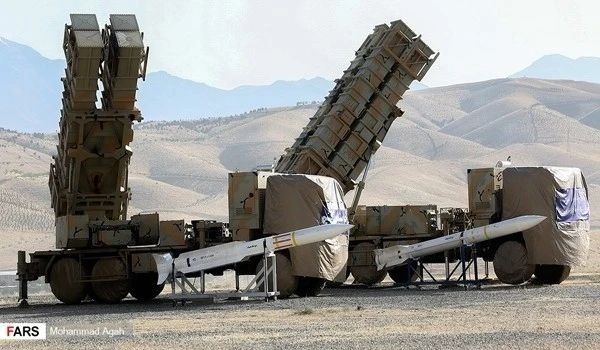
The lack of a joint statement by the parties was likely caused by strained relations between Iran and the United Arab Emirates (UAE). These countries stand on opposite sides of the ongoing conflict in the Middle East. During the fighting, Iran repeatedly attacked targets located on UAE territory. Iran is said to have launched about 550 ballistic missiles and more than 2,000 drones in their direction.
On Thursday, May 14, Iranian Foreign Minister Abbas Araghchi called on BRICS to condemn the United States and Israel for “unlawful aggression” and accused the UAE of “collusion with Israel” and “direct involvement in military aggression” against his country. This was said to be a response to reports of a secret meeting between Israeli Prime Minister Benjamin Netanyahu and UAE President Mohammed bin Zayed.
BRICS consists of Brazil, Russia, India, China, and South Africa, along with Ethiopia, Egypt, Iran, the UAE, and Indonesia. The bloc is neither a formal political alliance nor a trade association. Its main goals are to create a new monetary system, increase the role of developing countries in global financial institutions, and reform the United Nations.


