












- WIADOMOŚCI
- ANALIZA
Is Saudi Arabia distancing itself from the US? The post-American Middle East begins

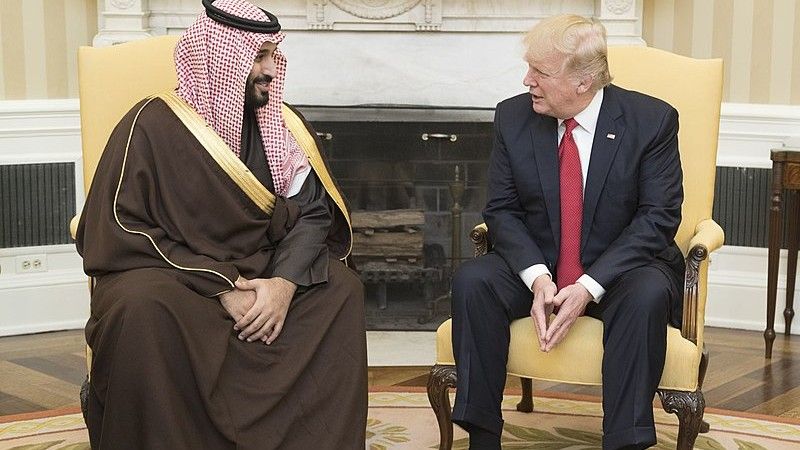
The evolution of Saudi Arabia’s foreign policy represents a fundamental, structural reorientation of the global balance of power, especially in the Middle East, which for years was subject to direct US influence and its national interests. The shift in Saudi Arabia’s approach therefore signals a shift from decades of strict dependence on US security guarantees towards multidimensional strategic autonomy. However, this shift is not merely a response to short-term crises, but an expression of deep scepticism about the political stability and durability of US promises.
The evolution of Riyadh’s relations with Washington: From unconditional alliance to a crisis of credibility
By analysing the successive stages of changes in US foreign policy and Saudi Arabia’s responses to them, one can conclude that the gradual revision of the alliance stems not from a sudden reluctance among Middle Eastern elites, but primarily from the inconsistency of Washington’s policies and the declining credibility of three successive US administrations.
Despite the gradual erosion of trust that has occurred during virtually all recent US presidencies, Riyadh managed to forge a rapprochement with Washington and negotiate unprecedented concessions.
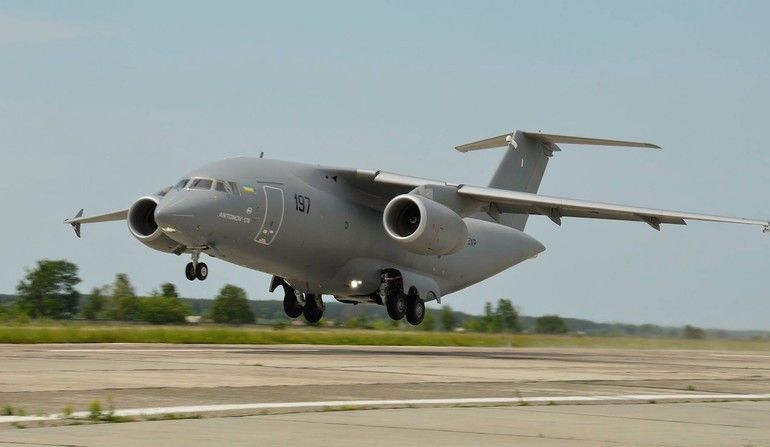
In November 2025, Saudi Arabia gained the status of a Major Non-NATO Ally (MNNA) and a commitment to sell F-35 fighter jets. This process culminated in the signing of a civil nuclear energy cooperation agreement on July 22, 2026. This agreement, worth tens of billions of dollars, allows for uranium enrichment in Saudi Arabia under the supervision of American companies, marking a historic breakthrough in US nuclear non-proliferation policy, which aims to block the influence of China and Russia. Equally important, however, the 2026 war exposed the hegemon’s logistical weaknesses, and the „empty warehouses” crisis and ammunition shortages forced the Gulf states to ensure their security through transactional agreements, such as swapping fuel for Ukrainian anti-drone technology.
”Saudi First” and the consolidation of local powers
Mohammed bin Salman’s (MBS) priorities are inextricably linked to the realisation of Vision 2030. This strategy requires constant de-escalation to attract foreign capital, which gave rise to the „Saudi First” doctrine. Faced with the perceived unpredictability of the United States, Riyadh has begun building a network of overlapping ad hoc security formats, currently encompassing Saudi Arabia, Türkiye, and Pakistan, while also engaging Qatar and other regional states in broader initiatives. These regional cooperation formats fill the void left by the departing hegemon, focusing on operational sovereignty.
The region’s ability to manage crises independently was demonstrated, for example, by the successful diplomatic engagement undertaken by Oman and Pakistan in August 2026. Oman has become a key mediator regarding shipping traffic in the Strait of Hormuz. Pakistan, in turn, facilitated strategic communication between Washington and Tehran, which helped avoid further escalation. „Strategic autonomy” has therefore ceased to be a slogan and has become a survival mechanism, building resilience to external pressure. However, the vacuum left by the US is attracting new players, primarily China, which offers a development partnership without interfering in the internal politics of the Gulf states.
China in the Persian Gulf: Economic dominance without military engagement
The unpredictability and impulsiveness of US policy have created favourable conditions for China’s growing influence in the region. Beijing’s balanced, non-interventionist, and free-trade-oriented approach has become an attractive diplomatic and economic option for the Persian Gulf states. For example, in 2024, China’s trade with the Gulf Cooperation Council countries reached $288 billion, compared with $86 billion with the United States. Chinese companies dominate the supply of 5G infrastructure and are significant suppliers of microprocessors, cars, and technology under the Belt and Road Initiative (BRI).
However, despite its dominance in artificial intelligence (AI) and chip technology, China positions itself solely as a modernisation partner, not an actor seeking to change the status quo of the countries in which it operates. The Djibouti base serves only limited logistical purposes, confirming that China has no intention of replacing the United States as the regional policeman and has consistently avoided rigid defence commitments, accounting for just 1.3% of the region’s arms imports (2021–2025). This asymmetry raises fundamental questions about Washington’s justification for maintaining the expensive infrastructure of its bases, which de facto protects Chinese commercial interests.
While the United States bears enormous financial, military, and political costs associated with protecting shipping lanes, China focuses on trade, infrastructure investment, and secure energy imports. Moreover, Beijing’s strong diplomatic relations with Tehran and the Houthis often mean that Chinese ships receive preferential treatment and safely navigate blockades breached by American forces. It is worth noting, however, that while most experts agree that China is unwilling and unable to take over the role of military security provider from the United States, countries in the region are increasingly willing to leverage their relationship with Beijing to counterbalance Washington’s influence.

The dilemma of the US military presence: What will happen to American bases?
The traditional model of permanent US military presence has begun to reveal its dark side, becoming a geopolitical liability for host nations. The 2026 war demonstrated that US installations in the Persian Gulf states can be not only a guarantee of security but also a source of additional risk for host nations. US facilities and forces in Qatar, Bahrain, Kuwait, and the United Arab Emirates were among the targets of Iranian retaliatory strikes. The scale of the attacks also demonstrated the limitations of even extensive, multi-layered air defences against the simultaneous use of ballistic missiles, cruise missiles, and drones.
The Project Freedom crisis in May 2026 was particularly telling. When President Trump announced a naval escort mission without prior consultation with key Gulf partners, Riyadh restricted US access to Saudi bases and airspace for the operation, fearing being drawn into an unwanted war. Within roughly two days, Washington paused the operation and Saudi Arabia subsequently lifted some of the restrictions on US access to its bases and airspace, although Riyadh continued to stress that its territory would not be used to support offensive military operations.
In light of the above, it can now be concluded that relations between the United States and its Middle Eastern partners are evolving towards an „access over presence” model, moving from permanent contingents to rotational deployments and pre-positioning. The United States is slowly losing its status as the ultimate guarantor, forcing the Gulf states to build their own sovereign defence capabilities.

Conclusions
The post-American order in the Middle East does not mean the disappearance of the United States, but rather the definitive end of its monopoly on shaping the rules of the game. Although Washington has maintained a dominant share in arms supplies, it has lost some of its previous control over diplomatic processes to local players. One of the most serious consequences of the 2026 war is the sidelining of the IMEC (India-Middle East-Europe) corridor project, which weakens the American vision of regional integration.
At the same time, the dominant strategy of the Persian Gulf states currently appears to be „assertive hedging.” This is a dynamic balancing act between the major powers. The influence of the United States, which remains a partner in advanced technologies, and China, a major buyer of raw materials and provider of digital infrastructure, must be taken into account, alongside the growing role of Türkiye and Pakistan as pillars of regional security. The new Middle East can therefore be described as a mosaic of overlapping alliances where stability depends on local power dynamics rather than the arbitrary decisions of an external hegemon.


