












- WIADOMOŚCI
- ANALIZA
Mecca Pact: Saudi Arabia, Türkiye and Pakistan redraw regional security

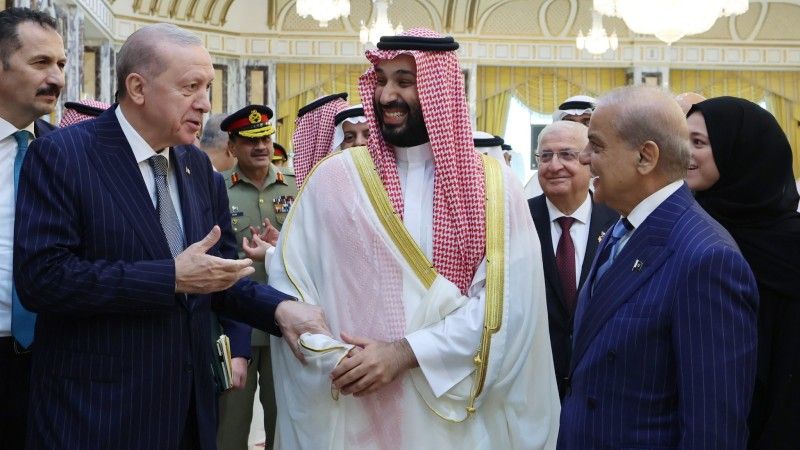
Photo. Directorate of Communications of the Presidency of the Republic of Türkiye
Saudi Arabia, Türkiye, and Pakistan have concluded a landmark defence agreement, known as the „Mecca Agreement”, which establishes the principle of mutual assistance in the event of armed aggression. The signatories agreed that an attack on one of these countries would be treated as an attack on all members of the alliance. The decision to strengthen cooperation was made in the face of the escalating conflict between the US and Iran and the destabilisation of trade routes in the Middle East. Although the agreement is purely defensive in nature, it is seen as the beginning of a new regional security architecture, limiting the influence of Israel and Iran.
Main goals of the Mecca Agreement
As the signatories emphasise, the Mecca Joint Defence Agreement is purely defensive in nature and is not officially directed at any specific country. Furthermore, it remains open to other countries in the region that share the same stabilisation goals, primarily in terms of collective defence and joint deterrence against all forms of external aggression. The most important element of the agreement is the principle that any armed attack on one of the signatory states will be treated as an attack on all three. This, in turn, entails the expansion of existing security umbrellas.
In the face of escalating conflicts in the Middle East (the US–Iran war and Houthi attacks), the signatories strive to de-escalate tensions, protect strategic maritime trade routes, such as the Red Sea and the Strait of Hormuz, and secure their economies and energy infrastructure.
At the same time, it is stipulated that this right to take military action is exercised under the aegis of the UN, i.e., is based on the right to individual and collective self-defence, as set out in Article 51 of the UN Charter. The agreement does not replace or prejudice the existing international obligations of the signatories. For example, in the case of Türkiye, it complements its NATO membership and serves to better share security burdens.
The agreement also provides for the strengthening and development of multidimensional military cooperation, including joint military exercises, personnel exchanges, intelligence exchanges, cooperation in air defence, and counterterrorism. The pact also aims to accelerate joint technological and production projects, which, given the current unrest in the region, is crucial for all parties to the agreement. Countries are striving for technology transfer and joint development projects (such as the T625 GÖKBEY helicopter or the national KAAN fighter programme), moving away from models based solely on the purchase of ready-made weapons.
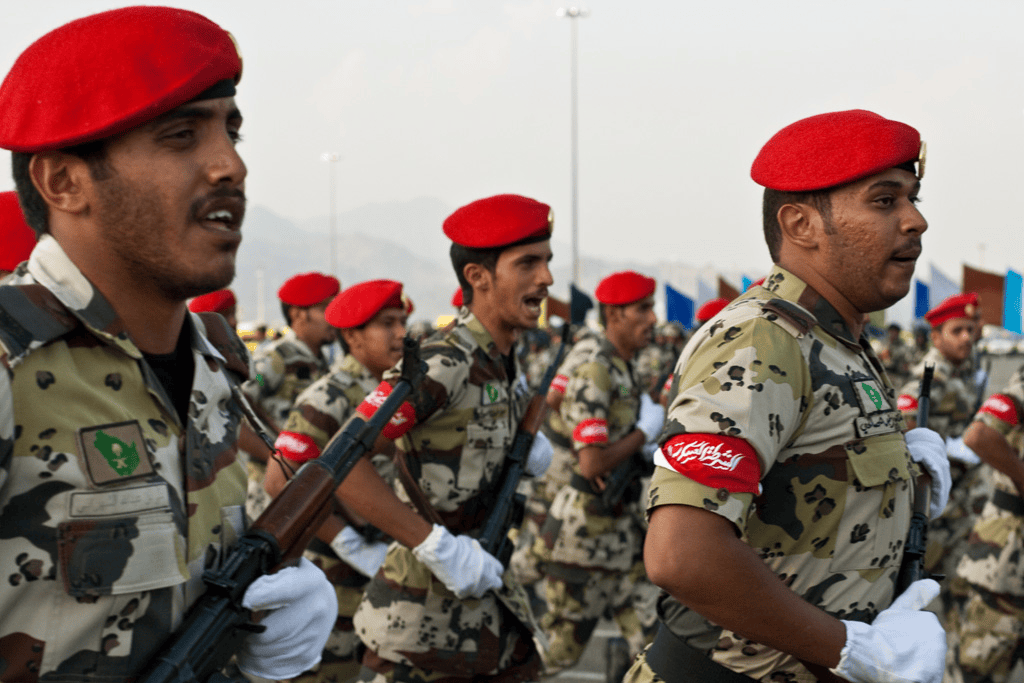
Unique resources brought by individual Mecca Agreement participants
The Pact undoubtedly combines the unique strengths of the three powers, which, through their complementarity, contribute to its driving force and the overall potential of the planned cooperation.
Saudi Arabia
- Financial and Economic Strength: It is the strongest state in the Persian Gulf, the only G20 economy in the Arab world, and one of the world's leading oil exporters. It has enormous potential to finance joint energy, transport, trade, and defence projects. At the same time, Saudi Arabia is also one of the world's largest arms buyers.
- Technological and Investment Contribution: Although it is not currently a leader in the arms production sector, it contributes capital for technological investments in the defence sector and joint projects.
- Symbolic Significance: The holiest sites in Islam (Mecca and Medina) are located within its territory, giving the alliance significant symbolic and political weight, particularly in the Muslim world.
Türkiye
- Military Capability: It has the second-largest army in NATO.
- Advanced Defence Industry: It has highly developed defence production and export capabilities, including advanced drone and ammunition systems. It is also developing major technological projects such as the T625 GÖKBEY helicopter and the KAAN fighter aircraft.
- Geopolitical Location: Located at the crossroads of Asia and Europe, with access to the Mediterranean, Black Sea, Eastern Europe, and the Caucasus, it is a key industrial centre in the region.
Pakistan
- Nuclear Arsenal: It is the only Muslim-majority country with nuclear weapons.
- Combat Experience and Personnel: It has a large, battle-hardened army and its own ammunition production. Pakistan also has years of experience training and providing technical support to Saudi forces.
- Geostrategic Location: It borders Iran, Afghanistan, India, and the Indian Ocean, which, while potentially risky, provides strategic access to Central Asia. Due to its shared border with Iran, just like Türkiye, it can exert exceptional geopolitical pressure on Tehran.
Combined, these characteristics enable the alliance to create a completely new security architecture and balance other forces in the region.

Interests of individual states
While all three signatories to the agreement emphasise their shared interest in strengthening regional security, their motivations for joining the pact differ in several key respects. Each views the agreement through the lens of its own strategic and economic priorities, as well as internal security challenges.
For Saudi Arabia, this alliance represents a step towards diversifying its defence partnerships. The goal is to build ”layers of security” and implement the principle of ”regional ownership”, that is, enabling the countries of the region to solve their problems independently. This is particularly important at a time when recurring unrest in the Middle East has exposed the US’s inability to manage the crisis and raised serious doubts about the reliability of the traditional American security umbrella, forcing countries in the region to seek alternative forms of protection. With this newly signed agreement, Riyadh intends not only to strengthen its position but also to protect its oil infrastructure and ambitious economic development plans from attacks by Iran and its militias.
Türkiye, on the other hand, by avoiding direct involvement in the war, aims to stabilise the economic situation and security on its borders, a goal frequently emphasised in speeches by both the Ministry of Foreign Affairs of the Republic of Türkiye and President Erdoğan himself. Ankara is also demonstrating its growing ambition to play a more prominent role on the international stage. The pact thus increases Türkiye’s political and military influence in the Middle East, provides access to Saudi investment, and opens new markets for its thriving arms industry.
Pakistan, like Türkiye, is seeking to de-escalate the crisis affecting its economy. In exchange for military engagement, it is counting on crucial financial support, investment, and cooperation in the energy sector from wealthy Gulf states (such as Saudi Arabia and Kuwait).
See also 

Regional reactions
Although the signatories officially declare the pact to be purely defensive and not directed against any specific entity, it is clear that this alliance was formed in direct response to the growing aggression by Iran and Iran-backed Houthi militias in Yemen and Shiite militias in Iraq, which have recently repeatedly attacked Saudi territory and oil infrastructure.
It is therefore not surprising that Tehran has greeted the pact with open scepticism and criticism. Iranian parliamentarian Ebrahim Rezaei warned the Saudis that ”a paper agreement with Türkiye and Pakistan will not guarantee their security,” just as years of cosying up to the Americans have not helped them, and urged Riyadh to reform its policies instead of „begging for security from others.”
India is also monitoring the pact with particular attention and concern, given its immediate neighbourhood and tense relations with Pakistan. Although experts assess that the pact likely does not include a nuclear component, the mere fact that Pakistan is the only Muslim-majority country possessing nuclear weapons is of paramount importance. Importantly, Pakistan’s nuclear deterrence doctrine has traditionally focused on the threat Islamabad perceives from India.


