












- WAŻNE
- WIADOMOŚCI
Pakistan as the key to US–Iran peace. The inside story revealed

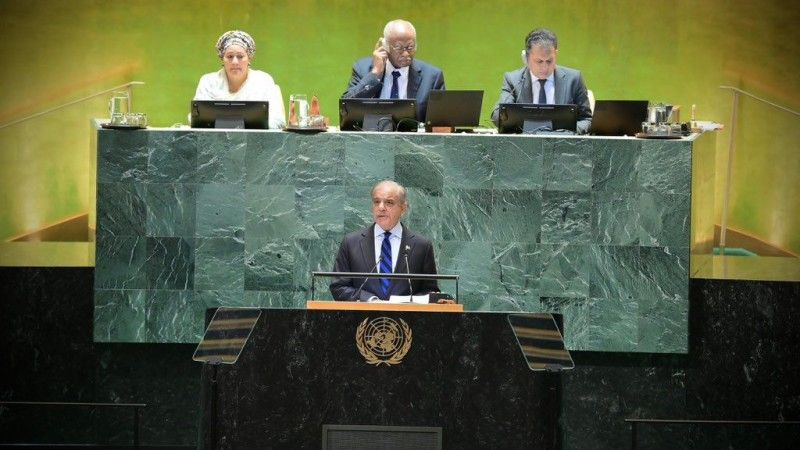
An unexpected hero of the ceasefire between the United States and Iran turned out to be… Pakistan. What role did the authorities in Islamabad play in preventing the conflict from escalating?
On Friday, 10th April, talks are to be held in the Pakistani capital, Islamabad, with the aim of turning the newly agreed two-week ceasefire between the United States and Iran into lasting peace.
Ceasfire
Pakistan’s Prime Minister Shehbaz Sharif announced on Wednesday via the X platform that Iran and the United States, along with their respective allies, had agreed to an immediate, comprehensive ceasefire, including in Lebanon, and that it had already entered into force. He welcomed the decision as a prudent step, expressed his appreciation to the leadership of both countries, and invited their delegations to Islamabad on 10th April, 2026, to continue negotiations aimed at reaching a final settlement to end all disputes.
The Iranian Supreme National Security Council is also said to have expressed readiness for peace talks in Islamabad. According to the South Asian news agency ANI, Iran’s delegation at Friday’s meeting in Pakistan will be led by Parliament Speaker Mohammad Bagher Ghalibaf, while on the U.S. side the highest-ranking representative will be U.S. Vice President J.D. Vance.
Pakistan assumes the mediator role
The long-awaited announcement of a ceasefire in the U.S.–Iran war raised the question of why Pakistan has become the center of the diplomatic world today. The most basic and prosaic explanation is that Islamabad appears to have shown the greatest determination in seeking a solution to the problem.
For quite some time, Pakistani authorities had been involved in mediation efforts and were seeking international support for their initiative. At times, this took on a dramatic dimension, especially on Tuesday, 7th April, when Pakistan’s prime minister, just hours before the expiration of the ultimatum set by Donald Trump (in which the U.S. president threatened to destroy Iranian civilization) asked the American leader for „an additional two weeks,” while also urging the authorities in Iran to unblock the Strait of Hormuz as soon as possible.
Pakistan’s role was not limited to influencing the United States and Iran. One example came on March 31, when Pakistan’s deputy prime minister and foreign minister, Mohammad Ishaq Dar, met Chinese Foreign Minister Wang Yi in Beijing. The Pakistani-Chinese talks resulted in the publication of a five-point program expressing a shared assessment of the ongoing conflict (it should be stressed that this was not the only move by Chinese diplomacy).
Pakistani authorities were also engaged in talks with other countries in the region that were keenly interested in a swift end to the war in Iran. In Islamabad, meetings were held, among others, between the foreign ministers of Pakistan, Turkey, Egypt and Saudi Arabia. The goal was to define a common position and try to persuade Washington and Tehran to adopt it.
The above examples show how, in less than a few weeks, a country’s prestige and standing on the international stage can rise significantly. Pakistan leveraged its relatively solid diplomatic ties with countries driven by different interests (Saudi Arabia, Turkey, China, Iran and the United States) and helped create a channel of communication between the warring sides.
Michael Kugelman, a senior fellow for South Asia at the Atlantic Council, told Bloomberg that the development constituted a major diplomatic success for Pakistan and ranked among the most significant achievements of its foreign policy in recent decades.


