












- PILNE
- WAŻNE
- WIADOMOŚCI
Trump sends more troops to Poland

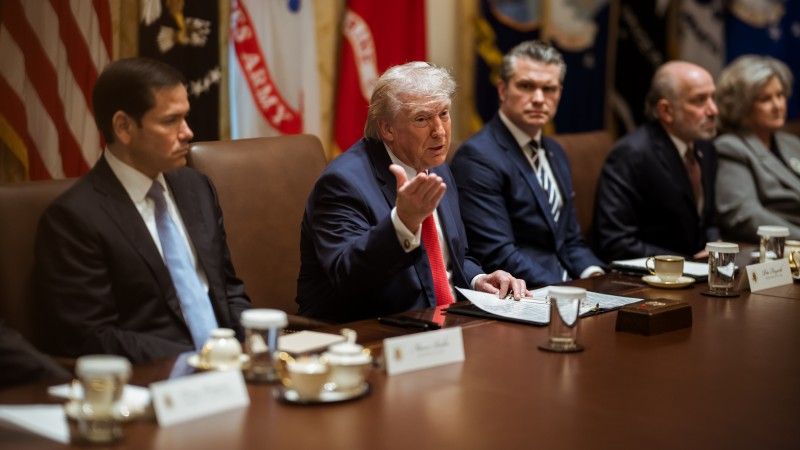
Photo. Daniel Torok / The White House / flickr
Donald Trump’s announcement that the United States will send an additional 5,000 troops to Poland changes the tone of the discussion about the American military presence on NATO’s eastern flank. Only days earlier, Washington had delayed a planned rotation of U.S. forces to Poland. Now the key question is whether this is a genuinely new deployment or a political confirmation that the previously suspended rotation will be restored.
The most important point is that American troops are not leaving Poland. The earlier statement from Sean Parnell about reducing the number of U.S. Brigade Combat Teams assigned to Europe from four to three created uncertainty, especially because it temporarily delayed the deployment of U.S. forces to Poland. However, Trump’s new declaration clearly shows that Poland remains one of the most important U.S. allies in Europe and that Washington does not want to weaken deterrence on the eastern flank.
At the same time, the details still matter. It remains unclear whether the announced 5,000 troops represent an additional deployment above the previously planned rotation, or whether this is in fact the political restoration of the delayed armoured brigade rotation. If both elements were combined, the number of American troops in Poland could rise significantly, even towards around 15,000. This would be a major signal not only for Warsaw, but also for Moscow, Berlin, Paris and the entire eastern flank.
This decision also has a clear political dimension. Trump linked the announcement to President Karol Nawrocki and to his own support for him, which shows once again that American security policy under Trump is strongly connected with personal relations and political messaging. For Poland, this can be beneficial, but it also means that Warsaw must manage relations with Washington carefully, because military decisions are increasingly tied to the broader political logic of the White House.
Poland is also deepening defence cooperation with the United States in other areas. The agreement on drone cooperation is particularly important, because unmanned and counter-unmanned capabilities are now among the key lessons from the war in Ukraine. Poland needs to develop both drone reserves and anti-drone systems, while the United States will also be able to use Polish drone-related capacities. This is not only about new technology, but about preparing for the type of war that Russia is already conducting.
Another important signal is the arrival of further F-35 fighters in Poland. Poland is the first country on NATO’s eastern flank to receive these aircraft so quickly, which strengthens its position within the Alliance and changes the regional balance of air capabilities. F-35s are not only fighter jets. They are platforms for reconnaissance, command, targeting and integration with allied systems, which means their arrival has a much broader military meaning.
At the same time, Poland is not limiting itself to one partner. After statements by President Emmanuel Macron, Warsaw is also expecting several hundred additional French soldiers. This will not replace the American presence, but it is politically important. Poland is trying to play foreign and security policy on several instruments at the same time: with the United States, with France, with regional allies and within NATO.
This is the right direction. American soldiers in Poland remain the strongest signal of deterrence against Russia, but Poland must also strengthen European and regional cooperation. The U.S. presence is crucial for the whole of Central and Eastern Europe, not only for Poland. If the new American deployment is confirmed in practice, it will show that despite debates about reductions, rotations and global U.S. priorities, Poland remains central to NATO’s defence posture on the eastern flank.


