












- WIADOMOŚCI
- KOMENTARZ
Russia rebuilds its Mi-8 fleet

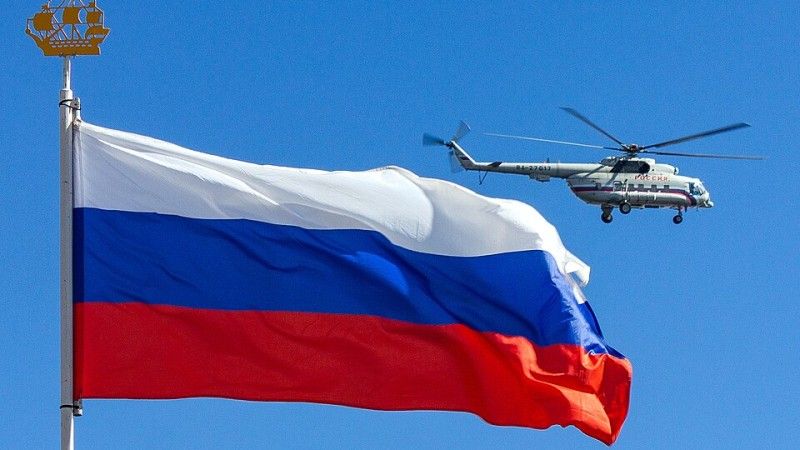
Photo. Bestalex / Wikimedia Commons
Russia is trying to restore one of the basic tools of its military power: transport and assault aviation. The planned increase in Mi-8 helicopter production should be read not only through the war in Ukraine, but also through the longer confrontation with NATO.
According to documents obtained by Dallas Analytics, the Kazan Helicopter Plant is expected to manufacture 72 Mi-8MTV-1 helicopters in 2026–2027 under Russia’s state defence order. At least 37 helicopters are planned for 2026 and another 35 for 2027. This is almost twice as high as previous estimates of Russia’s annual production capacity for this type of helicopter.
The Mi-8 remains one of the most important helicopters in the Russian armed forces. It is not a new platform, but it is useful, simple and still relevant. Russia uses it for transport, evacuation, search-and-rescue missions, indirect rocket attacks and support for operations in difficult terrain. At the beginning of the full-scale invasion of Ukraine, Mi-8 helicopters were also used in airborne assault operations, including around Kyiv and Hostomel.
That is why the new production plans matter. If Russia manages to produce helicopters at this scale, it could compensate for a significant part of its wartime losses in this category. This would not automatically change the situation on the front in Ukraine, where helicopter operations are limited by air defence, drones and the density of the battlefield. But it would strengthen Russia’s ability to rebuild forces for a longer war and for future operations.
See also 
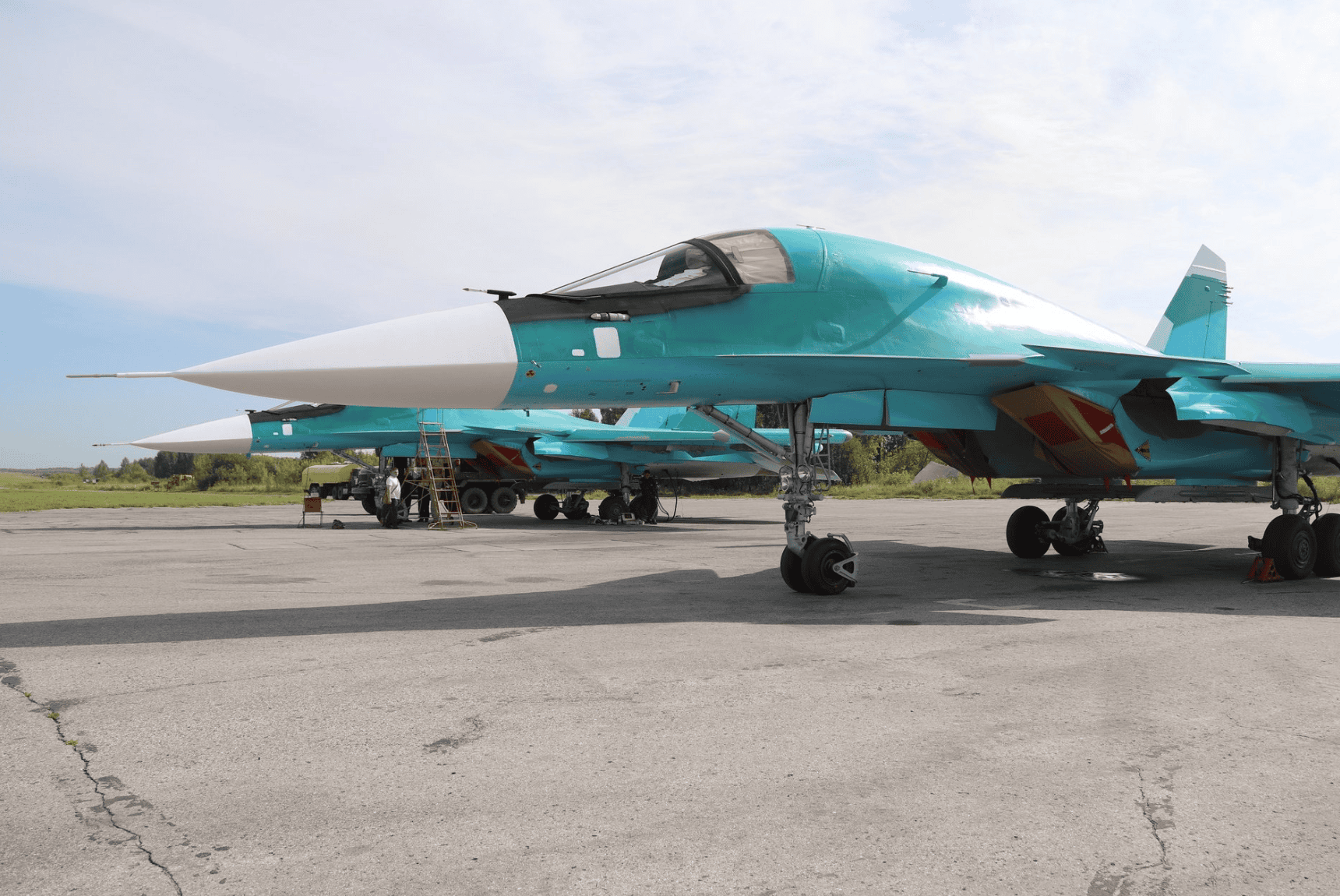
The NATO dimension is important. European intelligence services and military officials have repeatedly warned that Russia may try to restore the capability to threaten NATO countries later in this decade. In such a scenario, transport and assault helicopters would matter especially in the Baltic region, where geography, short distances and Russian proximity create conditions for fast military action. A Russian ground operation against the Baltic states would almost certainly include an airborne component.
However, more helicopters do not automatically mean better capabilities. The same leaked documents show problems inside the Russian defence-industrial system. The production plan depends on coordination between Russian Helicopters, the United Engine Corporation, KRET and other suppliers. It also requires advance financing, contracts, engines, avionics and components delivered on time. This is not a simple production line. It is a network of companies under pressure from war, sanctions and financial strain.
One detail is particularly important and must be taken into account: the United Engine Corporation is expected to start supplying engines for the Mi-8 only from September 2026. This may become a serious bottleneck. Another issue is KRET, which is responsible for onboard electronics and avionics. The documents suggest that deliveries depend on timely advance payments, which shows that even Russia’s military production system has financial and organisational limits.
There is also a political and economic signal. The documents mention the use of Russia’s National Wealth Fund to support defence production. In practice, this means that state reserves are being redirected into the war economy. Money that could be used for infrastructure, social spending or civilian development is being used to sustain military output.
This confirms two things at the same time. Russia is preparing for a long confrontation and wants to rebuild military capabilities lost in Ukraine. But it is doing so through an industrial system that still has weak points: engines, electronics, financing, production cycles and dependence on dozens of suppliers.
For Ukraine and NATO, the answer is not only to observe Russian production figures. Sanctions against engines, avionics, machine tools and dual-use technologies remain essential. Air defence must also be strengthened, because helicopters are vulnerable when the battlefield is saturated with missiles, radars, drones and mobile air-defence systems.
The war has also changed the value of helicopters. A multimillion-dollar aircraft can now be destroyed or forced away from the battlefield by much cheaper unmanned systems. Ukraine has shown that drones, electronic warfare and mobile air defence can limit Russian aviation. NATO should treat this experience seriously, especially when planning defence of the eastern flank.
Russia’s Mi-8 production plans are therefore a warning, but not a reason for panic. Moscow wants to rebuild its airborne assault and transport aviation. It may partly succeed. But the same documents that show Russian ambition also show Russian dependence on money, components and industrial coordination.


