












- WIADOMOŚCI
- KOMENTARZ
Algeria gets Russian Su-34

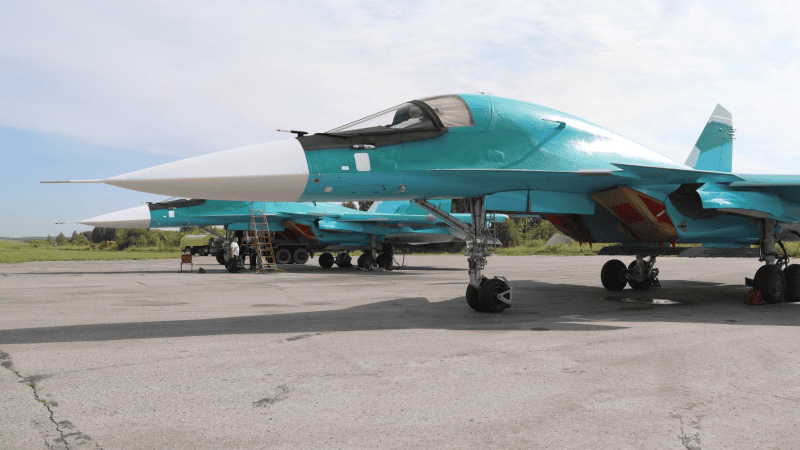
Algeria has reportedly received its first Russian Su-34M strike aircraft, and this is not only another arms delivery from Moscow to North Africa. It is a clear signal that Russia, despite the war in Ukraine, sanctions and pressure on its defence industry, is still able to maintain important military relationships outside Europe. For Algiers, the Su-34M means long-range strike capability, stronger deterrence and confirmation that the Algerian army is continuing its modernisation through Russian systems.
This delivery matters because Algeria is one of the most important military actors in Africa and one of Russia’s key defence partners on the continent. The reported package has long been linked to wider Algerian interest in Russian combat aviation, including Su-34M, Su-35E and even Su-57E aircraft. Whether all these elements materialise fully is another question, especially given Russian industrial pressure, but the arrival of Su-34M already shows that Moscow remains present in the Algerian defence ecosystem.
The timing is also important. North Africa is entering a new phase of military competition. Morocco is deepening defence cooperation with the United States and Israel, receiving drones, missile systems, Apache helicopters and upgrades for its F-16 fleet. Egypt is diversifying between Western and Russian suppliers. Algeria, meanwhile, continues to rely heavily on Russian high-end platforms. This is not an isolated purchase. It is part of a regional arms race shaped by Western Sahara, Libya, the Sahel and the fear of external intervention.
Europe should look at Algeria much more seriously. Many European countries want to pull Algiers closer, but usually through politics, energy, migration dialogue and Mediterranean cooperation. France, Italy and Spain see Algeria as an important gas supplier and regional partner. Russia approaches the same country differently: through combat aircraft, air defence, military prestige and long-term security dependence. Europe offers partnership. Russia offers hard power.
This is the difference. European states try to attract Algeria by building political and energy relations. Moscow tries to bind Algeria through military systems that create training, maintenance, ammunition, spare parts and doctrine dependencies for decades. A Su-34M is not just an aircraft. It is a relationship. It means pilots trained in a certain way, bases adapted to a certain system, weapons linked to a certain supplier and strategic habits built around Russian technology.
Russia’s wider arms geography confirms this logic. In 2020–2024, 74 per cent of Russian major arms deliveries went to Asia and Oceania, 12 per cent to Africa, 7.4 per cent to Europe and 6.4 per cent to the Middle East. India, China and Kazakhstan alone accounted for two-thirds of all Russian arms transfers. Africa is not Russia’s largest arms market, but it is one of the places where Moscow can still transform weapons into influence, especially when European states hesitate or focus only on energy.
See also 

Russia’s military footprint in Africa also goes beyond arms contracts. Through the African Corps, formerly linked to the Wagner ecosystem, Moscow maintains personnel and influence in countries such as Sudan, the Central African Republic and Mali. This gives Russia access to gold, diamonds, uranium and political leverage. Arms exports, military advisers, logistics and resource access are not separate instruments. For Moscow, they are one policy.
Algeria is therefore a test for Europe; If the EU wants Algiers closer, energy cooperation will not be enough. Europe cannot speak only about gas, migration and diplomatic formats while Russia supplies aircraft and long-term military dependence. The delivery of Su-34M shows that Moscow still understands how to build influence through defence. Europe has better economic tools, deeper markets and stronger technology, but it must decide whether it wants Algeria as a true partner or only as an energy supplier.


