












- WIADOMOŚCI
- ANALIZA
Saudi-Pakistan mutual defense pact: a new Middle East

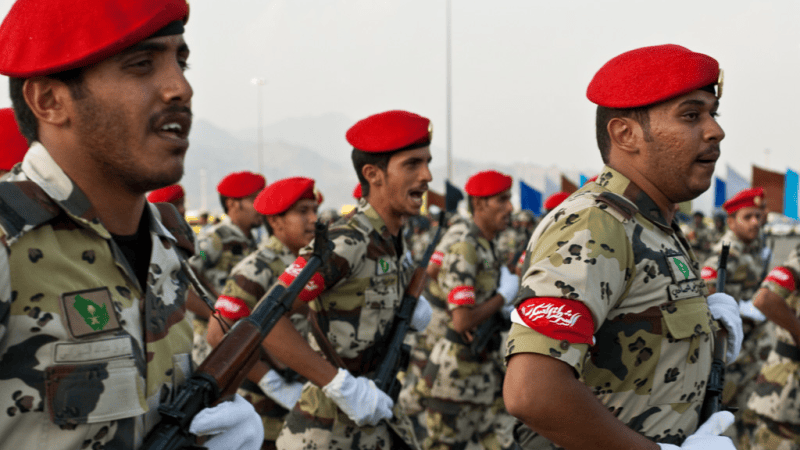
„I don’t need uranium to make a bomb. I’ll just buy one from Pakistan.” – Muhammad bin Salman, from the book War by Bob Woodward
Saudia Arabia and Pakistan consolidating their military cooperation is one of the major shifts in regional dynamics – an earthquake of sorts. Even though the close relation between the two countries are more than five decades old, the defense pact between them marks a tremendous shift in the regional defense paradigm.
On the surface, the deal has always been simple: financial support in exchange for military might. Ever since the 1950s, Saudi Arabia (KSA) has been supplying Pakistan with an economic lifeline. At fist small and symbolic, the aid gradually transformed into major support, with Saudi Arabia sending oil at lower prices, making large deposits in Pakistani national bank, and even bailing it out in 2018.
All this was in return for Pakistani protection. Since the 1960s, thousands of Pakistani troops have been stationed in Saudi Arabia to help build and train its forces, initially to protect the royal family. This arrangement proved especially helpful in 1979, after the Iranian Revolution, which heightened KSA’s fears of Shi’ite influence over the region. Theran’s potential for ideological export immediately positioned the Kingdom and the newly established theocracy in a zero-sum geopolitical rivalry. In response, Saudi Arabia sought a potent Sunni counterweight, finding it in Pakistan’s robust, disciplined, and regionally experienced armed forces. But the most important test for the alliance was yet to come.
During the 1990 Gulf War, with Saddam Hussein’s invasion of Kuwait, the Saudi royal family found itself with Iraqi forces sitting just across its northern border, fearing that Saddam might invade the Kingdom next. As a response, 11,000 Pakistani troops were deployed to Saudi Arabia, effectively repelling any potential for an Iraqi invasion – and marking a crucial sign of loyalty to KSA.
Since then, both countries« « cooperation has been tightening. Even in times when their leaderships did not see eye to eye (as in the case of the Yemen war), their alliance has remained resistant to whatever challenges regional turmoil has brought.
The stability of this relationship is not a consequence of the merely complementary nature of both parties but also their shared values. Pakistani society is deeply religious, with almost 90% of its population Sunni. Its constitution states that all laws must be consistent with the principles of Islam as prescribed in the Quran and Sunnah. By allowing the Saudis to fund mosques in Pakistan, its leadership welcomes KSA’s soft power and ideological spread within the country.
Gradually, the historical cooperation started transcending simple transactional security arrangements. It became a strategic hedge: Saudi Arabia gained an implicit extended deterrence against regional rivals, while Pakistan secured economic stability and a supply of oil, offsetting the volatility of its own domestic politics and its perennial rivalry with India.
The deal between Riyadh and Islamabad was simmering at the cusp of signing for months. After the Israeli attack on Doha, the idea of American protection for its GCC allies vanished in the eyes of Gulf leaders. This power vacuum needed to be filled. And promptly.
The paradigm shift: SMDA
And so, on September 17, 2025, the Strategic Mutual Defense Agreement (SMDA) between the Kingdom of Saudi Arabia and the Islamic Republic of Pakistan was signed. Although the official text of the pact has not been published, authorities from both states confirm that the SMDA stipulates that „any aggression against either country shall be considered an aggression against both”. The agreement most likely includes the following:
- Joint deterrence and training: expanded joint exercises and real-time operational coordination to ensure both forces can move and fight as one if required.
- Defense industrial collaboration: Saudi investment in Pakistan’s defense industry, particularly in munition, drones and armored systems, to advance Riyadh’s Vision 2030 goal of localizing half of its defense production.
- Intelligence fusion: integrated intelligence-sharing cells focused on counterterrorism, missile defense, and hybrid threats.
- The nuclear undertone: though neither side has confirmed it publicly, Saudi officials remarked that the agreement „covers all military means”, understood as expanding the scope of cooperation to include Pakistan’s nuclear arsenal.
If confirmed, such a clause would fundamentally redefine the balance of power in the region. Even in an indirect form, it would give Saudi Arabia access to a nuclear counterweight to any threat in the region.

New power distribution: reactions
The long-term implication of the SMDA extend far beyond bilateral security, rebalancing the power equation from South Asia to the Mediterranean Sea.
1.Iran and Israel
For Saudi Arabia, the pact provides a new layer of deterrence against both Iran and Israel. Against Tehran and its proxies (such as the Houthis), the SMDA raises the cost of escalation, as any significant aggression against Saudi territory now risks drawing a nuclear-armed regional power. Theoretically, this provides a powerful counterweight to Iran’s established Axis of Resistance. Practically, the 2023 Chinese-brokered deal between KSA and Iran allowed for more common ground between the countries. The Iranian president praised the defense deal at the September UNGA summit, seeing it as „a beginning for a comprehensive regional security system with the cooperation of the Muslim states.”
For Israel, the SMDA serves as a potent diplomatic signal. With normalization agreement currently on hold and Pakistani military might shielding KSA, the pact represents an autonomous Saudi move toward extended deterrence. It forces Israeli military strategists to consider Pakistan’s atomic capability, however remote the threat of its operational deployment may be, regarding any potential future strikes on the Gulf.
2.U.S. and China
The United States, for decades Saudi Arabia’s main ally, reacted with visible concern, particularly in the context of the pact’s nuclear implications. The U.S. administration, aiming to stabilize the region and implement a non-proliferation policy, sees the pact as a signal from Riyadh to seek alternative security guarantees in the face of Washington’s perceived ineffectiveness or even reluctance to contain regional threats, especially after the Israeli attack on Qatar.
For the United States, the SMDA is both a confirmation of its waning influence and a necessary step in the burden-sharing of regional security. While Washington may view the arrangement with suspicion due to proliferation risks and Pakistan’s close military reliance on China, the pact forces regional actors to rely on self-help, potentially reducing the long-term deployment costs for the U.S. military. Nevertheless, the SMDA fundamentally undermined the U.S.-led security architecture in the Gulf.
Conversely, for China, the pact is a strategic boon. By securing its key energy artery through the Gulf via a newly fortified Pakistani partner, Beijing enhances its energy security. The SMDA also complements China-Pakistan Economic Corridor (CPEC) by linking Pakistan’s military depth with Saudi financial power, deepening China’s influence across the broader Eurasian landscape without direct military intervention.

3.India and Arab states
Coveted by Pakistan, the SMDA injects complexity into India’s rapidly deepening strategies and economic ties with Saudi Arabia. New Delhi has now found itself in a situation where military escalation with Pakistan could jeopardize its significant economic interests and the well-being of its large expatriate workforce in the Gulf. This dynamic creates a strategic ceiling on Indian military options, cooling the prospects for conflict with Pakistan by linking it directly to the security of the Gulf. While Saudi Arabia may seek to maintain robust economic ties with India, the defense pact with Pakistan introduces a clear, non-negotiable security hierarchy.
India, Pakistan’s main rival and Riyadh’s key partner (the second largest), reacted cautiously. New Delhi has emphasized its „broad strategic partnership” with Saudi Arabia, expecting Riyadh to be mindful of mutual interests and „sensitivities”, sending a veiled warning to the Saudi leadership.
Among Arab countries, the pact has sparked mixed reactions, despite some commentators dubbing it an „Islamic NATO”. While the pact formally strengthens the Sunni strategic axis, Riyadh is cautious not to disrupt the fragile, China-mediated peace with Tehran. The Arab summit held in Qatar two days before the SMDA agreement also proved that Arab countries are not ready for a broader military alliance.
The real winner
For its signatories, the SMDA was concluded at the perfect time. From a mid-October perspective, Riyadh and Islamabad had only one month in which such a deal could be struck safely, without major pushback from the U.S. While the attack on Qatar was a catalyst for the KSA-Pakistani arrangement, the Palestinian-Israeli ceasefire closes this convenient window of opportunity. While still shaky, the peace in Gaza may prove stable and, as a consequence, bring Saudi Arabia back onto the path to normalization with Israel.
This way, Mohammad bin Salman may have killed three birds with one stone. If lasting, the Gazan ceasefire allows KSA a safe return to the idea of the Abrahamic Accords. At the very same time, the Pakistani agreement represents a strong hedge against any future Israeli hostilities. And finally, rich, armed to teeth, and sharing a common ideology, the SMDA may become a foundational pillar of the security architecture of the entire region.
Author: Ali Gibran


