


- WIADOMOŚCI
- ANALIZA
Oman between Iran and the West. The military value of its ports

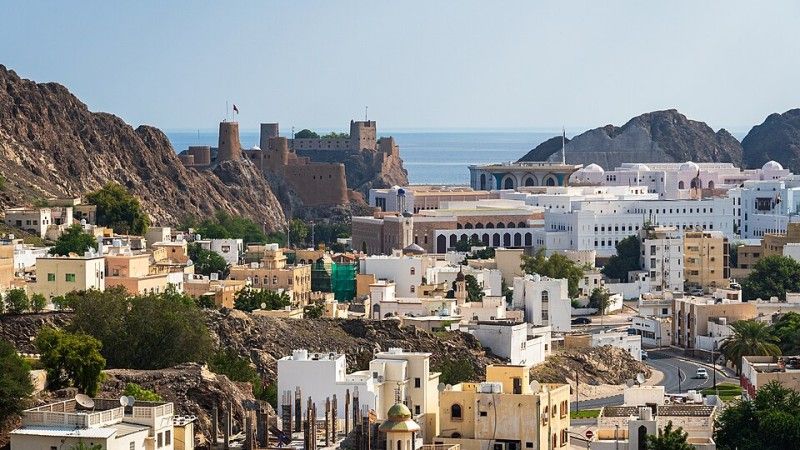
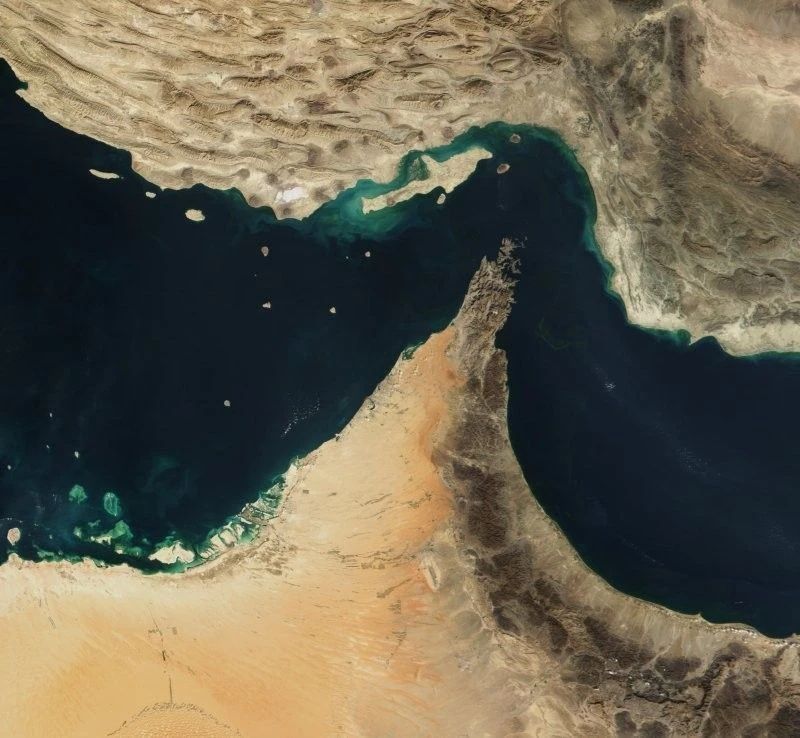
Oman combines access to the Arabian Sea beyond the Strait of Hormuz with a position on the strait itself and diplomatic channels across regional divisions. These advantages attract commercial activity and foreign military interest. They also expose Muscat to pressure over how its territory and infrastructure are used. Oman’s defence problem is therefore inseparable from its ability to decide which commitments to accept—and which to refuse.
In a report published on 11 October, Reuters cited the US military as saying it had disabled a commercial cargo vessel in the Gulf of Oman the previous day after what it described as an attempt to breach its blockade of Iran. The report did not establish that the incident occurred in Omani territorial waters. It nevertheless illustrates the strategic environment facing Muscat: military operations can disrupt the approaches to the country without Oman itself becoming a belligerent.
For the Sultanate, distance from the centre of a conflict provides only partial protection. Its ports can benefit from demand for routes outside Hormuz, yet that same demand increases their importance to competing powers. Its diplomatic relationships can reduce misunderstandings, but they cannot guarantee restraint by every actor operating nearby.

The central question is how Oman can remain useful to others without allowing their requirements to determine its own security policy. The answer involves combat aircraft and warships, but also control over military access, reliable maritime information and the ability to keep essential infrastructure operating under pressure.
Geography offers an alternative, with limits
Oman occupies two distinct strategic positions. Musandam faces the Strait of Hormuz and is separated from the rest of the country by territory belonging to the United Arab Emirates. Further south, ports on the Arabian Sea offer access to international shipping routes without requiring vessels to pass through the strait.
This creates different defence requirements within the same state. Around Musandam, proximity to a contested waterway makes surveillance, communications and continuity of access particularly important. Along the Arabian Sea coast, the task is to protect the infrastructure through which Oman connects to the wider economy.
Duqm embodies the second position. Its port accommodates commercial cargo and naval vessels, while its liquid terminal supports the adjacent refinery. Its location outside Hormuz gives it practical value when passage through the strait becomes uncertain.
However, the strategic significance of an alternative port depends on what can reach it. A berth outside Hormuz does not, by itself, provide an alternative export route for oil or goods located inside the Gulf. Diversion requires suitable land connections, pipelines, storage, handling capacity and commercial arrangements. The bottleneck can move from a maritime passage to the infrastructure connecting producers with the coast.
This distinction matters for defence planning. Protecting a terminal while overlooking its power supply, transport links or workforce can preserve the physical facility without preserving its economic function. Oman’s value as an alternative route therefore rests on the reliability of a connected system. Expanding capacity and protecting continuity are related, but separate, investments.

Foreign access brings influence and exposure
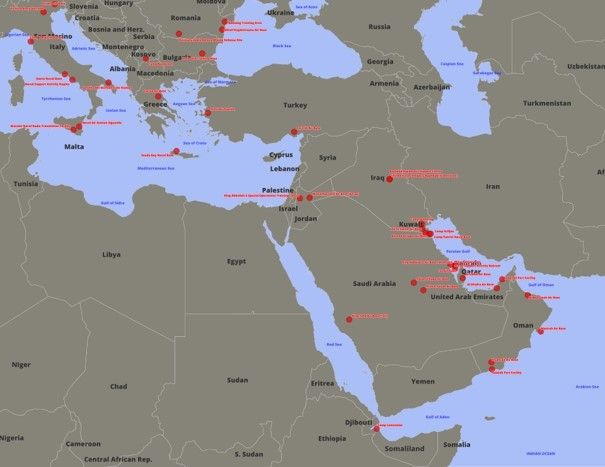
Western military cooperation gives Oman additional ways to support its security. A Strategic Framework Agreement concluded with the United States on 24 March 2019 expanded American access to facilities and ports at Duqm and Salalah. Britain opened its Joint Logistics Support Base at Duqm in 2018 and signed a Joint Defence Agreement with Oman in February 2019. London announced further investment in the logistics facility in September 2020.
These arrangements increase the practical importance of Oman to partners operating in the region. Access to maintenance, supplies and port infrastructure can support a sustained naval presence. Cooperation also creates opportunities for training and familiarity between armed forces.
Yet a logistics relationship does not settle every political question that arises during war. Routine replenishment, support for maritime protection and assistance to an offensive campaign can carry very different consequences. Public announcements about access should not be treated as evidence that Oman has authorised every possible wartime use of its facilities.
For Muscat, the difficulty lies in preserving meaningful distinctions between those activities. A partner may regard additional support as a limited operational requirement. An adversary may interpret the same activity as evidence of participation in hostilities. Oman can consequently face pressure from both directions, even when it considers its own position consistent.
Clear conditions governing access have strategic value in this setting. They help partners understand what support is available and give Muscat a firmer basis for explaining its decisions. Ambiguity may facilitate cooperation during peacetime; under sustained conflict, it can increase the risk that another state defines Oman’s role for it.
Foreign presence also has no automatic deterrent effect against every form of attack. It can raise the political cost of striking a facility while simultaneously increasing that facility’s military significance. The balance depends on the adversary, the operation being supported and the expected response. Counting foreign relationships is therefore an inadequate measure of Omani security.
See also 
A mediator also needs evidence
The exposure of commercial infrastructure became tangible on 1 March 2026. Oman’s state news agency, in a report carried by Qatar News Agency, said two drones had targeted Duqm’s commercial port. One struck accommodation used by workers, injuring an expatriate employee; debris from the other fell near fuel tanks.
Attribution requires separate treatment. In its statement of 29 March, Oman’s Foreign Ministry said recent attacks against the country had not been claimed and that the authorities were investigating their source and motives. That statement establishes the position communicated on that date. It does not justify assigning responsibility to a particular state.
For a mediator, identifying an attacker has consequences beyond selecting a military response. A premature accusation can damage a diplomatic channel that remains useful for limiting escalation. Conversely, an inability to establish responsibility can encourage repeated pressure and weaken confidence in the state’s capacity to protect its territory.
Surveillance, the preservation of evidence and the ability to compare information from different partners therefore support diplomatic independence. They help Oman decide whether an incident represents a deliberate attack, spillover from nearby operations or an attempt to provoke a wider confrontation.
This is an important reason to assess defence investment beyond the destructive power of individual weapons. A reliable picture of what happened can give the government more freedom than an additional capability it cannot confidently decide when to use. Military preparedness and diplomatic restraint are compatible when restraint follows informed choice.
What Oman's forces can contribute
Oman possesses modern combat aircraft with which to enforce its sovereignty and respond to air threats. BAE Systems completed delivery of the country’s 12 Typhoon aircraft in 2018. The Royal Air Force of Oman also operates F-16s, supported through its longstanding relationship with the United States.
These aircraft provide options, but fleet size alone cannot establish the level of protection available during a prolonged crisis. Readiness, trained personnel, maintenance, suitable weapons and access to timely information determine how much of an inventory can be employed repeatedly. Delivery records should not be confused with a verified count of aircraft available for combat on a particular day.
Ground-based air defence adds another layer. Raytheon identifies Oman as an operator of the National Advanced Surface-to-Air Missile System, or NASAMS. The manufacturer describes a system designed to engage threats including aircraft, drones and cruise missiles. The manufacturer’s general description does not establish the configuration deployed in Oman, comprehensive protection against ballistic missiles or continuous coverage of every important installation.
The analytical priority is therefore the relationship between capabilities. Fighters, ground-based defences and surveillance need to support a coherent assessment of threats and an affordable pattern of response. Where inexpensive attacks can be repeated, preserving interceptors and operational endurance becomes as important as the outcome of a single engagement.
At sea, the Khareef programme supplied three corvettes to the Royal Navy of Oman, with the third handed over in May 2014. Such vessels contribute to patrol, presence and the protection of maritime interests. Their acquisition nevertheless cannot be treated as proof that Oman can independently secure every commercial approach or sustain a prolonged confrontation with a larger navy.
The practical objective is to maintain a useful national contribution while retaining access to specialised assistance. Protecting shipping involves information, inspection, rescue, port security and, where necessary, mine clearance alongside armed protection. No individual class of vessel replaces that wider effort.
Land forces also belong in this assessment. Oman shares borders with the UAE, Saudi Arabia and Yemen. Their relevance extends beyond preparing for a conventional invasion: securing infrastructure and maintaining movement across the country can become essential when maritime or aviation activity is disrupted. A defence model centred exclusively on aircraft and ships risks overlooking the connections that allow both to function.
Cooperation with Iran creates a second test
Oman’s relationship with Iran gives it access to discussions that military partnerships alone cannot provide. On 25 August 2026, the two countries announced consultations on a phased framework for restoring safe navigation through Hormuz. The proposal included a temporary navigation corridor and a joint mine-clearance project, with further technical discussions envisaged.
The statement also envisaged consultations with other Gulf coastal states and stressed respect for international law. It described a proposed process, without establishing that the corridor was operating or that a lasting settlement had been implemented.
For Oman, the attraction is clear: practical arrangements can reduce risks before the wider political confrontation is resolved. Muscat had already reaffirmed on 14 July its commitment to freedom of navigation and its obligations under the United Nations Convention on the Law of the Sea. The practical test is whether arrangements negotiated with Iran uphold that position. Other Gulf states and commercial users will judge any arrangement partly by whether it provides predictable passage.
Cooperation can consequently strengthen Muscat’s position if it produces a service accepted beyond the two participants. It can also expose Oman to criticism if a bilateral arrangement appears to leave other affected states without meaningful influence. The diplomatic task is to translate access to Tehran into a wider benefit without accepting responsibility for decisions Oman cannot control.
On 13 September, the Foreign Ministry announced the postponement of a regional meeting scheduled for the following day in Salalah, citing the need to create conditions for constructive dialogue and consensus. This illustrates the difficulty of turning diplomatic access into an agreed process; the announcement did not identify responsibility for the postponement.
Maintaining communication also does not prevent Muscat from expressing solidarity with its neighbours. On 8 October, Oman condemned attacks on Abha and King Khalid international airports in Saudi Arabia and called for restraint. Its position combined opposition to attacks on civilian facilities with efforts to avoid further escalation.

The political consequences of port access
A request to replenish a warship can reach Muscat as a logistical matter and leave it with a political consequence. Duqm and Salalah are useful to Western forces because they provide access beyond Hormuz. The way those facilities are used during a conflict can also affect Oman’s dealings with Iran. Muscat therefore has to judge each request against the operation it supports and the permissions already granted.
Oman’s own forces matter here because control over access depends partly on control over information. Monitoring activity around its ports and investigating incidents gives Muscat a basis for assessing accounts supplied by others. Protection and repair capacity also reduce the urgency with which it must request outside help after an attack. A government able to keep a port functioning has a stronger position when deciding what additional military use to authorise.
Restrictions can frustrate a Western partner seeking operational flexibility. Accepting successive requests can, in turn, complicate Oman’s dialogue with Iran. Muscat has to weigh those consequences together, including the risk that assistance intended as temporary becomes difficult to withdraw once an operation depends on it.
The danger lies in the cumulative effect of decisions that appear manageable individually. Several permissions to provide logistical support can establish a role in a campaign without a single decision defining its extent. Oman has reason to settle those limits before cooperation creates expectations it will later find costly to reverse.


