












- WIADOMOŚCI
East Front News #61: Poland in G20; What about Security Guarantees for Ukraine?

East Front News is a weekly newsletter summarizing the past week’s most important events concerning security and the situation in the Central and Eastern Europe region. It includes original opinions and comments, along with key news items significant from a Polish perspective. If you would like to receive this newsletter, please sign up by clicking .
SCO Summit in Tianjin: Unity in images, divisions beneath the surface
The Shanghai Cooperation Organization summit in Tianjin gathered an unprecedented number of leaders — from Xi Jinping, Narendra Modi, and Vladimir Putin to Erdoğan, Tokayev, and Lukashenko. The largest meeting in the organization’s history produced powerful photographs of leaders in close conversation and a joint declaration anchored in India’s motto „One Earth, One Family, One Future.” For China, it was an opportunity to reinforce its role as leader of an alternative bloc to the West; for Russia, a way to erode isolation. India gained recognition for shaping the final communiqué and blocking Azerbaijan’s accession, while also promoting its 2026 BRICS presidency.
Yet beyond the spectacle, divisions remain. The summit carried a strong anti-American message, rejecting Trump’s tariff policies and stressing de-dollarization, but conflicting interests among participants were merely set aside. Many states, such as India or Kazakhstan, continue to pursue multipolar strategies, balancing ties with different partners. The images of Tianjin showcased apparent unity of the „Global South,” but whether these gestures translate into real cooperation is uncertain. For now, the summit delivered what Beijing, Moscow, and New Delhi needed most: optics of strength and leverage in negotiations with Washington.
Poland invited to the next G20 Summit
After years of continuous diplomatic efforts, Poland has been invited to the 2026 G20 summit in Miami. The announcement came from Polish President Karol Nawrocki after his meeting with President Trump on Wednesday, as the US is set to assume presidency of the group next year. Polish aspirations to join the group were also raised earlier this week by Polish Foreign Minister Radosław Sikorski during his meeting with US Secretary of State Marco Rubio.
The invitation represents symbolic recognition of Poland’s unprecedented economic growth, with its economy projected to reach 1 trillion dollars this year, making it the 20th largest in the world. Poland’s presence will strengthen not only its own voice on the international stage but also that of the whole Eastern Flank region countries, which have been absent from this prestigious forum. However, the invitation currently applies only to next year’s summit and does not entail permanent membership or guest status in the group. Securing these should therefore become Poland’s next objective, including during the summit itself.
Author: Kacper Kremiec
Coalition of the Willing: New arrangements on Security Guarantees for Ukraine
On September 4 in Paris, the Coalition of the Willing held its first meeting since the August summit in Washington, aimed at clarifying the mechanisms of future security guarantees for Ukraine. More than 30 countries participated, including EU members as well as the United Kingdom, Turkey, Canada, Japan, Australia, and New Zealand, underscoring the broad international scope of this format. President Emmanuel Macron emphasised the readiness of European countries to provide Ukraine with guarantees on the day peace is signed. At the same time, Prime Minister of Poland Donald Tusk pointed to the unprecedented solidarity and determination of the partners. The discussions focused primarily on preparing reassurance forces that could be deployed in Ukraine in the event of a ceasefire; Poland declared its support in the field of logistics, but without sending its own troops.
In the background of the talks was a teleconference with Donald Trump, during which the U.S. president urged European leaders to stop purchasing Russian oil, which fuels the Kremlin’s war machine, and to increase economic pressure on China for its support of Moscow. Participants agreed that the key to lasting peace lies in weakening Russia’s war capabilities by limiting its access to money and resources. The Paris meeting confirmed that the Coalition of the Willing is not only coordinating political declarations but is also gradually developing concrete military and economic tools that are to form the basis of Ukraine’s future security guarantees.
Author: Justyna Smoleń

France's nuclear strength overshadowed by continued gas imports from Russia
In 2024, France set a record in clean electricity production, with 95% of power generated from low-emission sources, chiefly nuclear energy. Yet despite this achievement, Paris remains significantly dependent on imported natural gas — with Norway providing 32%, the U.S. 20%, and Russia still 17%. LNG purchases from Moscow continue despite sanctions and President Emmanuel Macron’s repeated calls for tougher measures against the Kremlin, raising sharp questions about credibility and coherence in French energy policy. Russian pipeline deliveries to Europe, meanwhile, increased by 37% in July 2024 via TurkStream, showing that Moscow continues to find buyers despite the war.
This duality exposes a broader European contradiction: publicly committed to isolating Russia, yet still funding its war economy through energy trade. France illustrates the paradox most clearly — on one hand, a leader in nuclear power and decarbonisation, with gas consumption falling year-on-year; on the other, still reliant on Russian resources for heating and industry. Nuclear power may anchor France’s energy mix, but dependence on Moscow’s gas undermines both strategic autonomy and the EU’s collective stance. If Russia is the enemy, then why does cooperation in energy persist? The inconsistency benefits only the Kremlin.
EU Proposes New Space Act to Regulate and Secure Orbit
The European Commission unveiled the draft of the „Space Act” – a proposed regulation aimed at reshaping how the European space sector is governed. With an increasingly congested, contested, and competitive orbital environment, the Commission aims to create a single legal framework to regulate commercial space activities across the EU. The proposal seeks to strengthen Europe’s security, resilience, and sustainability in orbit, while boosting the competitiveness of EU space companies in the global arena.
Poland's bid to be America's top ally gains momentum
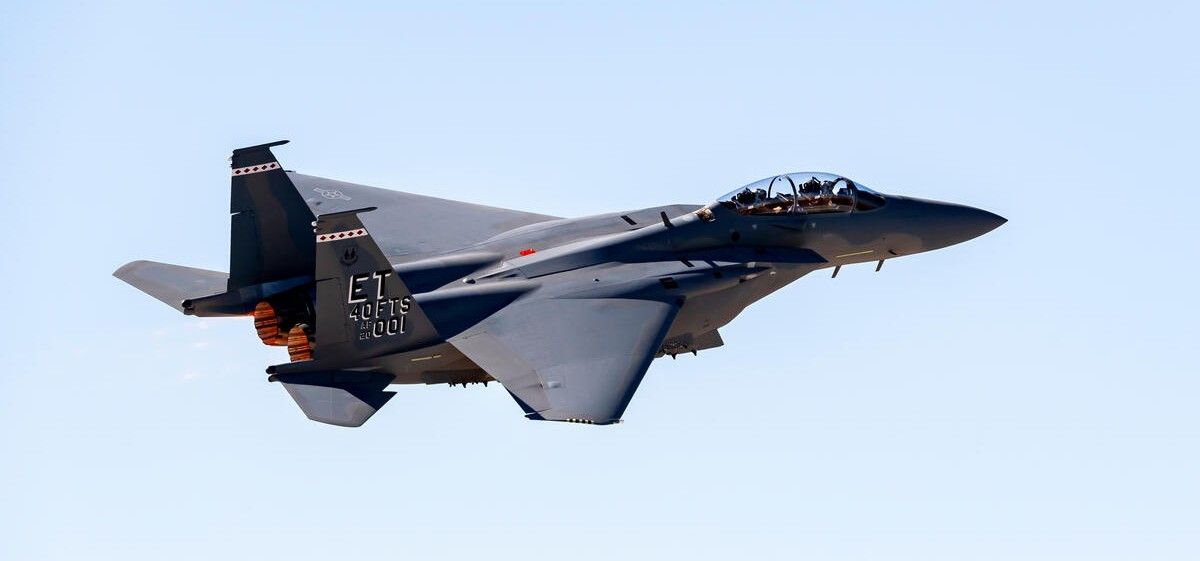
For decades, European capitals have competed to secure the status of Washington’s most valued partner. The UK has long claimed pole position, Germany leveraged its economic clout and U.S. troop presence, while France oscillated between ambivalence and respect. Recently, even Finland entered the race with President Stubb’s rhetorical skills and symbolic gestures. Poland, too, has pursued this ambition since 1989, underscoring shared history, common priorities in countering Russia, and a deep societal affinity for America. Yet these efforts often sparked tensions, with Paris and Berlin branding Warsaw as „America’s Trojan horse” — a term unfair but telling of transatlantic frictions.
September 2025 marked a breakthrough. President Karol Nawrocki’s visit to the White House brought warm words from Donald Trump, a pledge not to reduce the U.S. military footprint in Poland, and an invitation to the 2026 G20 summit in Miami. Nawrocki was treated with unusual courtesy, in stark contrast to Trump’s often turbulent exchanges with other leaders. This signals potential for a strong personal bond, which could elevate Poland’s standing on the global stage. Still, Warsaw must balance its rock-solid ties with Washington against sensitive relations in Europe. The „Trojan horse” label lingers, and the pursuit of America’s Most Valuable Ally status comes with a price.
If you would like to receive this newsletter, please sign up by clicking.
East Front News is a weekly newsletter and article on Defence24.com summarizing the past week’s most important events concerning security and the situation in the Central and Eastern Europe region. It includes original opinions and comments, along with key news items significant from a Polish perspective.


