- WIADOMOŚCI
From Loara to San. What makes up the Polish C-UAS system?

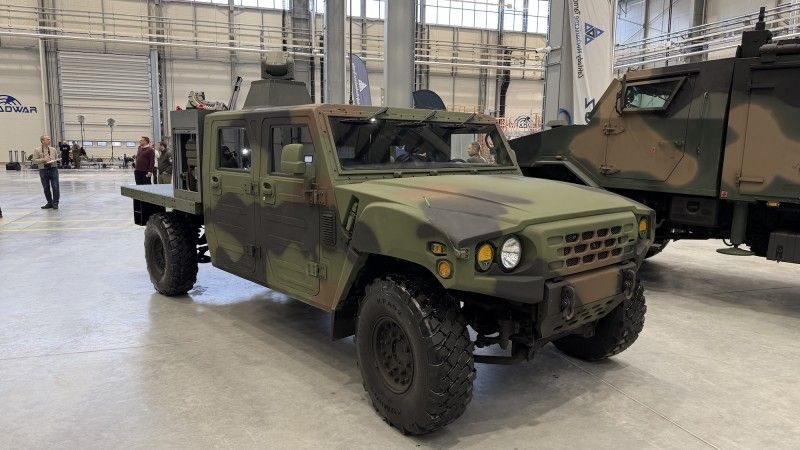
Photo. Tomasz Głowacki/Defence24.pl
On 30th January, in the presence of Prime Minister Donald Tusk and Deputy Prime Minister and Minister of Defense Władysław Kosiniak-Kamysz, a contract was signed for the delivery of the San anti-drone system.
Both the Prime Minister and Deputy Prime Minister emphasized that this is the largest system of its kind in Europe, being implemented faster than in NATO countries and with significant export potential. Deputy Prime Minister Kosiniak-Kamysz noted that, during a NATO Military Committee meeting, relevant information had already been presented to allies, generating interest.

Photo. Tomasz Głowacki/Defence24.pl
Prime Minister Donald Tusk added that the involvement of Kongsberg is no coincidence, as cooperation with Norway—similar to the earlier collaboration on submarines with Sweden—is part of a new security architecture in the Baltic Sea region. This architecture had been previously conceptualized under the leadership of the Minister of National Defence.
On the industrial side, the main contractors, alongside PGZ SA and Kongsberg (consortium members) and APS (described by the MoD as a key subcontractor for the consortium), will include:
- PIT-Radwar
- ZM Tarnów
- Rosomak SA
- Jelcz
- HSW
- Mesko
- Transbit (comms suite).
What Does San Consist Of?
What are the San system elements?
The first element is the command system, provided by Advanced Protection Systems SA (APS). It will be the SanView C2 solution, allowing both fire control and system management integration, as well as tactical situational awareness. APS, a well-known Polish manufacturer of counter-UAS systems operational in Ukraine and the Middle East, will integrate all components.
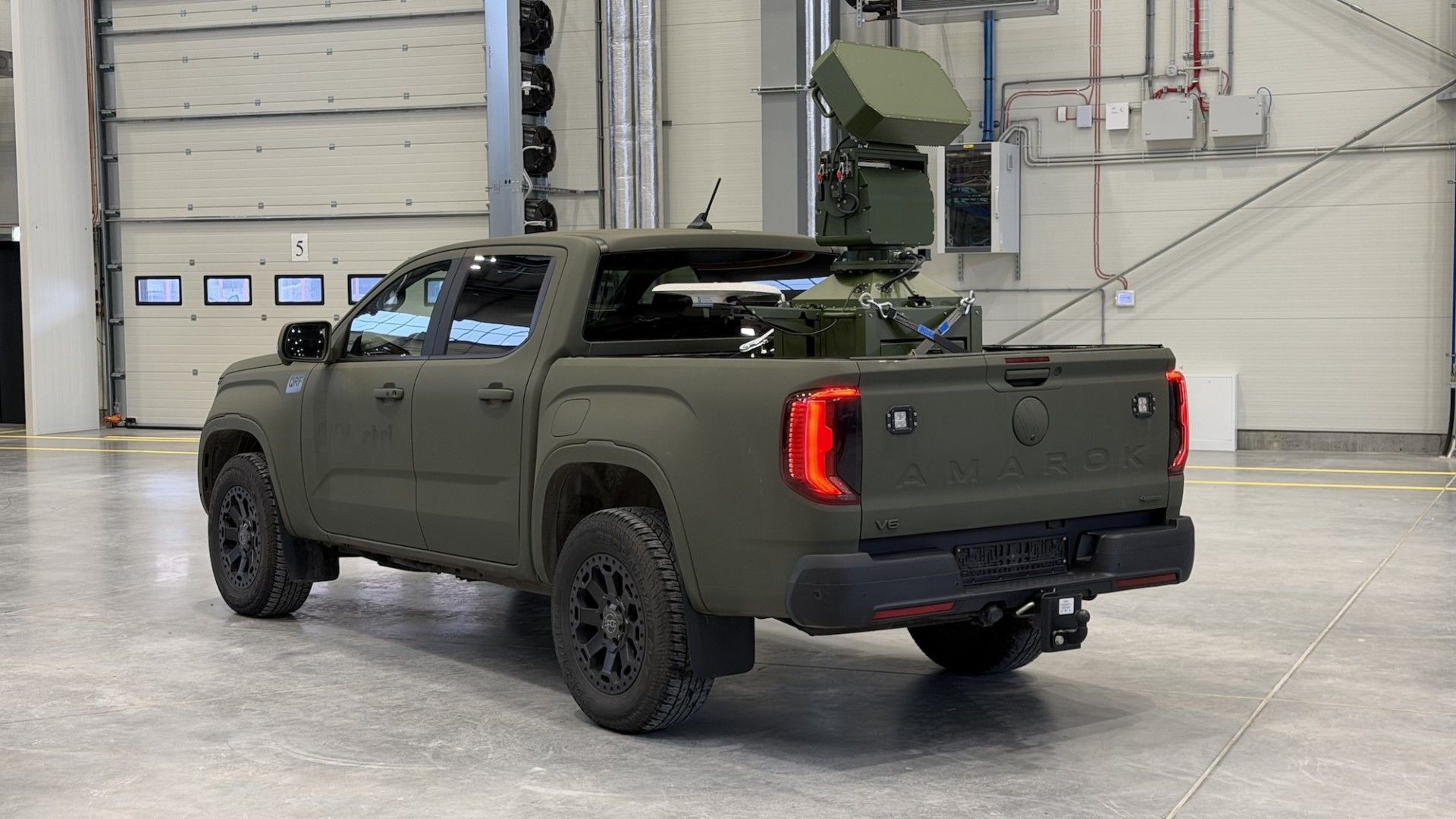
Photo. Tomasz Głowacki / Defence24.pl
For radars, the system will include two types of Polish radar stations: FieldCTRL Ultra and FieldCTRL Follow, as well as, at the battery level, Weibel radars. This will allow for comprehensive tactical situational awareness. It will be supplemented by passive electronic sensors (detecting drone communications) and, of course, electro-optical systems.
San will feature a full range of anti-drone effectors, including:Laser-guided APKWS missiles modified from 70 mm unguided rocket ammunition. In some cases, they can serve as a cheaper alternative to expensive anti-aircraft missiles.
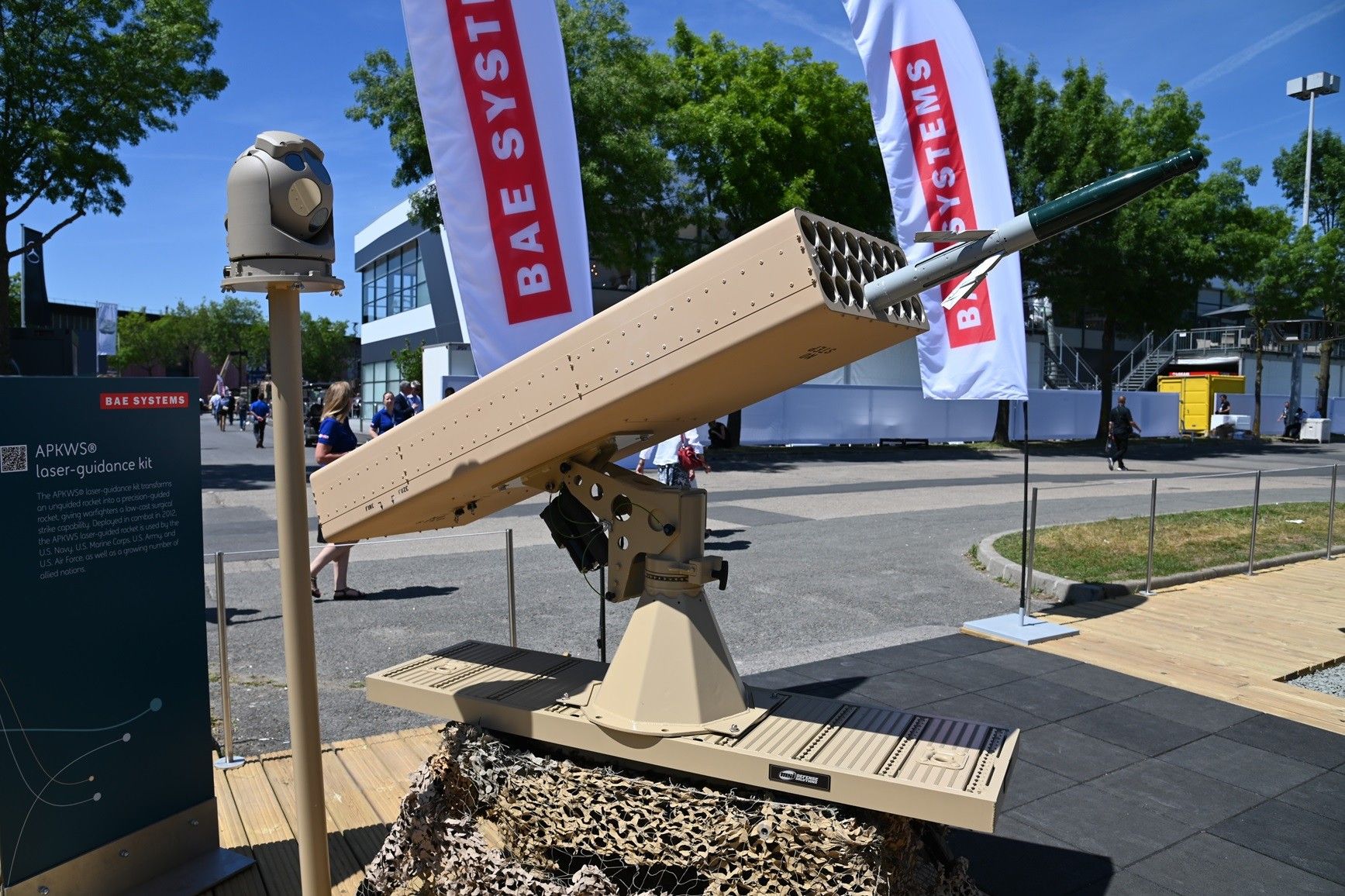
Photo. M.Dura
APKWS laser-guided missiles. These laser-guided APKWS missiles, with a range of several kilometers, are used to combat Shahed-class drones both in Ukraine and the Middle East. They can be deployed from ground platforms (as in San), naval platforms, as well as aircraft and helicopters. Notably, integration with Polish F-16s was announced in an interview with Defence24.pl by Brigadier General pilot Ireneusz Nowak, Deputy Commander of the Polish Armed Forces General Command.

Photo. Tomasz Głowacki/Defence24.pl
35 mm cannons. The San system’s fire modules will use Polish SA-35 cannons, capable of firing both sub-caliber rounds (longer range and higher muzzle velocity) and programmable ammunition. The system is based on a naval cannon developed for Kormoran II and Miecznik ships, itself an evolution of equipment licensed to Poland in the 1990s under the Loara program. According to the manufacturer, it can engage targets up to 3.5 km in altitude and 3–5.5 km in range, depending on the target.

Photo. Jarosław Ciślak/Defence24.pl
30 mm Cannons Another artillery effector will be Bushmaster II cannons, adapted for programmable ammunition, known from Rosomak vehicles with ZSSW turrets and Borsuk IFVs. These will be integrated into Kongsberg combat modules, capable of engaging targets at over 2 km.
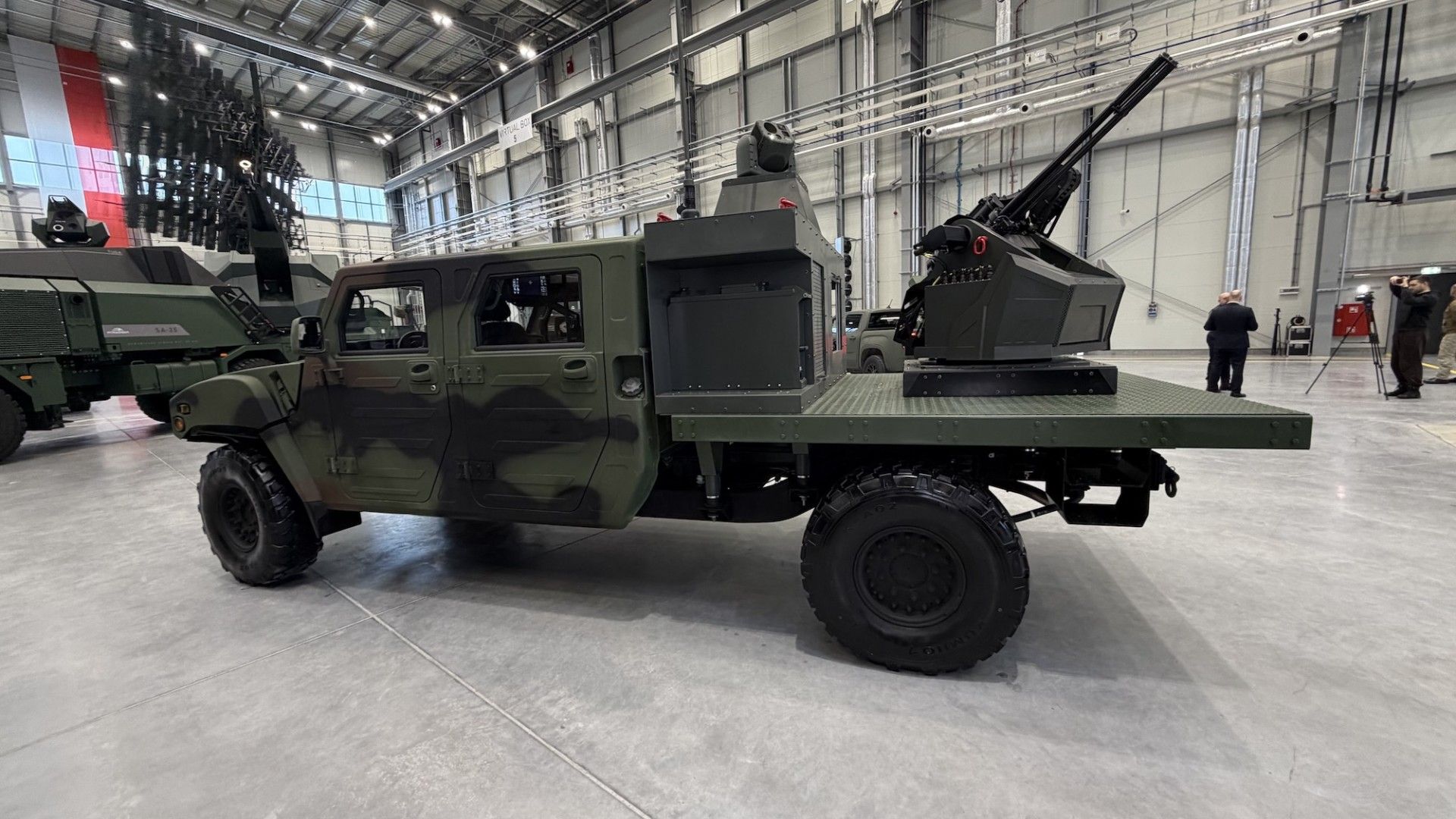
Photo. Tomasz Głowacki/Defence24.pl
WLKM Machine Guns. Among the firepower will also be WLKM 12.7 mm heavy machine guns produced by ZM Tarnów. This domestic design, refined over several years, can fire up to 3,600 rounds per minute. Its effective range is up to 1.5 km against aerial targets and 2 km against ground targets.
Kamikaze drones will be used to counter enemy UAVs in a „drone-versus-drone” role and will be based on MEROPS platforms.
Electronic warfare systems will be used to disrupt enemy drone communications.
Each fire platoon will include: one 35 mm cannon, one 30 mm cannon, a machine gun, an APKWS launcher, a command vehicle, kamikaze drones, radar stations, an electronic warfare vehicle, and an ammunition vehicle.
San will be fully mobile. A support platoon will include: a battery command vehicle (based on Pilica program solutions), Weibel Xenta-M radars (with IFF), artillery and radar workshops, and transport, reconnaissance, and fuel vehicles provided by domestic industry.
The entire San system will comprise 700 vehicles (approximately 40 per battery consisting of four platoons). Of these, around 400 will be Jelcz trucks, and around 300 will be Legwan-based vehicles, produced by Rosomak SA on the Korean KLTV platform.
The San program represents a major investment in anti-drone defense, financed through the European SAFE fund. From the outset, it was planned as a „spiral capability development” program, allowing additional elements to be incorporated over time. Deputy Minister of Defense Cezary Tomczyk confirmed that 60% of the system’s funding goes to the Polish defense industry.
Deputy Chief of the General Staff, General Stanisław Czosnek, told Defence24.pl that the Polish Armed Forces are also interested in counter-UAV systems based on new technologies, including directed energy. Currently, most components are existing systems, but production and integration will be the main challenge.
San is being implemented under the SAFE program. The question remains how well the system will succeed in export markets. Continuous development will be necessary even after deliveries, as drone technologies evolve rapidly. Work on the system accelerated significantly after Russian drones violated Polish airspace in September 2025, although over a year earlier the Armament Agency had presented the KINMA (Kinetic-Nonkinetic Anti-Drone Module) concept.
At that time, it did not receive funding, neither domestic nor from the EDIRPA program. Now, San is being implemented at an accelerated pace, but its purchase is just the first step toward building a comprehensive anti-drone capability for the Polish Armed Forces.