












- ANALIZA
- KOMENTARZ
- OPINIA
- WIADOMOŚCI
Who blinks first? The political limits of Western support for Ukraine

The question is no longer whether Western support for Ukraine will weaken. It’s happening. The only suspense left is the schedule and the geography: Will it be America first, or will some ambitious European leader race to be the statesman who cuts the ribbon on appeasement?
Let’s consider the statistics. In Ukraine, public trust in the United States has declined from 41 percent in late 2024 to 21 percent a year later, based on statistics from the Center for European Policy Analysis. The same trend has been observed in public trust in NATO. While the decline in public support in NATO has not been as dramatic as in the United States, it has been steadily declining nonetheless. In Europe, support for military aid to Ukraine has declined to 65.2 percent, based on the latest survey from Eurofound. This is from a peak of 88 percent in 2022 in support of welcoming Ukrainian refugees. The ground between the two extremes appears to be shrinking. In fact, the percentage of people who think their governments have done too much in helping Ukraine has increased by 7.9 percent since 2024. The broad consensus appears to be breaking down.
Well, the Trump administration has given us a clear answer. In February 2025, military aid was stopped. While not all military aid was stopped, there is still roughly $3.85 billion in drawdown authority, congressionally authorized spending power that technically exists. But since January 20, not a single new shipment has been included in a deal, and that is because the arrangement is quite simple: Ukraine receives military aid if it shows commitment to peace negotiations, which is a nice way of saying a political hostage situation. The Consolidated Appropriations Act of 2026, which was signed into law recently, ends USAID and reduces foreign assistance by an estimated $10 billion this year alone. The reckoning is now at the bureaucratic level, where agencies are closing operations and shifting funding from development to what they call „direct US strategic objectives.”
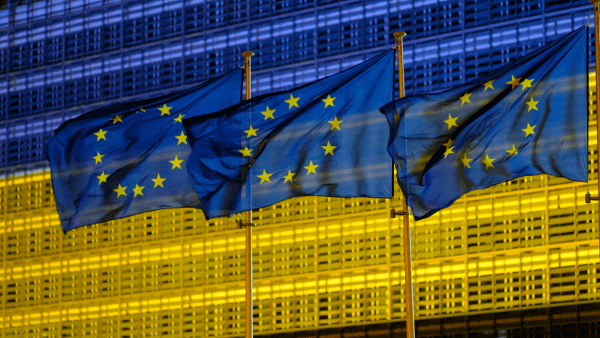
However, it is at this juncture that the narrative has split. Europe has not taken the route America has taken, at least not in the way the latter has envisioned. While Trump was declaring pauses and conditions, the European Union to its own surprise held together. Although the €90 billion support package to Ukraine during 2026-2027 was approved in December 2025 after contentious negotiations, this has been the moment when the European Union has been tempted to falter. Instead, it has mustered the resolve to commit. Though the financing mechanism has to be ingenious, using an untested „enhanced cooperation” mechanism to avoid the situation in which Hungary, Slovakia, and the Czech Republic were to be forced to finance Ukraine directly from their own contributions, the funds were disbursed. Money flows when there is a consensus, however obtained.
So the real fault lines are not between the Atlantic and the Continent, but within Europe itself. And they run precisely where geopolitics and domestic politics collide.
See also 

The Calculus of Abandonment
Let’s be clear about what is actually happening. Fatigue is a feeling. What governments are displaying is calculation. Hungary and Slovakia are not tired of supporting Ukraine in some emotional sense. They are making rational assessments that Ukraine’s dependency on them creates leverage, and that leverage has a price. Hungary’s blocking of the €90 billion loan was explicitly conditional on the resumption of Russian oil transit through the Druzhba pipeline. Slovakia cut diesel supplies for the same reason. When Russia struck the pipeline at Brody in January 2026, Hungary and Slovakia almost immediately retaliated—against Ukraine, not Russia. Viktor Orbán framed this as energy policy. Anyone paying attention understood it as political extortion dressed in regulatory language.
It is here that the story becomes uncomfortable for the capitals in the West who claim to have unwavering support for Ukraine. The principle of unanimity in decision-making in the EU, which was put in place to ensure the protection of national interests, has become a tool through which individual states are holding the entire union hostage. Hungary has the power to withhold a package of sanctions. It has the power to withhold electricity, which will leave Ukraine in a state of summer darkness. It has the power to withhold much-needed funding. And it has the power to do all this from a position of minimal vulnerability since no one is willing to consider Article 7 against it, despite frequent suggestions from Ukrainian commentators and some in Europe.
Here’s the uncomfortable part that nobody in Brussels wants to articulate publicly: If you are Hungary, the leverage is already deployed. If you are Poland or France or Germany, watching Hungary operate with impunity despite explicit hostility to the Western consensus, the lesson is that obstruction pays. The question then becomes: At what point does any government decide the political costs of support exceed the strategic benefits?
The Polling Problem That Nobody Solves
Support for Ukraine is still high in absolute terms. However, it is the trend that is more important than the picture. The research conducted by Eurofound indicated that those who felt that their economic prospects were deteriorating, those who were struggling to make ends meet or were experiencing deprivation, were significantly more likely to withdraw their support for military assistance. In another survey, those who accessed their news through social media platforms reported significantly lower levels of enthusiasm for further deliveries of weapons. These are not small groups of people. With European inflation still above target and energy prices remaining volatile, the political room for further large-scale aid packages is shrinking.
A recent survey carried out by the End of the Century Foundation in 30 countries and 30,000 people found that 69 percent of Europeans oppose sending their countries« troops to Ukraine. Well, good. Nobody in Europe seriously considered sending troops anyway. But the same survey also found that 69 percent oppose „new tranches” to Ukraine. That’s a big number. It suggests that public support for weaponry has reached a kind of ceiling.
Yet here is the paradox that Western policymakers have not adequately explained to their publics: The cost of continued Ukrainian resistance is substantially lower than the cost of Ukrainian collapse. If Ukraine’s defense fails, the military expenditure requirements for European NATO members do not decrease. They multiply. Poland, the Baltics, and potentially others would require permanent garrison-level deployments, military modernization, and the kind of sustained defense spending that makes current support for Ukraine look economical by comparison. But making that argument requires talking about deterrence and long-term security posture, not about Ukrainian gratitude or moral imperative. It is not an argument that polls well.

Who Flinches First?
The conventional response is that it is America under a Trump administration that has made it clear it is skeptical of alliance commitments and assumes that allied countries are freeloading on US security provision. But the Trump pause in military aid is a conditional one, and it is not the same as a final withdrawal. The US has not cut off Ukraine entirely. It has simply used the distribution of aid as a negotiating tool, and it is a disruptive and counterproductive strategy, but it is not a terminal one. Trump wants Ukraine to be sitting at a negotiating table and making concessions over territory. He has not yet signaled he wants them defeated completely.
Europe is in a more constrained position than America, and this is what gives it a reason to stay in its position for a longer period. The EU doesn’t have a strategic option where it doesn’t include Ukraine’s immediate neighborhood in its security considerations. As long as Hungary and Slovakia can be handled through technical workarounds and, from time to time, a diplomatic concession, it can continue to present a façade of unity, where countries like Poland can drive policy.
However, watch Italy. Matteo Salvini’s League party has always been skeptical about continued military aid. Italy’s new administration under Giorgia Meloni has been supportive, but space is opening for a narrative of accommodation-seeking behavior. France is committed but increasingly concerned with redefining its own concept of European strategic autonomy from the United States. This could mean a level of skepticism towards open-ended commitment to a conflict many in France perceive as adjacent to America, rather than Europe itself.
These are not nations poised to defect, but rather a situation worth keeping an eye on.
The real weakness is at the level of domestic politics. How long can democracies sustain a commitment to foreign wars, which require high expenditures and have no end in sight, in a time of inflation, housing crises, and immigration pressures at home? German voters have been willing to spend lavishly on defense, but that is defense spending for NATO and German rearmament, not for Ukraine. There is a difference between those two.

The Uncomfortable Timeline
Trump’s stated objective is peace negotiations. This is not a euphemism for victory on Ukrainian terms. It is a euphemism for a settlement that ends the conflict, likely involving territorial concessions and security guarantees that neither Russia nor Ukraine particularly trusts. The question is whether he can force such a settlement before his leverage erodes, and his leverage is substantially dependent on maintaining the threat of abandonment.
It is at this juncture that the calculation becomes seriously hazardous. If the Ukrainians believe that the Americans will not respect their commitment to resume large-scale military support, then the calculations of negotiating from weakness apply. If the Europeans believe that Washington is seriously disengaging from Ukraine, they have to consider whether European support will suffice to carry the resistance in Ukraine. The data suggests it will: European support increased by 67 percent over 2022-2024 averages in 2025 despite the US pause. Of course, it is also true that Ukraine needs US support in terms of intelligence support, satellite communications through Starlink, and advanced missile capabilities. So, European support will not suffice to make up for US disengagement.
This is the temporal trap.The threat of abandonment by the Trump administration is most credible in the short term but becomes less so over time if no follow-through occurs. If Ukraine makes it through the summer of 2026 without a negotiated settlement and continues to have military viability through European support, then the credibility of Trump’s threat decreases. At this point, the administration will either choose a new posture or bluff again.

What Fatigue Actually Means
The term „war fatigue” is used loosely by analysts to describe declining support. It is imprecise. What the data actually shows is shifting calculations at the mass level—people weighing moral, strategic, and economic costs differently as the conflict persists. Some proportion of Western publics will never abandon Ukraine. Another proportion views continued support as economically irrational. A significant middle remains persuadable depending on how governments frame the commitment and whether near-term progress becomes visible.
The threat is not that it would spread across the West. The threat is that it would appear in certain countries at certain times. And that would be an opportunity for certain governments to pull out. We are already seeing it happen in Hungary, but that was a country in relative weakness. A country like France, or Germany, or even Italy, deciding that the domestic cost of continuing support outweighed the strategic gain would see the domino effect happen quickly, not because of fatigue, but because it would be politically acceptable for them to stop supporting it overnight.
This is the scenario European leaders face: maintaining public consensus for a conflict that does not directly threaten European territory, that has no clear endpoint, and that competes with domestic priorities that voters view as urgent. The fact that this consensus remains intact four years into the war suggests more resilience than the doom-saying suggests. But that resilience is not infinite. It is stored in accounts that are being drawn down with each passing month.
The real question is not whether the West will abandon Ukraine, but whether it will do so together as a coordinated policy or piecemeal as domestic politics in various capitals dictates. The former scenario would be cleaner and would allow for some negotiated framework. The latter scenario, which is increasingly likely, is messier and establishes the conditions for a prolonged instability in which Ukraine and Russia will not achieve a clear victory, but will suffer from levels of attrition that are unsustainable.
For now, Europe holds. America administers conditional punishment through aid withholding. The question is whether this posture can survive contact with reality over the next twelve months. The data suggests it cannot, but neither the American nor European approach has yet fully reckoned with what comes after the current framework fails.
Who flinches first? Probably whoever faces the domestic political consequence first. In democracies, that is usually the government that forgets to make the strategic case to its own voters about why the investment matters.


