












- WIADOMOŚCI
- ANALIZA
The priorities of Washington’s foreign policy

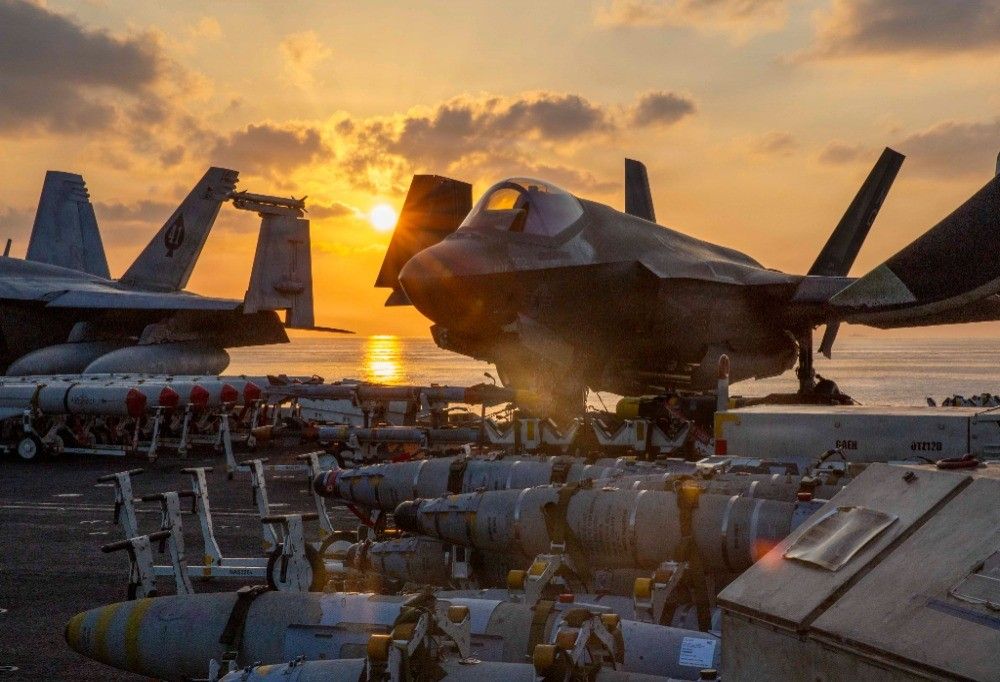
Rising tensions in Iran direct the attention of the United States toward the Middle East. Although rivalry with China remains a key reference point for Washington, the growing number of parallel crises results in an increased dispersion of resources. Consequently, both the U.S. priorities and expectations toward its allies shift.
Is the operation against Iran an example of controlled escalation?
The initial goal of „Operation Epic Fury” was clear. It was intended to be a rapid and limited operation demonstrating the strength of the United States toward Iran. In reality, however, some of Iran’s capabilities were underestimated.
Subsequently, the notion of a controlled escalation is gaining growing traction within American decision-making circles. The controlled escalation is supposed to consist of intensified strikes lasting for one or two weeks, followed by a scaling down of operations and a declaration of political success. This way, Washington could maintain an image of effectiveness without becoming involved in a protracted war.
China as a constant point of reference
Beyond the tense situation in Iran, rivalry with China remains one of the main reference points for U.S. foreign policy. Although competition with Beijing is primarily economic and technological, its geopolitical dimension is increasingly emphasised.
In Washington, there is also a growing belief that many European partners still underestimate the scale of Chinese influence in Europe and its potential consequences.
America First or America Alone?
The slogan „America First” remains a key component of the current administration’s policy. However, concerns are increasingly being raised in U.S. strategic debates that this approach could evolve into a policy of „America Alone,” which is why Washington expects greater engagement from its allies in the Middle East and in managing regional crises.
Differences in the approaches of partners are visible. The United Kingdom is perceived as relatively less active in the current crisis. At the same time, France has clearly increased its diplomatic and military activity, seeking to strengthen its position as one of the United States« key partners in the region.
Due to the growing U.S. engagement in the Middle East, the issue of Ukraine has recently moved further down the agenda. The negotiations are formally suspended, and the topic appears far less frequently in Washington’s political discussions today than it did just a few months ago.

Polish-American relations: a partnership with strong stability and potential
For Poland, relations with the United States remain relatively stable. Cooperation within the SAFE program is on the agenda, and the development of defence cooperation and the continued presence of U.S. troops on Polish territory remain vital. At this stage, there are no signals indicating a planned reduction of American forces in the region.
At the same time, interest in Washington is growing regarding Poland’s future role within the European Union. American decision-makers are observing how Warsaw will position itself within European structures and what role it will play in debates on the future of European security policy.
What does the hierarchy of U.S. priorities look like today?
The main priorities of U.S. policy are clearly delineated. Domestic matters and national interests come first, particularly in the context of the upcoming midterm elections, including issues such as migration and economic policy.
The most important foreign policy issues relate to South America, the Middle East, and the rivalry with China. Depending on the development of the international situation, the broader Indo-Pacific region may also play an increasingly important role.
A natural consequence of this list of priorities is that Central and Eastern Europe, including Ukraine, currently ranks significantly lower. At the same time, the topic of Belarus is gradually returning to the U.S. agenda and may appear in the context of future negotiations with Russia.

Washington is at a strategic crossroads
The United States currently faces a complex strategic moment. The growing number of parallel challenges makes it increasingly difficult for Washington to manage allied relations and build a sustainable strategy across multiple regions simultaneously.
Nonetheless, significant political and military resources still provide Washington with tools for effectively managing these tensions. The extent to which they will be used, however, remains an open question.
Author: Dr. Aleksander Olech\ Analytical Support: Karolina Kisie


