












- WIADOMOŚCI
France’s controversial arms exports to Serbia and Croatia

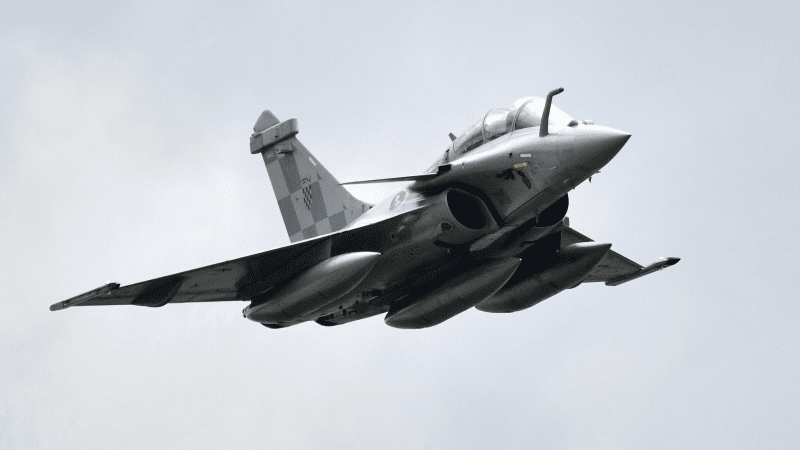
France controversially sells advanced weapons to both Croatia and Serbia, despite Serbia’s close ties to Russia and its differing alignment with Europe.
Serbia and Russia's historical friendship
Relations between Serbia and France are historically particularly close. During the First World War, France was a key ally of Serbia. In 1915, it supported the evacuation and reorganization of Serbian troops to Albania and Corfu, and Serbian units later fought alongside French troops on the Salonika Front. This solidarity is still commemorated today by the „Thanks to France” monument in Belgrade (1930.
Politically, the Yugoslav monarchy was clearly oriented towards France, which supported the young state militarily and diplomatically. Overall, these historical ties reflect a multifaceted, long-standing friendship. After the collapse of Yugoslavia and the socialist system, which had been generally reserved towards the West, Serbia and France purposefully renewed their relations.

Resumption of close political and economic relations after Serbian independence
The institutional basis of today’s relations is the Strategic Partnership and Cooperation Agreement of April 8, 2011. It structures political dialogue and cooperation in economics, science, culture, and security, and explicitly includes support for Serbia’s EU integration process as well as coordination on Western Balkan issues. Political exchanges take place regularly at the presidential, government, and foreign ministerial levels; France is considered an active supporter of Serbia on its path to European integration.
On July 15, 2019, during President Emmanuel Macron’s visit to Serbia, a total of 22 bilateral documents were signed at the Palace of Serbia, including five agreements in the field of defence and military technology.
A key element was a framework agreement with MBDA for the procurement of the Mistral 3 short-range air defence system and its integration into the Serbian Pasars system. In addition, a technical procurement agreement was concluded between the two defence ministries, along with Memoranda of Understanding with Thales (Air defence radars), Safran (Military navigation systems), and other industrial partners. These agreements demonstrate operational, industry-supported defence cooperation at the governmental level.
Economically, France is a significant partner and investor: French companies are heavily involved in infrastructure, energy, waste management, logistics, and industry. Vinci Airports operates Belgrade Airport under a long-term concession. According to current figures, bilateral trade reaches almost USD 2 billion annually.

Arms exports continue despite controversial ties to Moscow and threats in the region
The most significant recent step in Franco-Serbian security policy is Serbia’s purchase of 12 Dassault Rafale fighter jets.
Presidents Vučić and Macron signed the procurement contract in August 2024. The contract is worth approximately €2.7 billion (ca. US$3 billion). The delivery includes nine single-seat Rafale C and three two-seat Rafale B aircraft, all built to the latest F4 standard, along with a logistics package, spare parts, and engines. Delivery is currently scheduled for the period between 2026 and 2029, depending on Dassault’s production plans.
The deal is considered Serbia’s largest arms contract since 2006 and marks the strategic modernization of the air force, moving away from older MiG-29 systems and a deliberate diversification of procurement. France viewed the sale as a geopolitical signal of Serbia’s stronger European integration; Belgrade emphasized that no technology would be transferred to Russia.
The ordered Rafale F4 is the latest development stage of the French multirole fighter jet (4.5 generation). It features advanced sensor fusion, modern electronic warfare capabilities, improved networking and data link capabilities, enhanced self-protection systems, and the integration of modern precision-guided weapons. Typical combat ranges—depending on the profile—exceed 1,800 km with external fuel tanks. Furthermore, French radar and sensor components were previously procured for the Serbian armed forces, further underscoring the technical depth of defence cooperation.

Delivery of identical weapon systems to NATO and EU member Croatia
In November 2021, Croatia signed a contract with France for the acquisition of 12 Dassault Rafale multirole fighter jets, thus initiating the largest modernization of its air force since independence.
The procurement volume is approximately €1.1 billion and includes aircraft, weapons, simulators, training, spare parts, ground systems, and a multi-year support and maintenance package. The aircraft supplied were used models from the French Aerospace Forces« inventory, built to the F3-R standard. Delivery took place in stages from 2024 to 2025, meaning Croatia now has a full 12-jet squadron. The Rafale replaces the MiG-21 and restores Croatia’s comprehensive national air defence and interception capabilities. Strategically, the deployment improves NATO interoperability and independent deterrence and response capabilities in the Adriatic-Southeast European region; the fleet is designed for operation until the early 2050s.
Deepening Croatia-France security cooperation
Beyond combat aircraft, Croatia has expanded its cooperation with France to include key land and air defence capabilities. The procurement of 18 CAESAR 6×6 MkII 155 mm self-propelled has been contractually agreed upon. In addition to the 18 systems, the package includes fire control, radar, command and control, and support infrastructure, and serves the NATO-standardized modernization of field artillery.
Within the same program corridor, Croatia is ordering 15 protected VBMR-L „Serval” multi-purpose vehicles, intended for troop transport, fire control and observation, as well as digitally networked combat support to increase the mobility and command capability of its artillery forces.
In ground-based air defence, Croatia is acquiring French Mistral 3 short-range air defence systems to protect against low-flying threats such as fighter jets, helicopters, and drones; the delivery is planned as part of the ongoing modernization cycle. The added value would lie in extending the range of the Mistral system and in technological synergies with the Rafale fleet through shared missile families and improved system interoperability.
See also 

Geopolitical significance of French Arms deliveries in the region
France’s arms sales to Croatia and Serbia raise questions in Europe. Economically, they can be explained as legitimate actions to support their own defence industry, but from a security policy perspective, they are highly problematic.
Serbia is the only EU accession candidate that does not participate in sanctions against Russia and consistently emphasizes its military neutrality, while participating in and cooperating with NATO’s Partnership for Peace (PfP) program. At the same time, Serbia is conducting military training with Russian troops under the „Slavic Brotherhood” program, cooperating with Russian intelligence services, and receiving support from Moscow to secure influence in Kosovo, Bosnia and Herzegovina, and Montenegro.
President Aleksandar Vučić continues to fuel unrest in the region, sometimes through indirect military threats against Kosovo. In Bosnia and Herzegovina, he is using the Serb-majority Republika Srpska to further consolidate Serbian influence and indirectly supporting Russia’s interests in Europe by creating potential conflict zones. The same applies to Montenegro, where Russian-Serbian destabilization attempts were suspected during the 2016 and 2022 elections, with the aim of delaying EU accession or exerting political influence, since NATO membership could not be prevented.
Serbia committed itself in the contract for the delivery of the Rafale jets not to disclose any technical details to Russia; the mere mention of the clause should have prompted precautionary measures, so that the French behaviour (especially considering that Serbia also cooperates closely with China militarily) raises security policy questions.
The Croatian government is reacting professionally and diplomatically and continues to integrate its weapons systems into NATO structures, including through French systems, in order to reduce its dependence on US deliveries. It remains unfazed by France’s offer to supply Serbia with the same systems and only commented that France has the right to sell its weapons systems to whomever it chooses. Additionally, a memorandum of understanding was signed to modernize the aircraft to the F4 standard, improving connectivity, sensor technology, self-protection systems, and weapons integration; a final technical schedule has not yet been published.
France effectively benefits twice: first from the original sale of the jets, and now from the investment in upgrading the Croatian Rafale F3 fleet to the F4 standard, bringing these aircraft to the technical level of future Serbian jets.
At the same time, the Croatian government emphasizes the superiority of its own jets, citing their full integration into NATO information and logistics networks. From a Croatian perspective, the sale is debatable, as France, also an EU and NATO member, will immediately supply the same jets to a former enemy in war, which continues to create tensions in the region, immediately after delivering Rafale systems to Croatia. However, the country appears unmoved by this at least questionable sale.
Interestingly, at the signing of the Rafale deal in Zagreb in November 2021, French President Emmanuel Macron explicitly reaffirmed his support for Croatia’s Schengen accession and Eurozone ambitions. He praised Croatia’s organization of its external borders and its ability to prevent smuggling, and declared that France, during its EU Council Presidency, would advocate for a reform of the Schengen regime and support Croatia in this process.
When the Rafale delivery contracts to Serbia were ratified in 2024, Macron also strongly endorsed Serbia’s EU candidacy. The fact that these political pronouncements were made in both countries precisely at the signing of the arms contracts is open to interpretation.
Aleksandar Vučić is the last active politician from the time of the independence wars and shaped the 1990s with nationalist political rhetoric, serving as a minister under Slobodan Milošević; currently, he heads a centralized government system that is criticized by the EU for democratic deficits, corruption, and mismanagement, underscored by the unrest and protests of his own population that have been ongoing since November 2024.
On October 22, 2025, Brussels dealt the Vučić government its hardest blow to date. The European Parliament adopted the strongest resolution against Serbia since the start of the country’s EU accession process – a political signal of rare clarity. In unusually direct language, the regime in Belgrade was accused of brutally suppressing protests, intimidating the media, and deliberately undermining democratic institutions. France, which endorsed this declaration, has shown no intention of halting arms deliveries, thus contradicting official EU policy.
It should be noted that, at present, no EU or NATO member state other than France is supplying weapons systems to Serbia. Although Serbia operates Airbus C-295 transport aircraft, H125M helicopters, and HMMWVs from older U.S. inventories, these are primarily logistics and utility platforms rather than frontline weapons systems.

Future perspectives of Franco-Serbian cooperation
A look at existing and potential future arms and defence relations between France and Serbia reveals an asymmetrical picture. On the French side, it is not expected that Paris will develop an interest in Serbian defence systems. France’s defence industry is largely self-sufficient and relies on its own product lines, making the export of Serbian systems to France strategically uninteresting.
Serbia now also produces the majority of its weapons systems; since these are inferior to the French ones, a transfer is highly unlikely. The main point of contention is Serbia’s air defence, which requires modernization and for which Serbia currently lacks modern systems of its own, setting the stage for ongoing cooperation.
Given this context, Serbia could consider acquiring further French air defence components beyond the purchase of Rafale fighter jets to complete its national air defence system. In particular, French air-to-air missiles such as the medium-range MICA (VL/IR) or the long-range Meteor air-to-air missile, which is compatible with the Rafale and has a significantly greater range than standard MICA variants, would be a viable option. This would considerably improve the protection and effectiveness of the Serbian Air Force. Combined with the Mistral systems and radar installations already delivered, these could support the development of an integrated air defence network.
In parallel, Serbia has modernized its ground-based air defence system in recent years using other sources: As early as 2022, Belgrade introduced the Chinese FK-3 air defence system, the export version of the medium- to long-range Chinese HQ-22 system. This system is operated by the Serbian air defence as its own medium- to long-range air defence component, capable of engaging aircraft, drones, cruise missiles, and other aerial targets at ranges of approximately 100–150 kilometres, and is often compared to Western systems such as the US Patriot or the Russian S-300 family. France currently does not possess any long-range air defence systems of its own that it could offer Serbia.
A potentially larger project, which is currently still financially out of reach, is the potential modernization of its tank fleet: Serbia currently relies on the M-84 models, based on old Russian T 72s, but could theoretically consider the Leclerc or similar modern main battle tanks in the future – however, this remains speculative at the present time.
From a political perspective, a Serbian decision to adopt French intermediate-range missiles and the Meteor long-range missile could lead to stronger French support for Serbian EU integration, with President Emmanuel Macron playing a particularly active role. However, whether the European Union would allow this is questionable, given that President Aleksandar Vučić, who, through his rapprochement with France, also seeks to secure his political survival, as his autocratic rule and close ties to Russia have increasingly isolated him within the rest of the EU. Such French support is more likely to be granted to a new, more liberal serbian government.

Strategic Implications: Structural reorientation, Technological risks, and Regional consequences
The Rafale deal with Serbia represents far more than a conventional arms purchase. It creates a long-term structural dependency on France, encompassing pilot training, maintenance, software support, weapons integration, and system upgrades over the aircraft’s 30–40-year service life, as has already been achieved with Croatia.
This gradually shifts the Serbian Air Force away from its historical reliance on Russian platforms and integrates key elements of its military aviation into a Western technological ecosystem. France is thus positioning itself as a permanent external security actor in the modernization of the Serbian armed forces and gaining lasting influence over their operational and technological development. At the same time, the deal can be understood as a strategic investment in the future: France secures a privileged position within Serbia’s defence architecture early on, in anticipation of possible future EU and potential NATO integration, thus consolidating its long-term influence even before a deeper institutional connection is established.
At the same time, the delivery of one of Europe’s most advanced fighter jets to a militarily neutral state closely connected to Russia introduces clear technological risks. To operate the Rafale effectively, Serbia will require deep access to sensitive maintenance procedures, operational data, and classified system architectures. Serbia’s ongoing institutional and operational ties to Russian defence and intelligence agencies raise the risk that Russia could, intentionally or unintentionally, gain knowledge of the Rafale’s technical capabilities, maintenance practices, or system vulnerabilities. The contract’s explicit prohibition on technology transfer highlights the seriousness of this risk.
Furthermore, France’s decision could have unintended strategic consequences for NATO and EU member states in Southeast Europe. Croatia, Albania, Kosovo, and later Slovenia, separately with Croatia, have recently intensified their defence cooperation through new military coordination agreements to strengthen regional interoperability and collective security in the face of ongoing instability and perceived Serbian military assertiveness. For Albania and Kosovo, Serbia remains the primary security threat.
The simultaneous delivery of identical high-performance fighter jets to NATO members and an unaligned regional rival could undermine France’s credibility as a reliable and strategically predictable defence partner in the eyes of these states, especially since the treaty explicitly provides for the joint procurement of new weapons systems. This dynamic can also directly influence current and future procurement decisions. Croatia is currently trying to close critical gaps in its medium- and long-range air defence, particularly against missile and drone threats. While French systems such as the VL MICA NG are still under review, no binding decision has been made. The parallel French modernization of Serbia could now shift Croatia’s procurement calculations toward alternative suppliers such as Germany’s IRIS-T SLM or the US Patriot system, which would both strengthen Croatia’s NATO integration and avoid dependence on a single supplier who is simultaneously bolstering the Serbian air force. The purchase of Leopard 2A8 main battle tanks has already been signed, although Leclerc tanks were also being considered after the Rafale purchase; possibly an initial reaction to the Rafale delivery to Serbia.
Similar reassessments could occur in Slovenia (which recently opted for the IRIS-T SLM system as well as Italian Leonardo AW139M attack helicopters and C-27J Spartan transport aircraft) and Albania, which has already purchased the Javelin ATGM system and UH-60 Black Hawk helicopters from the United States, as well as in Kosovo, which operates armoured vehicles such as the M1117 Guardian and HMMWVs.
In the long term, these developments could weaken France’s defence and industrial position in NATO-aligned states of Southeast Europe, especially since Albania and Kosovo already host large American military bases (Kuçova and Camp Bondsteel, and the sale of French weapons systems to Serbia has certainly reinforced strategic concerns in both countries.
At the political level, the Rafale sale is creating tensions within the European Union’s external framework. Serbia, as mentioned above, faces ongoing criticism from EU institutions regarding democratic backsliding, media restrictions, and governance deficits. France’s decision to supply one of Europe’s most advanced weapons systems under these circumstances threatens to undermine the coherence and credibility of the EU’s common foreign and security policy and reveals a contradiction between the EU’s political conditionality and the bilateral strategic and industrial interests of individual member states.
A similar tension can be observed in the case of the French company S&D Sucden (employing around 4,000 people), officially operating as a sugar factory in Russia. The company produces corn, sunflower, and primarily sugar and wheat, with 15 branches in the country. It supplies the Russian army not only with camouflage nets but also with the machines to produce them, frontline vehicles, and additionally finances high-tech equipment for the troops. All of this is reported by the Franco-German broadcaster Arte on the 17th of February 2026, illustrating again how commercial and strategic interests of individual actors can conflict with broader European foreign policy objectives.
The Rafale transfer is therefore not a purely commercial transaction, but a strategic manoeuvre that secures French influence in the security landscape of Southeast Europe, which is partly reorienting itself towards Russia, and will shape regional military orientation and political relations for decades to come; The crucial question, however, is whether France has done itself a favour by selling to Serbia or whether it has closed itself off in the long term to other markets in Southeast Europe, which view Serbia as the greatest regional threat.
Author: Eduard Vasilj


