












- WIADOMOŚCI
- KOMENTARZ
100s of Rafale, Gripen and Viper for Ukraine? One common factor

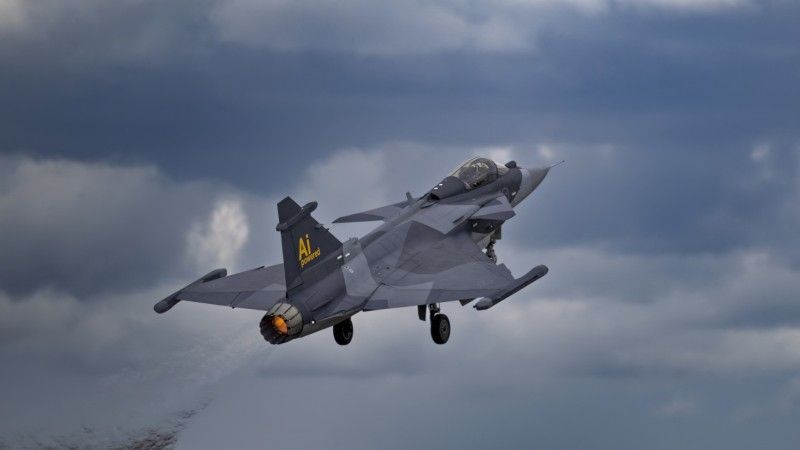
Photo. Saab
The understandings that Ukraine has been signing with various aircraft manufacturers from France, Sweden and US can help the Armed Forces of Ukraine, but in the long term. While those are different companies and supporting countries in Ukraine, all those agreements have one thing in common.
Last several weeks are full of announcement regarding the procurement of fixed- and rotary wing aircraft for Ukraine. First, on 20 October, a Letter of Intent was signed between delegates from Bell Textron, the Ministry of Economy, Ecology, and Agriculture of Ukraine, and UkraineInvestd. The purpose of the document is, according to official statement of Bell, to „assess approaches of Industrial Cooperation as part of a potential procurement of the AH-1Z and UH-1Y aircraft”.
Viper
Bell could provide AH-1Z Viper attack helicopters as well as UH-1Y Venom armed multi-role helicopters to Ukraine within the Foreign Military Sales project. Whether newly produced or provided from US Marine Corps surplus, those aircraft could significantly augument the defence of Ukraine, replacing reliable but worn out and obsolete Mi-8/17 and Mi-24 helicopters.
While both sides agreed on an intent to procure helicopters, the procurement was not yet finalized, neither a financing basis for the procurement. It is worth adding that the Viper/Venom family is already used in Europe by Czechia. The first procurement contract for 4 AH-1Zs and 8 UH-1Ys was signed in 2019, and the deliveries took place in 2023-2024. The delivery of further Venoms and Vipers that Prague requested in 2022 after having provided a number of its Mi-24/35 to Ukraine has been delayed and has not yet taken place.
Thus, absent a „drawdown” – an accelerated delivery of aircraft right from the stocks of US Marine Corps, which is very unlikely and was not a subject of the agreement with Boeing – we have to assume that the delivery timeframe would amount to several years. Thus, the potential deal with Bell may improve the situation of the Armed Forces of Ukraine, but only in the long term. Until that time, Kyiv has to count mainly on its existing helicopter force, comprising mainly of post-Soviet platforms. The UH-60A Black Hawk of the Defence Intelligence of Ukraine, as well as German-donated Sea Kings may be an exception, but they are unfortunately not present in large numbers.
See also 
Gripen...
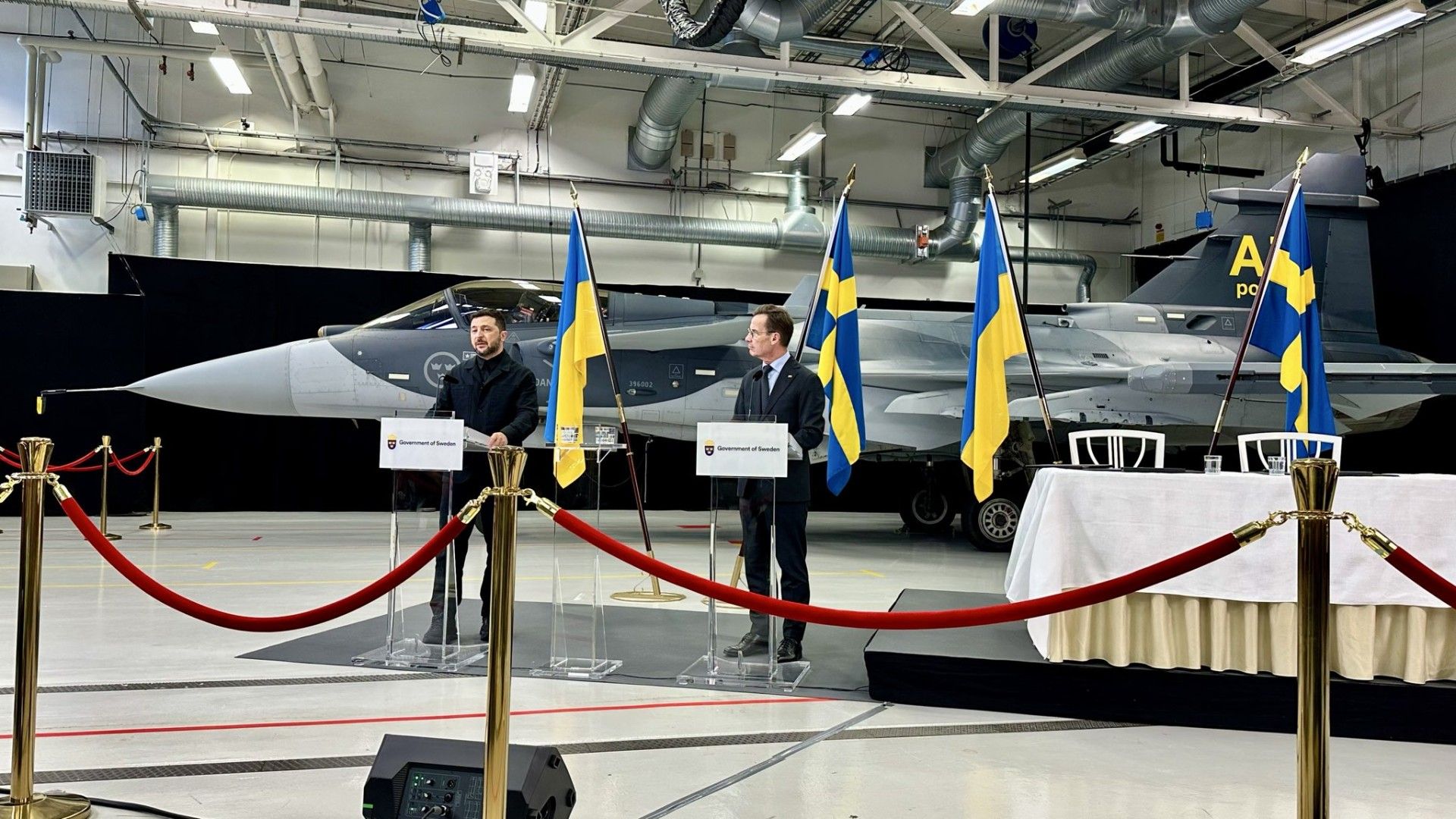
Just two days later, and at much higher government level, Ukrainian President Volodymyr Zelensky has signed another Letter of Intent, this time with Swedish Prime Minister Ulf Kristersson. The LOI is considering information exchange and cooperation and sets up a framework for Ukraine to purchase 100 to 150 Gripen E/F advanced fighter aircraft. Most of those would likely be newly built – and would need at least three years, and possibly longer, for the delivery – though it is possible that Ukraine would receive about a dozen or so older Gripen D/C fighters, which are being partially replaced by Gripen E in Sweden. Many financing options, including direct donations, using (e.g. as a loan security) of frozen Russian assets and EU funds, are being discussed. Joint production of Gripen components should also take place in Ukraine in 2033. And should such a deal, valued likely at more than 10 EUR billion take place, likely a combination of some or all of the above mentioned methods should be used.
...and Rafale
Most recently, on 17 November, France and Ukraine, represented – again – on the top government level by presidents Emmanuel Macron and Volodymyr Zelensky have signed a letter of intent to purchase 100 Rafale aircraft, as well as many other types of equipment, including eight new SAMP/T NG air defence systems, which are a significant improvement of the capability Ukraine has been using for some time. Ukraine has been using French Mirage 2000-5F fighter aircraft, which are being replaced by Rafale in the French Air Force, since early 2025, and this is the second type of Western-provided fighter aircraft after F-16 in Ukraine, which arrived in summer 2024. France and Ukraine have also signed agreements of joint production of interceptor unmanned aerial systems to commence in the near term, and current NATO exercises have shown France has potential in this area.
See also

Ukrainian Aircraft Modernization in the Long Term
There is no doubt that Ukraine would need at least 250-300 Multi-Role Fighter Aircraft to conduct both offensive and defensive missions effectively, as it was recently stated by the Ukrainian officials. However, such a capability build-up will likely take place only in several years, assuming that Ukraine manages to defend itself against a Russian aggression.
While all the Letters of Intent Kyiv has been signing have chance to improve the equipment of the Armed Forces of Ukraine, it may only happen in the long term. So, those are good steps, but will not improve the situation in the near term to a desired extent (though France or Sweden may increase the deliveries of the existing equipment in the meantime, such as Mirage 2000-5F and Gripen C). A very bitter lesson learned by Ukraine and its partners is that too-time stretched assistance measures are not as effective as they could otherwise have been. This is pointing to delays in provisions of ATACMS missiles, F-16s and cluster munitions in 2022, 2023 and partially 2024, which allowed a large scale Russian capability (and quality/combat experience) expansion and now are very difficult if not impossible to reverse. So – Kyiv undoubtedly needs Rafales, new Generation Gripen aircraft as well as new generation helicopters. But the perspective of Ukraine getting them in the desired time is uncertain at best.
It seems that the best case scenario would be a ceasefire in Ukraine due to Russian economy struggling with effects of sanctions and Ukrainian deep strikes on the oil industry as well as the cost of the war. Then Ukraine could build a significant capability and deterrence force, even outside of NATO, particularly if admitted to the European Union Nevertheless, the history of this conflict has repeatedly shown that the best case scenarios often do not come true.


