












- WIADOMOŚCI
Türkiye sends F-16s to Cyprus. New security architecture in the Eastern Mediterranean

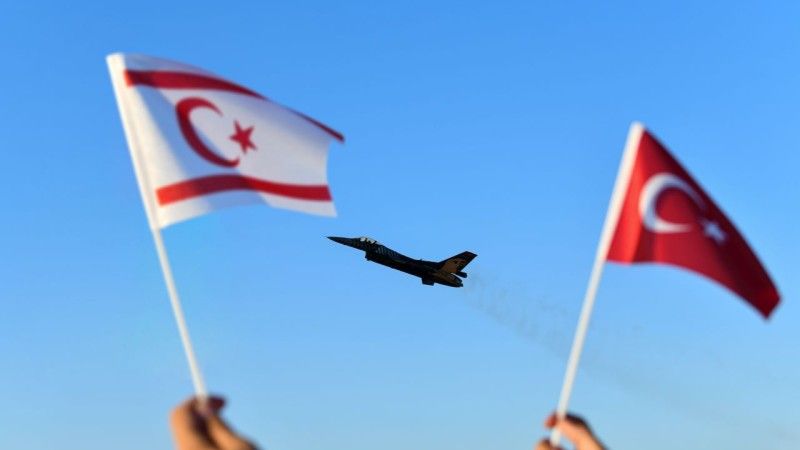
The deployment of six Turkish F-16 fighter jets and air defence systems to Northern Cyprus represents a significant step in the evolving security dynamics of the Eastern Mediterranean.
This decision was made in the context of rising regional tensions, sparked by renewed confrontation between Israel, the United States, and Iran, as well as the increasing militarization of Cyprus. Ankara has presented the deployment as a defensive measure aimed at protecting the Turkish Cypriot population and maintaining regional stability. However, the decision carries broader strategic implications that extend far beyond the island itself.
See also 

Cyprus as a permanent geopolitical flashpoint
Cyprus has long been one of the most sensitive geopolitical flashpoints in the Eastern Mediterranean. To understand the significance of recent and past military actions, it is necessary to analyse the historical context of the Cyprus conflict. The island has been divided since 1974, when Türkiye launched a military intervention in response to a coup d’état in Cyprus supported by Greek nationalists seeking unification with Greece. Consequently, in 1983, the Turkish Republic of Northern Cyprus was proclaimed and remains recognized exclusively by Türkiye to this day. The southern part of the island is administered by the Republic of Cyprus, which enjoys international legitimacy and has been a member of the European Union since 2004.
The divided island is now a key arena in a broader regional rivalry, and the discovery of significant natural gas reserves in the Eastern Mediterranean has intensified competition between regional actors.
The Republic of Cyprus is pursuing an ambitious energy development strategy in cooperation with international energy companies and regional allies such as Greece, Israel, and Egypt. These partnerships have been institutionalized through the Eastern Mediterranean Gas Forum, which aims to coordinate energy production and infrastructure development among participating countries. Türkiye strongly opposes these agreements, arguing that they exclude both Ankara and the Turkish Cypriot community from regional energy projects. Turkish officials also argue that the natural resources surrounding Cyprus should be shared between the two communities on the island.
The deployment of fighter jets by Türkiye to the Turkish Republic of Northern Cyprus must therefore be seen in the context of several overlapping strategic factors, including the indirect effects of the conflict in the Middle East, Greek military support for the Republic of Cyprus, growing European military involvement in the region, and Ankara’s determination to assert its role as a regional power capable of ensuring security on the island.
Direct factors behind regional escalation
Cyprus is home to two British bases, Akrotiri and Dhekelia, which play a key role in NATO military operations in the region. These bases have been extensively used for surveillance, logistical, and operational purposes during the conflicts in Syria, Iraq, and elsewhere in the region, making them potential targets for attack.
The situation escalated following a drone attack on a British military base in Akrotiri, southern Cyprus. Cypriot authorities believe the drone may have been launched by the pro-Iranian group Hezbollah. Some reports also indicate that missiles fired from Iran toward British military bases on the island fell into the sea without reaching their targets. Although the attack caused minimal damage, it raised security concerns for countries not directly involved in the conflict.
Iran’s Foreign Ministry spokesman Esmaeil Baghaei publicly denied that Iranian forces launched attacks toward Cyprus, Türkiye, or Azerbaijan, stating that no missiles or drones were launched from Iranian territory against those countries. He also suggested that some reports could be provocations or staged incidents intended to damage relations with regional states.
Following these events, several countries, including Türkiye, have decided to strengthen their military presence around the island, further increasing tensions in the region.
The deployment of Turkish F-16 fighter jets did not occur in isolation. Rather, it was part of a broader effort to strengthen the armed forces of multiple actors in the Eastern Mediterranean, reflecting the growing strategic importance of Cyprus in the broader European security architecture.
France has also become one of the most active European actors in the region, reflecting its growing ambitions as a major power and a leading force in Europe. Paris has strengthened defence cooperation with Greece and the Republic of Cyprus as part of a broader strategy to expand its influence in the Mediterranean. Amid escalating tensions on the island, French President Emmanuel Macron and Greek Prime Minister Kyriakos Mitsotakis visited the island on Monday to express solidarity with the EU member state, the Republic of Cyprus.
”This visit aims to demonstrate France’s solidarity with the Republic of Cyprus, a member of the European Union with which we share a strategic partnership,” Macron’s office said.
This clearly demonstrates that the island is no longer the subject of a local dispute between Greek and Turkish Cypriots, but has become part of a broader geopolitical rivalry involving other European countries, including:
- Greece: On Monday evening, it dispatched four F-16 fighter jets and two warships to Cyprus, including the frigate Kimon, which Prime Minister Kyriakos Mitsotakis described as the "pride of the fleet".
- France: Deployed the frigate Languedoc and the aircraft carrier Charles de Gaulle to the Eastern Mediterranean.
- Italy: Announced the deployment of the frigate Federico Martinengo to the region.
- Spain: Confirmed the deployment of the frigate Cristóbal Colón.
- United Kingdom: Deployed two Wildcat helicopters equipped with anti-drone missile systems following a drone attack on its air base on the island. The Royal Navy destroyer HMS Dragon is also expected to arrive in the region next week.
- Germany: Increased its presence by sending the frigate FGS Nordrhein-Westfalen, which arrived at the port of Limassol on Sunday, March 8.
As a member of the European Union, the Republic of Cyprus is increasingly deepening its defense cooperation with Western partners. From Ankara’s perspective, the buildup of foreign military forces in the south of the island could transform the region into a platform for Western military operations against its adversaries. Such a development could disrupt the delicate balance that has maintained relative peace in the region for decades.
Türkiye also recently criticized Greece’s plans to deploy additional military forces to several Aegean islands, arguing that such actions would violate their demilitarized status under international law. Turkish Foreign Ministry spokesman Öncü Keçeli stated that any actions taken in violation of these legal obligations would be considered „null and void”. This statement followed reports in Greek media that Athens is considering deploying Patriot air defence systems to the islands of Karpathos and Lemnos following recent Iranian attacks in the region.

Strategic justification for Turkish actions
Currently, approximately 40,000 Turkish troops are stationed in Northern Cyprus, creating one of the most important permanent military bases outside Türkiye. The Turkish military presence includes infantry formations, armoured units, artillery systems, and various air defence systems. The recent deployment of fighter jets, therefore, represents an expansion of existing capabilities rather than the creation of completely new military infrastructure. However, the symbolic significance of this deployment is considerable, as it signals a shift in Ankara’s threat perception. Simultaneously, this decision reflects a combination of concerns about the defence of Turkish Cypriots, Turkish strategic interests, and broader strategic signaling.
First, Ankara emphasizes its role as a security guarantor responsible for the safety of the Turkish Cypriot population. Turkish officials argue that the deteriorating security situation in the region, including the drone attack on the British air base in Akrotiri, requires additional measures to protect Northern Cyprus, which Ankara considers a protectorate of the Republic of Türkiye.
Second, the troop deployment was intended to counterbalance the Greek military presence in southern Cyprus. Ankara could interpret Athens« deployment of fighter jets and naval forces as an attempt to shift the long-term balance of power on the island.
Third, this move sent a broader signal to regional and international actors that Türkiye retains decisive influence over Cyprus’s security dynamics. For decades, the island has not hosted a large number of fighter jets on a permanent basis. Türkiye had traditionally benefited from its proximity to Cyprus, which allowed Turkish aircraft to reach the island within minutes from bases on the mainland. Now, however, by deploying advanced combat aircraft to the island, Ankara has demonstrated its ability to rapidly project power in the Eastern Mediterranean, signalling that additional measures may be taken if the regional situation deteriorates further.
The deployment of additional forces is therefore both operational and symbolic. It operationally strengthens air defence capabilities and enables a rapid response to potential threats. It also symbolically reaffirms Türkiye’s commitment to the security of Northern Cyprus and underscores Ankara’s determination to protect its strategic interests in the region.
Strategic concerns within the NATO Alliance
While Ankara insists that the deployment of Turkish F-16 fighter jets in Northern Cyprus is defensive in nature and intended solely to enhance deterrence, there is a risk that the growing concentration of military assets around Cyprus – not only Turkish ones but also those sent by other third countries – could create conditions in which even minor incidents could lead to a sharp escalation of regional tensions.
See also

Airspace incidents
One of the most immediate threats is the risk of air incidents resulting from the simultaneous operations of Greek and Turkish aircraft near the island. With both countries« fighter jets now operating in close proximity to each other, the likelihood of air clashes automatically increases. Such encounters have long characterized Greek–Turkish relations in the Aegean Sea. Interceptions, dogfights, and mutual accusations of airspace violations occur frequently, though they rarely escalate beyond tactical manoeuvres. Therefore, there is a high probability that the current situation surrounding Cyprus could replicate this dynamic. Political tensions, accidental collisions, or misunderstandings during interception procedures could lead to miscalculations and, consequently, a serious diplomatic crisis.
Naval confrontations
Another potential source of escalation is the deployment of naval forces in the Eastern Mediterranean. Several countries currently have warships in the region, including Türkiye, Greece, France, Italy, Spain, Germany, and the United Kingdom. Naval units operating in contested waters may come into direct contact with each other during patrols, escort missions, or exercises. This, combined with existing disputes over maritime delimitation and access to energy resources, increases regional tensions. Consequently, if warships from rival nations engage in close manoeuvres, the likelihood of incidents rises significantly.
Strategic misinterpretation
Escalating tensions may also stem from misinterpretations of actions taken by states involved in the region. In a region characterized by numerous overlapping rivalries, defensive actions may be perceived by other actors as preparations for offensive moves against regional rivals.
Therefore, Türkiye’s deployment of F-16s to Northern Cyprus may be interpreted differently by various audiences. While Ankara perceives this move as a deterrent intended to ensure the island’s security against further external attacks, other actors may view it as an attempt to strengthen its military position on the island.
Similarly, the deployment of naval forces by European states to protect Cyprus could be interpreted by Türkiye as part of a broader effort to limit Turkish influence and forcefully alter the status quo. Ultimately, the growing involvement of European NATO members, including countries that maintain a critical stance towards Türkiye, such as France, in supporting the Republic of Cyprus could further complicate the cohesion of an alliance already facing numerous security challenges, including the ongoing war in Ukraine and rising tensions elsewhere. Internal divisions among member states could therefore undermine NATO’s strategic effectiveness.

Conclusions
Türkiye’s deployment of F-16 fighter jets to Northern Cyprus represents a breakthrough moment in the evolving security landscape of the Eastern Mediterranean. This move reflects a combination of factors, including the escalating conflict in the Middle East, the militarization of Cyprus by external actors, and the ongoing rivalry between Türkiye and Greece.
It should be noted that with every increase in military activity around the island, the risk of miscalculation also rises. The question therefore remains whether the current deployment of additional armed forces on the island will strengthen deterrence or contribute to greater instability in the region.


