












- WIADOMOŚCI
- WYWIADY
“We Cannot Repeat the Mistakes of the Second Polish Republic.” Gen. Zielski on the Future of the Polish Armed Forces [INTERVIEW]

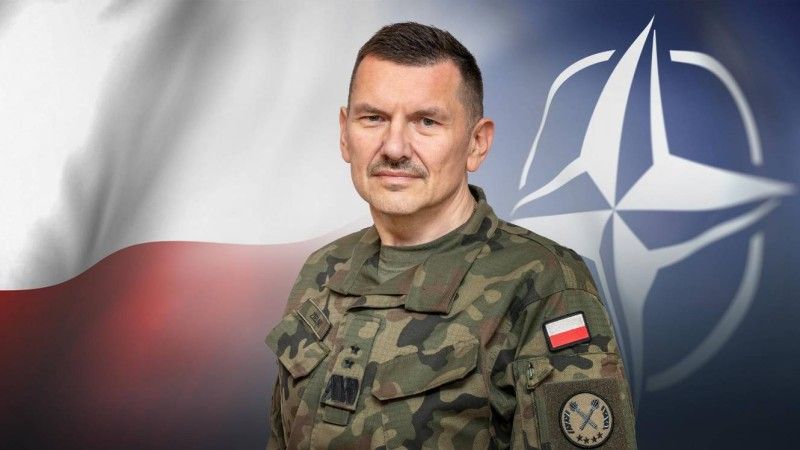
Photo. General Staff of the Polish Armed Forces
We must be prepared for the threat of potential Russian aggression against a NATO member state as early as 2030, says Major General Krzysztof Zielski, Deputy Chief of the General Staff of the Polish Armed Forces, in an interview with Defence24.pl. In the interview, he stresses that proper weight must be given to the expansion of infrastructure and the logistics system, and that reform of the command system is a key task.
Jędrzej Graf: General, let us talk about the Technical Modernization Plan through 2039. On the one hand, we have the ambitious development of structures up to seven divisions and the transformation of the battlefield; on the other, the need to pay for the gigantic purchases made in recent years — armored, mechanized and missile forces — and finally, life-cycle costs. How can these priorities be reconciled and financed?
Maj. Gen. Krzysztof Zielski, Deputy Chief of the General Staff of the Polish Armed Forces: By its very nature, the question touches on a very broad spectrum of issues. As a long-time practitioner, I always caution those discussing the transformation of the Armed Forces not to narrow it down solely to the technical modernization of the Polish Armed Forces, and thereby not to treat technical modernization in isolation.
It is true that our current plans focus mainly on building the necessary deterrence potential. We have little time to fill gaps in individual functional systems. However, when planners at the General Staff define investment tasks to be included in the so-called Central Material Plans, they think far more broadly than merely in terms of acquiring military equipment. They cannot forget the other „components” of operational capability described by the acronym DOTMLPFI, including, in particular, materiel and infrastructure. Therefore, among other things, the development of new divisions and tactical formations must be considered not only through the prism of increased personnel ceilings and procurement of the necessary equipment, but above all through the creation of appropriate conditions for integrating new units into the structures of the Polish Armed Forces and strengthening the logistics functions of the bodies supporting them.
Meanwhile, this task is becoming increasingly difficult, given that the current climate in the construction investment market has become unfavorable for investors. Since the not-so-distant period preceding the COVID-19 pandemic, the value of investments has almost tripled. As a result, the effectiveness of funds allocated in the 2021–2035 construction investment plan for the expansion of the new Armed Forces structures mentioned by you has been drastically reduced.
The task and role of the General Staff is to synchronize planning activities so as to achieve the best possible synergy across all areas of the Armed Forces« functioning. This includes securing the entire product life cycle: from the acquisition of military equipment and provision of the necessary technical and training infrastructure, through the training of crews and troops and the preparation of combat doctrines, to the organization of the necessary structures and the definition of the rules under which they operate. Even the best-oiled organism can become dysfunctional without effective management. Therefore, based on our experience, beyond the process of technical modernization of the Polish Armed Forces — which is the area of interest you have raised — we are also working intensively on the assumptions for reforming the command and control system, the SKiD.
What are the assumptions behind the SKiD (C2 System) reform? It had already been announced earlier.
I will probably not be saying anything new when I say that we want its peacetime structure to be as close as possible to the assumptions we have defined for the command system in times of crisis and war. Our aim is to avoid repeating the mistakes of the interwar period, when matters of national defence were constantly derailed by „islands of interest” belonging to various political groupings, and ultimately pushed into the background. The Second Polish Republic did not complete its preparations for war in time. We want to make it in time not only with the preparation of appropriate structures, but also with their training and with the financing of arms and ammunition purchases.

Photo. General Staff of the Polish Armed Forces
As for the financing mechanism for transforming the Polish Armed Forces itself, today we are in a comfortable position. In addition to 3 percent of GDP, the legislature has provided for other sources which, this year, together with the relevant budgetary section, have reached an unprecedented level of 4.8 percent of GDP. This is the result of the Act on Homeland Defence, adopted unanimously by parliament in 2022. Let me recall that at the NATO summit in The Hague, the deadline for all Alliance member states to reach defence spending of 5 percent was set only for 2035. In our assessment, that deadline is too distant. All the indicators we are receiving suggest that we must be prepared for the threat of potential Russian aggression against a NATO member state already in 2030.
The Chief of the General Staff mentioned that the 2025–2039 Technical Modernization Plan involves expenditures on the order of one trillion złotys. Do these calculations align with the Ministry of Finance’s long-term forecasts and the country’s economic development over the coming years?
The defence budget forecast is based on GDP growth projections supplied by the Ministry of Finance. The analyses take into account the state of the national economy in terms of micro- and macroeconomic indicators. While forecasting the size of the budget 15 years ahead is, in a sense, like reading tea leaves, the defence budget for the next four years should be assessed as a figure calculated very reliably and on the basis of realistic scenarios. This is because it is based on the current observation and assessment of economic processes taking place in the national economy in short cycles, which are able to model changes in GDP levels with a high degree of accuracy.

Photo. Pvt. Mateusz Mierzejewski / 15th Giżycko Mechanised Brigade
In this situation, even possible downturns in the economy, provided they are not caused by a global crisis, should not significantly affect the projected level of the defence budget in the near term. Only in later years may changes in GDP follow a course that differs from what is assumed today. As we begin a new edition of the Armed Forces development program, we are therefore in a very safe position. A separate issue is modeling the size of the Armed Forces Support Fund. This is an additional instrument for financing the transformation of the Armed Forces. We received it together with the Act on Homeland Defence. Thanks to the Support Fund, we can purchase equipment available „here and now” above the defence budget limit. So, instead of waiting a decade for additional funding, we are urgently filling gaps in operational capabilities. The drawback of this solution, however, is that it is funded to a large extent by the state taking on long-term debt obligations.
Of course, even the most accurate and favorable calculations will never answer planners« doubts 100 percent. Nor will they generate the expected level of funding. Not only are the military’s needs always highly ambitious, but ad hoc changes in the operational art also have a diametrical impact on our perception of how combat should be conducted, often forcing us to accelerate some programs at the expense of other capabilities. At this point, I would like to express my appreciation for the Armament Agency, which responds dynamically and with the highest professionalism to all new needs defined by the Armed Forces, despite the considerable discomfort resulting from the shortage of time.
Critical voices have emerged that annual budgeting restricts planning, and that orders for Polish industry „trickle in” instead of taking the form of multi-year contracts for simple products such as uniforms. Are functional changes planned in the equipment acquisition system and in oversight of industry?
I cannot agree with the assertion that orders for Polish industry merely „trickle in.” The 15-year horizon of the Armed Forces« technical modernization plan and the other central material plans was introduced precisely in order to create conditions for procurement institutions to conclude multi-year contracts. Each successive edition of the plan is the same jigsaw puzzle which, while taking into account earlier stages of the process, adds in successive steps the missing pieces needed to obtain the complete picture.
It is precisely the high complexity of orders involving the delivery of advanced weapons systems — such as fifth-generation aircraft, for example — that created the need to „stretch out” the editions of the central material plans so as to make it possible to align financial plans with the conclusion of a contract. Unfortunately, problems with the timely execution of such tasks, caused mostly by manufacturers, generate the greatest turbulence when it comes to the ability to finance smaller orders with shorter delivery timelines.
What does the above mean, in practical terms?
If an invoice does not reach the contracting authority before 31st December, then in the following year we have to shift funds originally allocated to other tasks in order to pay for delayed deliveries. The state’s rules governing annual budget planning and execution are unforgiving in this respect. There is therefore no systemic possibility of „saving” unspent funds and carrying them over to the following year.
To sum up, the guarantee of 3 percent of GDP for defence spending gives the Armed Forces a sense of security and ensures continuity of planning compared with other ministries. The Support Fund, handled by BGK, makes it possible to obtain additional funds. Poland’s credibility is high, so foreign financial markets are eager to cooperate with us, offering us various forms of preferential loans. Our only concern is to make proper use of the money for priorities, in a way that ensures the highest economic efficiency of the decisions we make.
What about the SAFE mechanism? Key decisions are to be made by the end of May. Does the General Staff have a Plan B if negotiations with the European Commission are prolonged, and are you already thinking about further editions of this instrument?
From a planner’s point of view, once SAFE funds are „injected” into the Support Fund, they will feed into the limit of funds allocated for the technical modernization of the Polish Armed Forces agreed with the Ministry of Finance and BGK. For the planning authority, the source of financing for the Armed Forces« needs — whether it is a loan from the European Commission or one obtained by the operator — is seen as a global pool of funds available for allocation to the needs submitted by planning bodies. The plan therefore does not change. The state will feel the difference only when the incurred obligations are repaid, since the loans granted differ in their repayment terms.
The details become important when tasks are qualified for coverage under the SAFE instrument. It has its own restrictions concerning, among other things, procurement markets and the scale of domestic solutions« participation in the product. The Armament Agency therefore negotiated with the EU so that the eligibility of tasks selected for SAFE financing, at subsequent stages of their implementation, would be beyond question. We planners take care of the balance of this solution’s effectiveness compared with other forms of financing.
What significance does the cost of financing have in the context of modernization plans?
Across all central material plans, it must be cheap enough for us still to have budgetary resources for „kit,” the day-to-day operation of military equipment, munitions, and logistics in the broad sense. The development of capabilities in the logistics functional system, in an era of a growing threat of conflict between Russia and NATO, is becoming a critical element of preparations to receive reinforcement forces — the Host Nation Support function. And I must say that, contrary to the commonly repeated view among Alliance member states that Poland is an example in this area, we still have a great deal to do here.
Let us return to oversight of industry. In the past, the Ministry of National Defence directly supervised repair companies. Does the current model, in which PGZ is under a different ministry, pass the test, or does coordination require improvement in order to avoid problems, for example with the Borsuk programme?
I view this problem through the dimension of the „globalization” of processes. When the Ministry of National Defence supervised the companies, the minister, having in his portfolio various tools for motivating company presidents and boards, could „influence” matters so that, for example, repairs of military equipment could be carried out even more efficiently under the so-called „fast track.” In the case of implementing new technologies, however, development work took years. Arms manufacturers, enclosed in a homogeneous environment, showed no interest in exchanging experience with external entities and did not build systemic solutions enabling them to establish and maintain such contacts. I will go even further in these reflections: they were in fact made complacent by the system.
Today, the defence industry is part of assets subordinated to a ministry with a much broader range of opportunities and sectors, support instruments, and possibilities for financing development than the Ministry of National Defence previously possessed. The expansion of production capacity is perceived from a completely different and broader perspective than merely the need to preserve continuity of production for times of crisis or war. Moreover, efficient management of industry requires developing an entire army of modern managers who think through the prism of the economic profitability of production. The Ministry of National Defence did not have such tools or such a system of incentives.
So what does cooperation between the Ministry of State Assets, the Ministry of National Defence, and industry look like today?
I must emphasize that despite the subordination of the national defence industry to the Minister of State Assets, the dialogue between the Ministry of National Defence and industry remains active and is maintained at a very high level. The leadership of PGZ and the presidents of the companies forming individual consortia are in constant contact with us. We talk as partners about our expectations, new programs, and development directions, but we also try, with concern and understanding, to support industry in solving the difficulties and problems it encounters.

Photo. Ira/12SDZ
The role and position of private defence industry in this dialogue is also growing, which is particularly visible in the scale of its involvement in production and deliveries for fighting Ukraine. Competition is very beneficial from the point of view of satisfying the military’s ambitious needs. If the national industry is too sluggish in this regard, then at a moment of real threat the military will take its orders to any supplier that can provide a ready-made product. Industry therefore has to be efficient already now. For example, if the arms industry is unable, in wartime conditions, to absorb a budget amounting to 60 percent of GDP — that is, a level corresponding to Ukraine’s current defence spending — this may mean its complete elimination from the procurement chain.
When planning gigantic expenditures at the level of 5 percent of GDP, do you take into account the costs of maintaining equipment — life-cycle costs? Other countries have sometimes abandoned procurements precisely because of operating costs.
Yes. Taking into account the life-cycle costs of acquired armaments lies at the foundation of the currently processed reform of planning and programming the development of the Armed Forces. Let me recall that not so long ago, procurement contracts covered only the purchase of military equipment. Support for the operation of acquired armaments was contracted under separate tasks, which not only dispersed planning effort but also generated the risk that funds originally planned for keeping the acquired inventory operational might be „lost” along the way.
Today, the Armament Agency procures weapons systems together with the necessary training and logistics packages. Moreover, when contracting for the purchase of a system, we do not forget about acquiring for the Polish defence industry the technologies and tools necessary to establish a maintenance and repair base. After all, military equipment acquired at enormous financial cost will remain with us for the next 30 to 50 years.
Given the horrendously high costs of acquiring modern advanced weapons systems, the Armament Agency must have greater flexibility when it comes to allocating part of the funds to the purchase of capabilities for science and industry. Attention must also be paid to the need to properly equip the organic repair subunits functioning within the structures of the Polish Armed Forces with the necessary tools. This is a new philosophy of planning.
Thank you for this conversation.
In the second part of the interview with Gen. Zielski, we will address specific modernization priorities of the Armed Forces, including combat aircraft, strike capabilities, submarines, and air defence.


