












- ANALIZA
- WIADOMOŚCI
Nordic countries agree on a common uniform. What are takeaways for Poland?

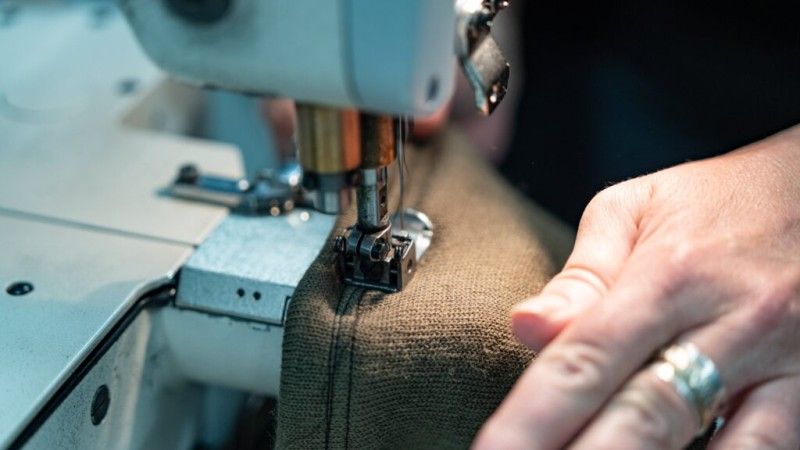
Denmark, Finland, Norway and Sweden decided to introduce a common field uniform design, starting in 2026. The project worth EUR 425 million can be used as a model example of efficient modernization processes implemented in the Armed Forces via the means of international cooperation.
The idea of creating a common uniform system for the Nordic armies grew out of practical operational needs. Soldiers from Denmark, Finland, Norway and Sweden operate in extremely varied climatic conditions, from Arctic cold to desert heat. No single uniform could meet such a wide spectrum of requirements. What was needed was a layered system that could be adapted to changing weather and the nature of the mission.
An additional spur for cooperation was the coincidence in timing of planned modernizations. All four armies were roughly due to replace their field uniforms around the same period. Jointly developing the requirements, running tests and coordinating procurement significantly reduced unit costs and simplified logistics. Each country retained its own camouflage patterns and insignia — only those elements that affect functionality, such as materials, cut, closure systems and pocket layout, were standardised.
The Nordic Combat Uniform (NCU) project was launched in 2016. The first phase consisted of agreeing common operational requirements, a process that took several years of intensive consultation between the defence ministries of the participating states. Only after a consensus was reached were tenders issued and suppliers selected to produce prototypes.

Testing in extreme conditions
A defining feature of the Nordic approach was rigorous prototype testing with end users. samples supplied by manufacturers were sent not only to laboratories but, above all, to soldiers in the field: in Finnish forests, Norwegian mountains, Danish dunes and on training ranges in both summer and winter conditions.
Soldiers wore the uniforms in everyday duties and evaluated comfort, durability, pocket functionality, fabric breathability and thermal performance. After each test phase feedback was collected and handed back to manufacturers for adjustments. That iterative process lasted several years and refined details that no laboratory test could have revealed.
In 2022 a framework agreement worth roughly €425 million was signed. Production was spread across several specialised firms: Norwegian Aclima was tasked with the base layer (performance underwear), Swedish Woolpower with insulating layers, Greek Siamidis with jackets and trousers, and American GORE-TEX with membranes that provide waterproofing and breathability. Overall project coordination was handled by the Norwegian company Layers AS, which acted as the system integrator.
How does Nordic cooperation reduce costs?
The biggest advantage of the Nordic solution is economies of scale. Common material standards, joint orders and centralised coordination secured prices that would have been out of reach for individual purchases. Manufacturers, receiving orders covering tens of thousands of sets in total, could offer better terms and amortise production setup costs across a larger run.

Photo. Gore
Logistical gains are equally important. Under the traditional model each army maintains its own warehouses stocked with thousands of different spare parts and components. In the Nordic system key items (zippers, hook-and-loop fasteners, buttons, fabrics) are standardised, which means stockpiles can be held jointly or at least shared between countries if needed. This simplifies supply chains and reduces the risk of shortages in crisis situations.
What are takeaways for Poland? Lessons learned from the Nordic project
Poland faces the challenge of modernising its soldiers« uniforms. The Polish Armed Forces operate across varied climatic zones — from coastal dunes to mountain peaks — and also take part in overseas missions in hot climates. The army needs a layered system that ensures comfort and protection in all conditions.
Nordic experience shows that it is crucial to define operational requirements precisely from the outset. Rather than vague references to „high quality” and „durability,” it is better to record concrete parameters: fabric weight, tear strength, breathability, the number and placement of pockets, ventilation systems, and compatibility with body armour and backpacks. The Nordics spent several years on this phase, and the result was a uniform that genuinely met soldiers« needs.
Another lesson concerns testing. In Poland it is often the case that new equipment is trialled only in a limited way and soldiers« feedback is not fully incorporated. The Nordic model mandates multi-stage testing across environments with ordinary end users, not only instructors or defence committees. That approach reveals problems that only appear after months of wear.

Photo. Gore
Equally important is the economy of scale. Poland usually produces uniforms primarily for its own needs, often in relatively small batches, which raises unit costs. Joint purchases with neighbouring countries (for example the Baltic states, the Czech Republic or Slovakia) could deliver the same savings the Nordics achieved. This would not mean abandoning Polish camouflage patterns, which are an element of military identity, but standardising components — fabrics, zips, hook-and-loop fasteners, insulating layers — that can be bought collectively while leaving external appearance intact.
Attention should also be paid to logistics. The current Polish supply system is sometimes fragmented, with warehouses filled with thousands of parts that are often incompatible with each other. Introducing standardised material specifications would simplify inventory management and make it feasible to build common reserves with allies.
Formally, the NCU project is closed and limited to the participating countries, but nothing prevents Poland from pursuing a similar initiative with regional partners in future. Calls for equipment standardisation within NATO and the European Union are growing louder, and the Nordic experience offers a practical template. Potential partners could include the Baltic states — Lithuania, Latvia and Estonia — which have similar needs and force sizes, as well as the Czech Republic and Slovakia. Czech Republic Slovakia Jointly developing requirements, testing and procurement would bring benefits to all parties.


