












- WIADOMOŚCI
Replacement systems become the target – Denmark's decision

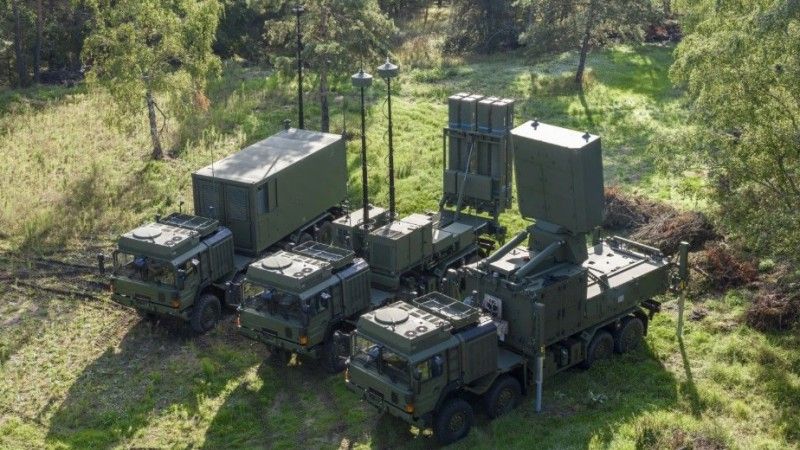
Denmark has signed contracts for the purchase of additional short-range air defense systems: NASAMS, IRIS-T SLM, and VL MICA. The interim solutions have thus become permanent ones.
In the first half of June this year, the Danes announced the acquisition of three different short-range air defense systems, which was a rather unexpected move. They declared the leasing of one NASAMS fire unit from Norway, as well as the purchase of the German IRIS-T SLM and the French VL MICA (one fire unit of each system).
The air defense variant
It was initially assumed that the final solution would be selected by the end of this year, with deliveries and initial operational capability of all the mentioned systems expected by the end of 2026 (although in the case of the IRIS-T SLM, this is planned for the following year). This approach to regaining capabilities lost years ago would be costly but was intended to allow for a comparison of all three systems’ performance and the selection of the best one (or possibly an entirely new option).
So, which system did the Danes ultimately choose as their short-range solution? All of them—deciding to order or purchase additional units to reach the level of two batteries of each system. This decision was made in the first half of November. Shortly afterward, a contract worth approximately €500 million (unofficially) was signed for the Norwegian NASAMS. The leased system will likely return to Oslo in 2027.
A few days ago, the U.S. Department of State approved the sale to Denmark of 200 AIM-120C-8 (AMRAAM) medium-range air-to-air missiles, along with accompanying equipment and service packages, for up to $730 million. These missiles can be used with the NASAMS system but may also be integrated into Denmark’s F-35A fighter jets.

The interim solution became the final one
The contract for additional German IRIS-T SLM fire units was signed in early December. Its value, exact scope, and delivery schedule for the additional components have not been disclosed. This purchase, like the previous one, is being carried out under the European Sky Shield Initiative (ESSI), which is expected to accelerate the entire process. It is likely that the previously acquired battery will be expanded with the newly purchased components.
Also in early December, an agreement was signed with MBDA for the purchase of the French VL MICA system. In this way, the Danes have rather “originally” completed the process of building their short-range air defense capability.

IRIS-T SLM, NASAMS, and VL MICA
IRIS-T SLM is a German short-range air defense system developed by Diehl Defence. It can engage a wide range of aerial targets, including cruise missiles, aircraft, helicopters, and unmanned aerial vehicles, at distances of up to 40 km and altitudes of up to 20,000 meters. The missile is infrared-guided and equipped with a data link that enables communication between the missile and the launcher. The system can integrate several types of air defense radars, including the Hensoldt TRML-4D, Thales Ground Master 200 MM/C, CEA CEAFAR, and Saab Giraffe 4A.
NASAMS is a medium-range surface-to-air missile system developed jointly by the American company Raytheon and the Norwegian firm Kongsberg. It can neutralize aerial targets at distances of up to approximately 25 km using AIM-120 AMRAAM missiles, or over 40 km when employing the AMRAAM-ER variant (with the latest version extending the range to as much as 80 km). Both missile types are equipped with active radar seekers. NASAMS is also integrated with short-range infrared-guided missiles such as the AIM-9X Sidewinder.
VL MICA is a short-range ground-based air defense system developed by MBDA, utilizing the MICA family of air-to-air missiles. It can engage a wide range of aerial targets, including cruise missiles, aircraft, helicopters, and unmanned aerial vehicles, at distances of up to 20 km and altitudes of up to 9,000 meters. The missile can be guided either by infrared (MICA IR) or radar (MICA RF) seekers.


