












- WIADOMOŚCI
Sweden wants faster rearmament

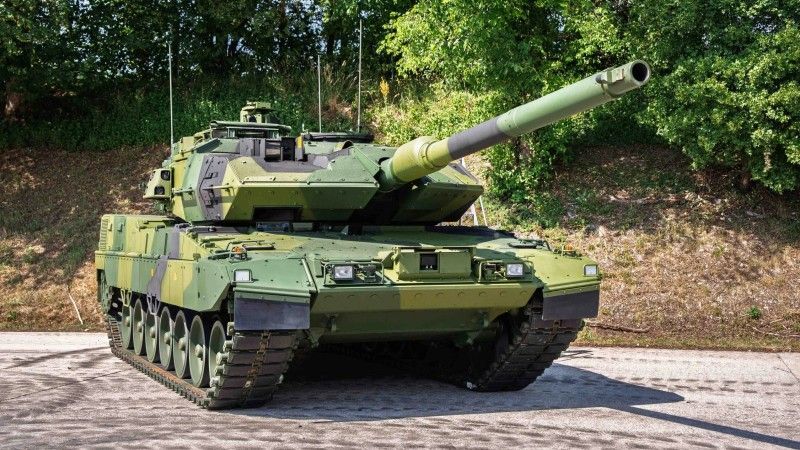
Photo. FMV
Sweden’s armed forces want the country to accelerate rearmament and move towards defence spending of between 4% and 5% of GDP. This would go beyond the government’s current path and shows that Stockholm is already thinking as a frontline NATO state, not as a newly admitted member still adapting to the Alliance.
The Swedish Armed Forces want defence spending to rise to 4–5% of GDP within a few years. Commander-in-Chief Michael Claesson has neither confirmed nor denied the figures, but he pointed to “existential” reasons for meeting NATO’s capability requirements. That distinction matters: the exact number remains a media report, but the pressure from the military establishment is clear.
The government’s official line is lower. Sweden is expected to spend 2.8% of GDP on defence in 2026, around 3.1% from 2028, and then move towards 3.5% by 2030. The report therefore suggests that the armed forces may consider this timetable too slow, or the target too low, if Sweden is to meet NATO requirements and operate credibly in the Baltic Sea, the High North and on the Alliance’s north-eastern flank.
The debate is no longer about the old 2% target. NATO’s new framework points towards 5% of GDP by 2035, divided between 3.5% for core defence spending and up to 1.5% for wider security investments, including critical infrastructure, cyber security, civil resilience, innovation and the defence industry. Sweden is therefore moving directly from neutrality-era assumptions into the most demanding phase of NATO defence planning.

The issue is not only money. It is ammunition, air defence, drones, rocket artillery, logistics, military infrastructure, personnel, stockpiles and the ability to operate inside NATO command structures. Stockholm has already discussed faster purchases where industry can deliver equipment between 2026 and 2028. This includes air defence, drones, personal equipment, ammunition and other systems that can quickly increase readiness.
It seems that the Swedish military is sending a direct message to the political class. 3.5% may be a political milestone, but it may not be enough for the threat environment Sweden now faces. Russia’s war against Ukraine, the militarisation of the Baltic region and the demands of NATO membership mean that Sweden cannot afford a slow transition.


