












- ANALIZA
- WIADOMOŚCI
Will the US put boots on the ground in Iran? Assessing the possibility [COMMENTARY]

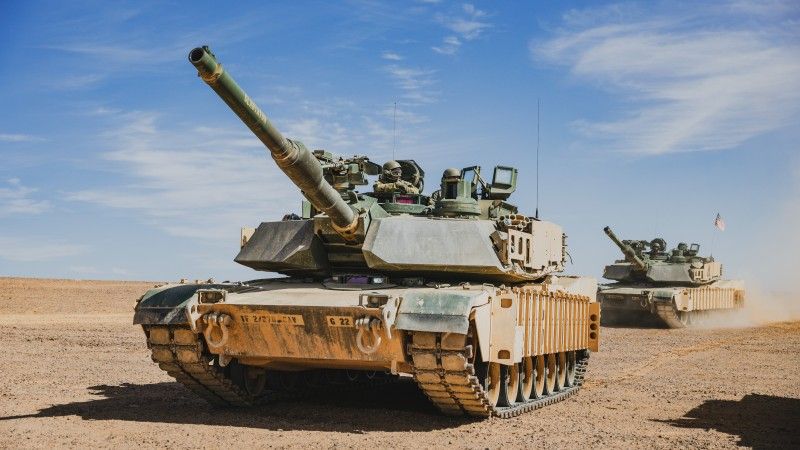
Photo. Hector Tinoco/Public Domain
Since the very beginning of the US and Israeli war against Iran, speculation has circulated about the possibility of a large-scale ground operation. Such an undertaking would require extensive preparations, visible even in places like Poland. The current disposition of U.S. forces in the region, however, does not allow for a land invasion.
Iran’s territory presents extremely challenging conditions for large-scale offensive ground operations. Much of the country is mountainous terrain that strongly favors the defender. Any major land campaign would therefore require substantial preparation, including the deployment of appropriate forces and the establishment of a robust logistical support system.

Photo. US Army
Large-scale offensive operations require deployment of heavy assets. While the US Army does possess brigades and divisions capable of such operations, these units would first have to be deployed to the Middle East. Moving formations of that scale would be highly visible and, together with operational planning and logistical preparation, would take several months.
III Armored Corps
The U.S. Army’s primary heavy forces with the greatest offensive capability are concentrated in the III Armored Corps, which includes the following divisions and independent brigades and regiments:
- 1st Armored Division,
- 1st Cavalry Division,
- 1st Infantry Division,
- 3rd Cavalry Regiment,
- 75th Field Artillery Brigade,
- 36th Engineer Brigade,
- 11th Corps Signal Brigade,
- 504th Military Intelligence Brigade,
- 13th Armored Corps Sustainment Command,
- 1st Medical Brigade,
- 89th Military Police Brigade.
Altogether, this amounts to eight armored brigades, four artillery brigades, three army aviation brigades, four logistics brigades, one motorized regiment (in practice a brigade), and support elements. Deploying such a force would constitute a major logistical operation that would be difficult to conduct in a covert manner. This is also because some sub-units of one of the brigades from the 1st Cavalry Division are currently stationed in Poland.

Photo. Noclador/CC BY-SA 4.0
Obviously, the U.S. Army does have other corps-level formations, but their offensive potential on land remains limited. For instance, I Corps includes only a single armored brigade within the 4th Infantry Division. In addition, it fields four Stryker brigades, four light infantry brigades, three artillery brigades, four army aviation brigades, and support units.

Photo. Noclador/CC BY-SA 4.0
The V Corps, stationed in Europe, permanently maintains only one motorized brigade (operating Stryker vehicles), one artillery brigade, and an army aviation brigade. On a rotational basis, however, it receives two armored brigades, an artillery brigade, an aviation brigade, and a logistics brigade detached from other formations. Together these units effectively form a rotating armored division.

Photo. Noclador/CC BY-SA 4.0
Finally, the XVIII Airborne Corps includes one heavy division in its structure: the 3rd Infantry Division; which fields two armored brigades along with an artillery brigade, an army aviation brigade, and a logistics brigade. The remainder of the corps consists of the 10th Mountain Division, the 82nd Airborne Division, the 101st Airborne Division, and several independent support and logistics brigades.

Photo. Noclador/CC BY-SA 4.0
As this overview shows, only the III Armored Corps possesses a sufficient number of heavy divisions and brigades capable of supporting a large-scale offensive operation. Even then, given the geographic conditions mentioned earlier, such an operation in Iran would be extremely demanding and likely prolonged.
USMC
Media reports on 13th March indicated that approximately 2,500 Marines and an amphibious assault ship had been deployed to the Persian Gulf. This number corresponds to a Marine Expeditionary Unit (MEU), a formation roughly the size of an infantry battalion. As such, its offensive capabilities are relatively limited.

Photo. US Navy amphibious vessel, usually used by the USMC expeditionary units.
Another issue is the ongoing Force Design 2030 reform within the U.S. Marine Corps. Under this restructuring, the Corps has been streamlined to better align with operations in the Pacific, particularly in island environments. As a result, Marine divisions lost their organic tank battalions, and artillery units were reduced.
The reform has been widely criticized, including by all living former Commandants of the Marine Corps. Critics have argued that it focuses too heavily on the Pacific theater while reducing the Corps« ability to project power globally. In particular, the elimination of tank battalions significantly diminished its offensive capabilities.

Photo. Cpl. Jamin Powel/ Wikipedia
As a consequence, the Marine Corps is now largely dependent on armored support from the U.S. Army when it comes to large-scale offensive operations. The Marine Expeditionary Unit currently deployed to the region would therefore be capable mainly of limited coastal operations, such as securing beachheads and ports or striking selected infrastructure targets.
No visible prep-work
In summary, unless the United States begins deploying heavy U.S. Army forces, such as divisions or major elements of the III Armored Corps, it is difficult to speak of preparations for a major ground offensive.

If any operations on land do take place, they will most likely involve special forces or light units conducting limited, targeted strikes against key objectives, rather than establishing a sustained and large-scale ground presence inside Iran.

Photo. US Department of War
That situation could, of course, change. Decisions may still be made to deploy larger forces to the region that could take part in such an operation. However, at the time of writing, there are no indications that such preparations are underway.


