- WYWIADY
- ANALIZA
- WIADOMOŚCI
A dire warning for Europe from Gen. Zaluzhny. How can we avoid war?

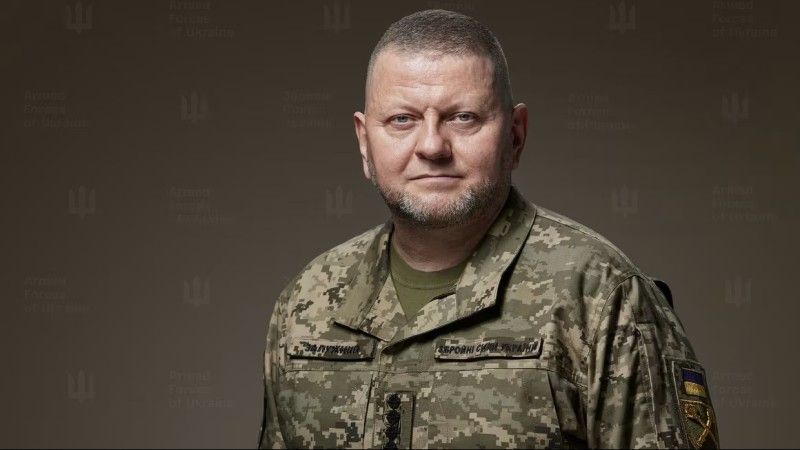
Photo. Armed Forces of Ukraine
A special commentary by the former Commander-in-Chief of the Armed Forces of Ukraine for the Eastern Flank Institute
Author: Gen. Gen. Valeriy Zaluzhny, Ambassador of Ukraine to the United Kingdom, Commander-in-Chief of the Armed Forces of Ukraine (2021–24)
European security depends on unity of purpose and the will to act
How did the war in Ukraine begin?
The war in Ukraine is the result of a long series of foreign-policy mistakes stretching back to independence. From the early 1990s our leaders pursued a so-called multi-vector policy. Kyiv tried to maintain good relations with both the West and Russia in order to reap benefits from each direction. That approach ultimately led the state into a grave misfortune and for a long time prevented it from resisting external influence. At the same time, it brought economic gains — credits and investments from Europe and the United States, and from Russia preferential gas prices and market access. In return, the Kremlin systematically built influence on both banks of the Dnieper: it supported loyal political parties and individual leaders, used energy resources, Russian-speaking communities and investments in strategic enterprises for political ends. Russian propaganda flowed into Ukrainian media in a broad stream.
But the greatest mistake was certainly underestimating Russia and placing excessive trust in the security guarantees written into the Budapest Memorandum. No great power came to our aid when war broke out in 2014; the world limited itself to imposing sanctions on Russia. That shows that international agreements not backed by concrete security instruments are essentially empty — an emptiness that will be filled, sooner or later, by war seeking space to spread.
We recall Ukraine today because of the situation our country finds itself in during the fourth year of a full-scale war, a war the world had not seen in the 21st century. It’s hard to say whether other states will suffer the same fate as Ukraine. One thing is clear: Russia is militarizing, its economy is operating on a war footing, and its society is being fed propaganda. Neighbors should ask themselves what Russia was doing on their territory yesterday and what it is doing there today, that must be established. The Russians see no reason now to stop. War in the heart of Europe has affected not only every Ukrainian. With the collapse of the old order, the conflict has become global and will soon knock on a neighbor’s door, a neighbor who shares our cramped floor called Europe. That is the Europe I want to address: Europe as a neighbor in a global war.
After four years of war we can say with confidence that the process set in motion in February 2022 has, like every great war, undermined the ideas and theories that underpinned the concept of peace. Some believed they knew everything. Others treated „concern” as a cure-all. Everyone has been disappointed, deeply so. Anyone connected to this war, even as an observer, has seen things they did not plan for and did not expect. Some still, agonizingly disappointed by their own illusions, insist that everything happening now is merely the result of those illusions. What brings sorrow and pain to some remains a dry chronicle to others. But without doubt, these are whirlwinds of events that will change the world forever.
War and its ramifications for Europe
So what is happening now in this whirlpool that, with the silent consent of a now-obsolete order, is gathering speed?
On the night of 27–28 September 2025, 552 unmanned aerial vehicles were used against Ukraine, along with at least two ballistic missiles and at least 31 cruise missiles. On the night of 6–7 September a record number of aerial attack means was recorded: as many as 776 at once. Recently about two dozen Russian drones flew into Poland; three or four of them were shot down using very expensive missiles.
A few days later Russian aircraft calmly entered Estonian airspace. They were escorted by two of NATO’s most modern Italian F-35 fighters, scrambled from an airbase 50 km from Tallinn.
The Telegraph described NATO’s response eloquently: „The Italians began the standard intercept procedure, wagging their wings. In response, the Russians wagged theirs. Then one of the pilots raised his hand and waved amicably. For the next 12 minutes the Italian pilots escorted the Russians all the way to the Russian exclave of Kaliningrad — an unprecedented length of time for an incursion into NATO airspace.”
If we draw a simple conclusion from these events within the vortex of total war: while Europe debates whether its reaction was decisive enough, the Russians launch more thousands of drones. And Ukrainians, fighting for their survival, buy time for their neighbors, time first and foremost to rid themselves of illusions.
Once again I stress: four years of hostilities have produced a revolution in military craft. We can already speak with certainty of the birth of a new type of war and radical changes in the art of warfare for the whole of the 21st century. One of the main features of this war is that no state in the world can independently sustain the current level of intensity and fully satisfy the entire complex of defense needs.
How do we secure our safety?
We need answers to a number of questions in the context of the ongoing war if we are to survive. First and foremost, we must secure essential guarantees of our own security for the future.
First: does Ukraine today have a real chance of achieving the necessary level of cooperation with Europe to meet as many of the needs of this war as possible?
In this context, the survival program for us revolves around:
- How realistic are hopes of receiving military assistance in the form of air-defense systems and ammunition from Europe?
- Can we count on near-term access to financial resources to develop our own defence industry?
- How realistic is gaining access to unique European scientific and manufacturing technologies, including satellite technologies?
- How possible is the rapid organization and scaling of our production on European territory?
- Second: as Europe intensifies efforts to transform its defence policy, is it truly seeking to build a new security architecture? Is there a place in it for Ukraine?
From our practical experience I would draw attention to the following questions:
- Is there political will to make radical changes to Europe's security landscape?
- Do we see signs of creating European Armed Forces as the foundation of combat capabilities and future alliances?
- How realistic is reform and consolidation of Europe's defence industry?
- How likely is it that the urgent needs of Ukraine will be met under a reformed European defence industry?
Despite countless discussions held on various forums in Ukraine and across Europe, and the delayed rounds of sanctions, today we have only one programmatic document that was produced at the European level.
I refer to the „Joint White Paper for European Defence — Readiness 2030,” announced by the EU High Representative for Foreign Affairs and Security Policy on 19th March 2025.
That document is also a response to a comprehensive report prepared in September 2024 by a group of European experts led by Mario Draghi (former president of the European Central Bank), titled „The Future of European Competitiveness.”
For the first time that report explicitly emphasized the need for Europe’s strategic autonomy amid growing competition, including from the United States.
Beyond diagnosing the Union’s problems, Draghi’s report contains an action plan and urges immediate concrete steps, with particular emphasis on coordination within the European defence industry.
In that light, the concept paper presented by the Commissioner for Defence and Space, Andrius Kubilius — the „Joint White Paper for European Defence - Readiness 2030”, addresses those problems. The White Paper identifies both the threats and challenges Europe faces now and will face in the future, and the directions for neutralizing them through development of the European security and defence sector.
Written under the pressure of war, the document was likely intended to convince Europe that it is capable of defending itself.
For the moment, this official material remains the only charted route by which we can even begin to imagine the shape of future European security. This, of course, rests on strengthening the European defense industrial base.
The extremely complicated situation in Ukraine and my own experience allow me to view European security from a practical, including military, standpoint. The main question is whether Ukraine, in a war of attrition, can count without reservation on Europe, if not as an ally, then at least as a reliable partner. Equally important for us is whether Europe understands the need to create a new security architecture on the continent.
To that end I recall the words of a classic strategist: at the beginning of the 20th century he wrote, „…in our reality peace is primarily the result of force and is maintained by force. Every border is the product of war, and the outlines of states on the map testify to the strategic and political thinking of the victors; political geography and peace treaties are also a lesson in strategy…”
So, based on the strategic lessons we have learned fighting the continent’s greatest power, I emphasize that defining security and attaining it unconditionally rests on a few simple concepts that do not change with time and that our war has confirmed.
First — political will and readiness to take practical, even unpopular, steps to ensure security. Winston Churchill (1874-1965) showed that will. Today we must ask: to what extent are citizens of EU member states and their political elites prepared to prioritize defence if that means, for example, a deterioration in economic welfare?
Second, well-trained forces equipped with modern weaponry and operating under contemporary doctrines. These forces must also be organized within a clear hierarchical structure based on a unified command system and combat doctrine. Even in our case, where centralized subordination of defense forces is codified in law, there has not always been enough time for common standardization in matters of armament, training and combat.
Third — the defence industry. This is a critical component that determines armed forces« readiness to deliver security capabilities. From our experience it is clear that globally the defense industry depends on several parameters:
- Access to raw materials, above all for ammunition production. It is essential to know whether we have components, for instance, for producing propellant, a necessary ingredient of explosives. Its basic formula includes nitrocellulose, which can be obtained from processing cellulose from industrial hemp, cotton and wood. We must decide whether to increase cultivation of those crops or pursue cooperation. And how will we solve the problem of chips and semiconductors, which are produced in completely different regions of the world today?
- Access to technologies and infrastructure (factories and transport) that can be expanded and reorganized to maximize production for defense needs. Such infrastructure should be governed by unified political and economic standards and supply chains. That may, for example, harm national governments that base revenues and budgets on that infrastructure.
- A workforce of sufficient size and with the right qualifications to meet the needs of all branches of industry. The number and skill level of specialists, especially in high tech, will be decisive for delivering any production programs and orders.
- Again, political will, to use compulsion, propaganda and appeals to civic duty to encourage civilians not only toward certain restrictions but in the future to sacrifices that may be unbearable.
Therefore, this first systemic document must be viewed solely from a strategic perspective, with long-term vision. The war in Ukraine, the revision of the United States role in European security, and the development of Russian combat capabilities beyond the needs of the current conflict should shape only a realistic vision of a future security architecture.
However, analyzing this document from our and Europe’s perspective, it must be said that declared financial allocations alone are clearly insufficient to achieve its primary goal. Europe needs both political will and time.
Speaking specifically about political will as the main engine of progress, one must realize that the success of any initiative will depend on the will of all 27 member states. These countries have travelled an extremely difficult path to membership but have different priorities, resources and threat assessments. That is probably why the White Paper repeatedly stresses that defense remains the prerogative of individual nations and an issue requiring unanimity as provided for in the Treaty on European Union. Time will tell whether that will slow down or block key defence projects. Under that assumption, implementing a centralized approach to shaping security is certainly impossible.
There is also much to do on the production base. Draghi’s report notes that over 60% of European defense procurement is currently sourced from the United States. That is the situation today. Look more broadly, though: a defence industrial base fragmented across many states will require political will and time to reach sufficient scale. When it comes to workers, we must remember advanced labor laws that cannot be ignored. It is unclear whether we currently have enough specialists and where their training will be organized.
We understand who is currently employed in European factories and can foresee how that will affect increases in production capacity. Of course, in preparing for „not World War II,” the White Paper also declares an appetite to lead in AI, quantum technologies, hypersonics and robotics. But in terms of investment, human resources and maturity, these industries in Europe lag many years behind the United States and China. Achieving such ambitious goals by 2030 seems unlikely.
It should be noted that the European Union was created primarily out of a desire for peace and stability, to stimulate economic development via a common market, and to promote democracy and common valuesm, with full security guarantees from the United States and NATO. It is therefore logical that the EU presently lacks clear mechanisms of compulsion. As a result, there are no firm bases for implementing political will. Implementation of the White Paper’s proposals will thus rely on „motivation” and „incentives” without establishing obligatory mechanisms. This will encourage large states such as France, Germany and Italy to continue developing national projects; others will not have that opportunity. How this will affect the declared capabilities of the remaining national armed forces of EU states is as yet unknown.
Analyzing implementation, it is worth noting that despite recognizing NATO’s primary role in security, the EU is developing defense cooperation within Europe. For example, via the Kensington Treaty between the UK and Germany, the Aachen Treaty between Germany and France, and the updated Lancaster House Agreements between the UK and France. Have these agreements been taken into account in the future vision, and what role will the UK, not an EU member but a European continental power with its own capabilities, play?
This programmatic document has already been widely examined. Its abundance of declarations allowed many in Ukraine to find both strengths and weaknesses. For us the most important point is that, despite ambitious pledges to support Ukraine, most of this will likely be delivered without deadlines or obligatory mechanisms, and consequently without adequate guarantees.
How will the West behave?
Accordingly, despite far-reaching expectations, practical European security will remain dependent on the United States. At the same time, by emphasizing cooperation, interaction and competitiveness within the defense industry, the White Paper opens up opportunities to promote our own interests. It paves the way for Ukraine, a non-EU state, to enter a future, united (because of the Russia-exerted pressure), European arms market. In the absence of obligatory mechanisms, our activity must focus on promoting Ukrainian defence-industry interests at the governmental, business and expert levels as part of a potentially opening European market. We must seek finance, technology and production ties with any state that interests us, remembering that national technologies and our own experience are the foundation of our strength. This approach will not only enhance Ukraine’s security but could also make our defense industry a source of economic growth: as it was in Israel and South Korea.
Therefore, despite European states« determination to take greater responsibility for their own security, concrete concepts for a new defense architecture will likely only begin to coalesce in the future. Thus, amid proposals for industry consolidation and declarations of collective combat capabilities, the White Paper up to 2030 does not foresee the principal objective: creating joint military structures within the EU and bodies capable of managing them.
All this demonstrates that, despite the White Paper’s declarations that the EU will prepare to deter external armed aggression and that member states must possess the full spectrum of military capabilities, it remains unclear who in the EU will be responsible for implementing joint projects, expanding common capabilities, and managing and employing those capabilities, for instance, within the framework of joint operations or in control of airspace outside NATO boundaries?
Speaking concretely about military capabilities, I would also note that in current conditions they can only be achieved by implementing a unified, comprehensive transformation system across several areas:
- developing and deploying the latest technologies;
- a thorough reform of the defence industry carried out under a rigorous state program;
- logistics and procurement that take into account rapid and radical changes in needs;
- managing processes not only on the battlefield but also within state structures to achieve political objectives;
- the organization of defence and armed forces as the primary bearers of capability;
- doctrines for preparing and employing all components of defence.
Thus it is obvious that the EU, in ensuring its own security by 2030, will rely exclusively on NATO and, accordingly, on the United States. Talk of Europe’s strategic autonomy from the United States is therefore premature. The EU will likely simultaneously increase the share of domestically produced armaments, striving mainly to boost production volume, including equipment jointly manufactured with Ukraine.
Shaping a new European security architecture is unlikely to be a priority before 2030. And if it is considered, it will be declarative, focused on changing the equipment of national armed forces. Accordingly, EU foreign policy will concentrate on maintaining the current security formula, trying above all to keep the United States at the center of attention.
As a result, Ukraine’s inclusion as a full-fledged actor in future European security architecture is not being considered formally or substantively, beyond partial use of combat experience and assistance in the war against Russia, a strategy of avoiding war by supporting an already fighting neighbor.
Clearly, as long as elements of a European defence system are missing, the only path to integrating Ukraine into Europe’s air-and-missile-defense systems is continued work with NATO and its members who share borders with Russia or remember past warnings. That is almost the only way to bypass political and other blockages within the EU, though that step carries serious geopolitical risks for member states.
Nevertheless, speaking of readiness for war as the main factor of combat capability, our war experience shows:
- Wars can last. And that completely alters how an armed force must be organized.
- New technologies have entered the battlefield; mastering them requires not just re-arming but a radical change in strategy, doctrine and training.
- War has indeed become hybrid: it is waged with ruthless brutality both along the front line and inside the country, using every state instrument, including information tools.
- The role of the private sector in contemporary conflicts has grown and continues to grow, demanding a different approach to state-business relations. A new public-private partnership emerges that allows entrepreneurs and foreign capital not only to manufacture but also to design weapons and military equipment.
- In a war of attrition, personnel are of enormous importance. Their training and education are decisive — not only for commanding military operations but for the defense sector, where integration of research centers and production requires integration of universities and design bureaus.
The guarantee of successful operations comes from effective logistics and material-technical supply. These become priority targets in a war of attrition. These problems cannot be solved merely by maintaining transport corridors. It is also important to remember that logistics is founded on uninterrupted power supplies, which, as we have seen, must be both protected and actively defended. The absence of electricity has painful consequences for both civilian infrastructure and the population. This is a complex set of actions that cannot do without military involvement. The conclusion: European security, regardless of the White Paper’s stated goals, will continue to depend on Ukraine’s resilience and its armed forces, as well as on the reality of future partnerships.
It is expected that building a new security architecture for the European continent will take more than five years, accompanied by inertia rooted in the desire to preserve an acceptable standard of living and by the need to overcome democratic society’s internal barriers.
I would also add that over nearly four years of war Russia has systematically learned to fight better. It has built a new army that gathers, analyzes and immediately implements combat experience. All this is rounded out by new doctrines and training programs. The ethnic composition of prisoners taken by the Ukrainian Armed Forces may indicate that this unique experience is being shared with countries such as China, Iran and North Korea. That in turn points to an inevitable, large-scale reform of Russia’s armed forces both during the war and, perhaps, in the postwar period.
Given trends in scientific and technological progress in modern warfare and the completion of a fundamentally new doctrine of warfare, that reform will likely be complete no later than 2030. Those forces will consist of robots, autonomous systems and artificial intelligence — integrated with experience and existing doctrines. Crucially, they will be able to scale their new capabilities to the necessary level. It will be a new arms race for the right to control the global security system. Even now it is not hard to foresee participants in that race. They will certainly not be those who merely want a favorable refit. I do not see all of this within NATO’s current army structures, which seem prepared to fight armies that no longer exist.
Looking back, another problem of our previous leaders was postponing unpopular measures in favor of short-term popularity and following populist promises.
Of course, to accelerate institutional defense readiness in a democratic society, a dialogue must be held with that society. Who begins that dialogue first: European governments or the Russian army; depends on us and our partners.
Only our joint work will allow Ukraine to share not only its pain but also its unique experience of waging war, which will help EU countries to rapidly improve their defense strategies, and not only in the area of defense-industrial cooperation.
The full text is available in its original version (in Polish) at the following link: https://wschodniaflanka.pl/jak-uniknac-wojny-gen-zaluzny-dla-instytutu-wschodniej-flanki