












- WIADOMOŚCI
- WYWIADY
Estonia prepares to defend from “moment one” — and to win, not merely survive

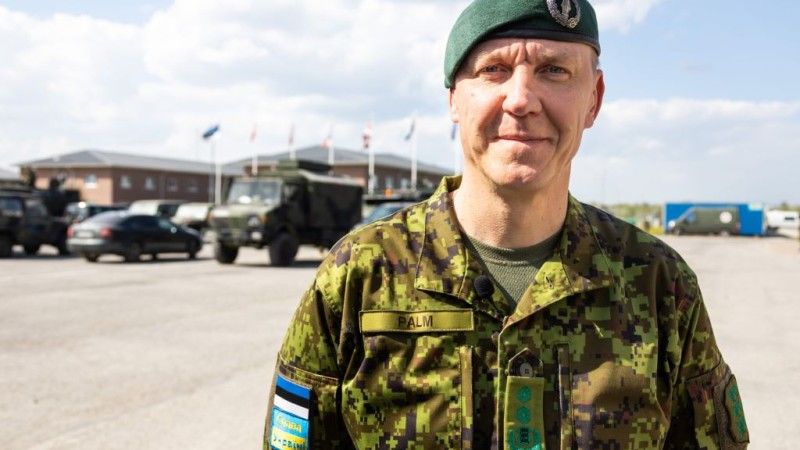
As Russia’s aggression against Ukraine continues to redefine security across Europe, Estonia stands out as a state that has moved from cautious defence to an uncompromising strategy of readiness.
In this conversation with Dr. Aleksander Olech, Major General (Ret.) Veiko-Vello Palm explains how Estonia plans to fight, what it has learned from Ukraine, and why deterrence today must be rooted in mass, speed, and societal resilience rather than technology alone. The discussion highlights deep fires, mobilisation, and Baltic-Polish integration, revealing a mindset not driven by fear, but by determination to impose high costs on any aggressor from the very first minute of conflict.
Dr Aleksander Olech: How do you assess Estonia’s current defence posture in light of Russia’s ongoing aggression against Ukraine and the evolving security environment in the Baltic region?
Major General (Ret.) Veiko-Vello Palm: Estonia’s defence posture is built on deterrence by denial, and we uphold it by consistently demonstrating robust self-defence capabilities and by maintaining a close, operationally meaningful relationship with our allies and NATO. Our approach rests on a strong interpretation of Article 3: Estonia must be able to defend itself from moment one, with ready forces, stockpiles, and infrastructure capable of immediate action and seamless integration with allied formations already in the region.
This posture is not driven by fear of Russia, but by a sober, historically grounded understanding of our neighbour. Russia will remain a threat not only because of its leadership’s aggressive culture and its track record of attacking its neighbours, but also because its imperial mindset leaves it with few non-military tools for exerting influence. Its economic weakness further reinforces its reliance on coercive behaviour. Even if Ukraine is ultimately victorious, these structural factors will persist. For Estonia, the implication is clear: our defence preparations must be continuous, scalable, and firmly embedded in the wider Baltic–Nordic–Polish security architecture, ensuring that deterrence is credible every day, not just in moments of crisis.

What lessons has Estonia drawn from Ukraine’s battlefield experience, particularly regarding mobilisation, command structures, and the role of reserve forces?
The foremost lesson is that large-scale, high-intensity warfare still depends on mass, depth, and resilience. Ukraine has demonstrated that even the most advanced systems cannot compensate for the absence of trained personnel, layered reserves, and robust territorial defence. For Estonia, this reinforces our long-standing reliance on a reserve-based force and rapid mobilisation model. In Estonia, only units that are fully manned, fully armed, fully equipped, properly stocked, trained, and that know precisely what their first mission is, are considered ready for battle. This is why we assign roles, locations, and responsibilities well in advance—so combat power can be generated from moment one without waiting for strategic warning.
A second lesson is the imperative to move at the speed of relevance, especially in information and data sharing. Ukraine shows that digital agility—using readily available tools such as smartphone apps, commercial networks, and rapidly adapted software—is often more effective than highly protected, exquisite systems that NATO nations spend years developing but cannot proliferate or update fast enough. We in NATO sometimes over-engineer our command-and-control solutions, prioritising security to the point that we sacrifice usability, adaptability, and scale. Ukraine’s example demonstrates that what matters in combat is the continuous flow of relevant, timely information to the decision-maker, not the perfection of the system that delivers it.
The third lesson is that war is ultimately the survival of the fittest in its most unforgiving form. To survive and prevail, one must be consistently better than the opponent—not occasionally, but at every turn. This requires, on one hand, a national mindset and organisational culture geared toward constant change, adaptation, and learning; and on the other, a rapid, structured process to identify what works on the battlefield and implement it immediately. Estonia’s total defence model and our close observation of Ukraine reinforce that success in modern war depends on institutional agility combined with societal readiness to embrace continuous improvement under pressure.
How important is civil–military cooperation and societal resilience in Estonia’s defence model, and what elements could be adopted by other NATO countries, including Poland?
Civil–military cooperation and societal resilience are not supporting features of Estonia’s defence model—they are foundational. Estonia’s concept of total defence integrates government institutions, local authorities, critical infrastructure operators, volunteers, and the private sector into a single, coherent framework for crisis and war. Are we fully there yet, and are we satisfied? Certainly not. But the progress over the past decade has been substantial, and the trajectory is clearly positive. This level of integration is essential for a small country that must be able to defend itself from moment one, before large-scale allied reinforcements can arrive.
Two elements stand out as particularly valuable for other NATO countries, including Poland. First, there must be clarity of roles, responsibilities, and legal authorities across all actors—government agencies, local authorities, critical service providers, and volunteer organisations—so that each knows in advance what is expected of them and under which authorisations they operate. One of Estonia’s most important legal principles is that in wartime every authority, agency, and critical service provider continues performing the same essential functions they fulfil in peacetime; the system does not reinvent itself under stress but accelerates what is already known and rehearsed.
Second, a strong public willingness to defend the country is indispensable, supported by the necessity of having armed forces that are respected and trusted by the population—in Estonia, more than 80 percent of citizens express trust in the armed forces. The reserve-based military model strengthens this bond even further, as a significant portion of the population passes through military service, creating a natural connection between the armed forces and society and reinforcing the shared sense of responsibility for national defence.
From your perspective, what are the key capability gaps within NATO’s Eastern Flank that should be prioritised in the coming years?
The first and most fundamental gap is correctly identified: mass warfare and everything connected to it. Western militaries excel at technological overmatch and can deliver an exceptionally strong first punch. The real question is: what about the second, third, and tenth punch? We have capability, but not capacity. The shortfall exists both in the war-economy domain—insufficient industrial scale to sustain high-intensity operations—and in the human domain, where we lack the ability to quickly generate, train, and replace manpower at the required tempo. Without this depth, our forces risk degrading rapidly in actual combat, and the technological edge we rely on could disappear far sooner than expected.
The second gap is the resilience and coherence of communication networks that bind the entire kill chain together. ISR, targeting, long-range fires, air and missile defence, and manoeuvre forces all depend on resilient, secure, high-bandwidth communications. Today, these networks remain fragmented, vulnerable, and often too exquisite to be scaled across the force. Without a robust, redundant digital backbone, even the best sensors and shooters cannot deliver decisive operational effect.
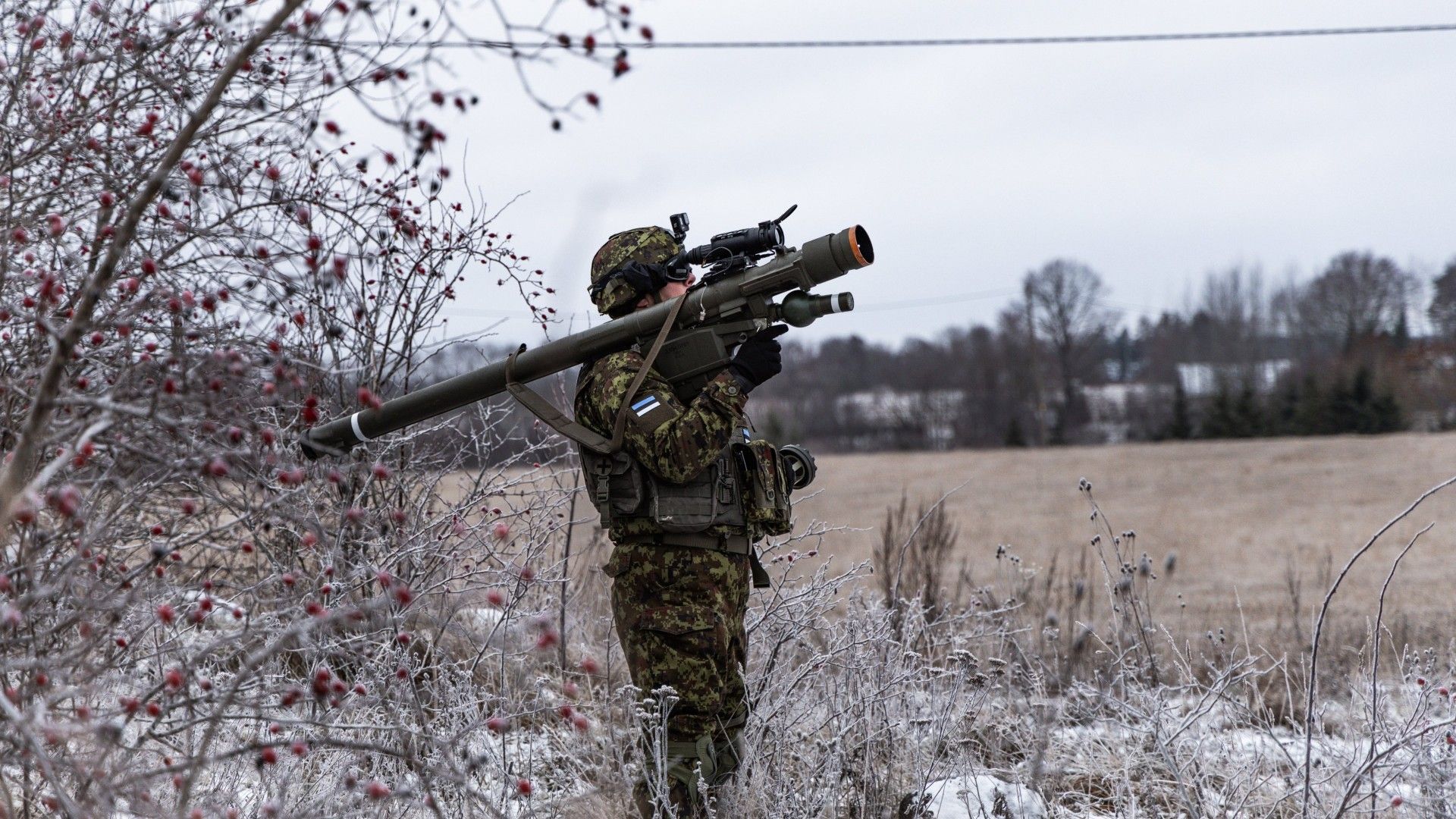
The final gap concerns societal protection in an era where cheap drones, cyber operations, and hybrid tools are Russia’s preferred instruments. Air defence against low-cost UAVs must be massively expanded and made affordable, but this is only part of the challenge. Protecting our societies—critical infrastructure, energy, information systems, and the daily life of our populations—against sustained enemy disruption is now a core military requirement. Without resilient societies, military operations themselves cannot be sustained.
Do you believe that integration and interoperability between the Baltic States and Poland can be further enhanced? If so, in which operational areas?
Yes—there is considerable room for deeper integration, and given the strategic geography of the region, it is not only possible but necessary. The Baltic States and Poland form a single operational space, and our defence planning must increasingly reflect that reality.
The first area for enhancement is fires: artillery, long-range precision fires, counter-battery capabilities, and deep effects. The region needs common targeting procedures, shared ISR inputs, and compatible digital fire-control architectures so that effects can be applied seamlessly across borders.
The second area is air and missile defence. We require an integrated air picture, shared sensor data, and pre-agreed engagement authorities that enable a coherent defence against missiles, drones, and aircraft across the entire Baltic–Polish front. No single state can build a dense enough shield alone; integration is the only practical solution.
Third, mobility and sustainment must be treated as shared responsibilities. Host-nation support, infrastructure planning, logistics hubs, rail capacity, and pre-positioned stocks should be built to serve the region as a whole rather than individual national plans. Russia will seek to disrupt movement at scale; only a unified approach will allow reinforcement and manoeuvre under pressure.
There is, however, too much platform-centric thinking in the current interoperability debate. Whether one army fields this or that tank, IFV, or artillery platform ultimately matters far less than is often assumed. Our most capable platforms exist in limited numbers, and even with Poland’s ambitious modernisation plans, the aggregate quantity of so-called main platforms across the region will remain modest in the context of mass warfare. These systems are important, but they will not be the war-winning factor.
What will matter is interoperability in ammunition and wear-and-tear items—areas where NATO still has significant gaps. Ammunition remains highly OEM-dependent, with limited cross-compatibility, limited shared stockpiles, and too little forward production capacity. The principle should be no different from the civilian world: vacuum cleaners from different brands use the same bags. On the battlefield, forces from Estonia, Latvia, Lithuania, and Poland should be able to draw from the same ammunition pools and replace key consumables without regard to manufacturer.
The same logic applies to dispensable systems such as drones. We need interoperability in categories, power sources, payloads, and data formats, not bespoke national solutions. By standardising what is expendable and consumable, we can enable forward positioning of capabilities, rapid replenishment, and scalable production across Europe. This shift—from platform-centric prestige to logistics-centric practicality—is essential if the region is to sustain combat power in a high-intensity war.
In summary, enhanced integration is both achievable and essential. Geography dictates unity of effort, and the security of each state is directly linked to the readiness and resilience of its neighbours.
How do you see the role of technological innovation and private defence companies in strengthening national and regional deterrence?
Let me begin with an apology, because I am going to evade the question slightly. What really troubles me is that we too often treat lightly the question of whatinnovation actually is. Not every change is innovation, and not every improvement is innovation. On the battlefield there is only one measure of success: the ability to defeat the enemy decisively and quickly. In simple layman’s terms, how rapidly can you destroy targets that matter to the opponent, and how rapidly can you kill or neutralise enemy soldiers. This is not abstract or theoretical—we must translate it into clear, measurable objectives.
Ukrainian leaders have spoken candidly about this. In some interviews they have mentioned that they initially believed inflicting 1,000 Russian casualties would be enough to force the Russian Federation to reconsider its invasion. When that did not happen, they revised the estimate closer to 10,000. Brutal as this sounds, it is at least honest. And it illustrates a crucial point: when evaluating the pace and direction of innovation, we must judge it against similarly concrete benchmarks. If we are moving closer to achieving the required battlefield effects, then innovation is working. If we remain far from the necessary thresholds, then innovation has been inadequate or too slow. If we are not increasing our destructive effectiveness or operational output, then we are moving in the wrong direction. Naturally, not all targets are about killing or destroying; many relate to mass production, logistics, resilience, and sustainment. But the principle remains: innovation must be measured against real operational outcomes.
In this quest, there is very little difference between industry and government. Ultimately, both exist to protect the same society and the same way of life. What is needed from the military and government is the articulation of clear problem statements and unambiguous targets—what must be achieved, on what timeline, and at what scale. Once those objectives are defined, private defence companies can accelerate, scale, and refine solutions rapidly. But without clear operational benchmarks, innovation risks becoming activity for its own sake rather than a driver of decisive battlefield advantage.
What message would you like to send to NATO decision-makers regarding readiness, adaptation, and long-term defence investment?
My message to NATO decision-makers would be straightforward: readiness is a function of time, not intent. We cannot buy back lost time, and we cannot mobilise industrial capacity, trained manpower, or resilient societies once a crisis has already begun. Russia’s war against Ukraine has shown that large-scale conflict in Europe is no longer a hypothetical and that the side which mobilises faster, adapts faster, and sustains the fight longer will determine the outcome.
First, readiness must be understood asactual combat power available today, not future plans or projected deliveries. That means fully manned units, full stockpiles, functioning logistics, resilient communications, and territorial infrastructure prepared to support allied operations from moment one. Anything less is a dangerous illusion.
The rest of my message ties directly to the innovation theme in the previous answer. The biggest fallacy in our current thinking is the belief that innovation, transformation, and adaptation can be managedinside organisations as discretionary internal processes. This is completely wrong. Change in defence is not something youwant to do; it is something youmust orneed to do. When change is voluntary, organisations tend to innovate in areas that are comfortable, familiar, and easy—while avoiding the areas where the battlefield demands the most urgent adaptation. NATO and national leaders must therefore introduce mechanisms that continuously measure our current state against the standards set by real battlefield performance and thatforce adaptation where it is needed most. Those mechanisms must include both incentives and consequences—carrot and stick.
Two additional reforms are essential.
The first is a fundamental reconfiguration of our procurement systems, logic, and methodology—at least in the areas where rapid change is unavoidable. Today’s procurement processes are slow, heavily procedural, and designed to make careful decisions among well-understood, stable technologies or to run long development cycles. They are rooted in decades of predictable evolutionary thinking—in some cases more than a century old, as with armour and artillery. These systems are unusable in fast-changing domains such as drones, counter-UAV, sensors, and electronic warfare, where the battlespace evolves monthly, sometimes weekly.
A second, equally important aspect of procurement relates to mass production. Large-scale warfare is fundamentally about scale, and yet our procurement systems rarely require manufacturers toprove that their equipment or ammunition can be mass-produced. Because budgets, storage space, or training needs often limit initial purchase quantities, we tend to buy only small batches—and this is understandable. But even if we buy only 50 units today, we must know that 5,000 could be produced tomorrow if required. That means analysing supply chains, sub-components, assembly processes, critical materials, and workforce availability. Without this requirement, Europe risks fielding systems that look impressive on paper but cannot be produced at the scale necessary for real war.
The second major reform is budgetary. We must create meaningful room for rapid-turnaround procurement. Today, nearly all defence budgets are fixed at very high levels, with little flexibility and minimal discretionary funding available for emerging needs. This rigidity makes fast adaptation nearly impossible. If we expect our forces to evolve at the speed of relevance, then our budgets must enable—not hinder—rapid acquisition, experimentation, and fielding of new capabilities.
In sum, NATO must institutionalise mechanisms thatforce adaptation, rebuild procurement systems for fast-moving technology areas, require proof of mass-production scalability, and provide the financial flexibility needed to act quickly. Otherwise, we risk preparing for the last war while the next one is already unfolding.
If Russia were to escalate militarily against Estonia or the wider Baltic region, what would be the immediate and expected reaction of the Estonian Armed Forces?
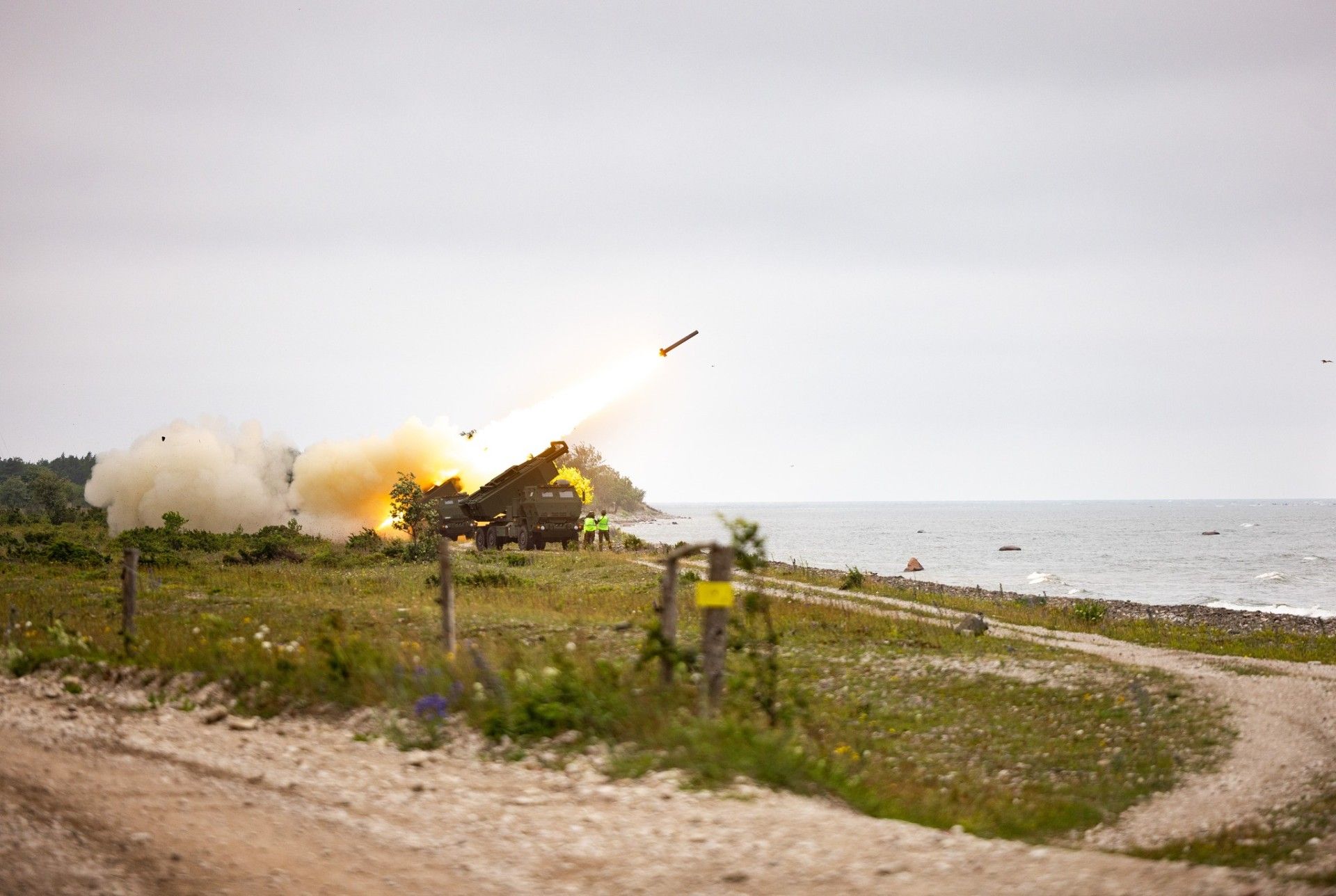
For many years, our military preparations focused primarily on defending the country. In the past few years, however, our thinking has shifted toward a more demanding question: what does it take towin the war? Winning requires not only defending our territory but rapidly taking the fight into the enemy’s area to prevent devastation within our own borders. This is feasible, and without going into operational details, geography is an important advantage. On the Russian side of the border, manoeuvre corridors and movement routes are limited. With rapid, accurate, and devastating deep fires, it is possible—if not to defeat the invader outright—then to break its advance, disrupt its cohesion, and destroy its forces piece by piece before they can concentrate combat power against us.
In parallel, mastering the Baltic Sea must be an immediate priority. Denying the enemy freedom of action at sea—especially in the Gulf of Finland and across key maritime approaches—is essential to prevent isolation of the Baltic States and to maintain operational depth. Estonia has significantly strengthened its deep fires capabilities, processes, and organisational structures in recent years precisely to contribute effectively to this broader operational picture.
However, even if we succeed in the deep fight, a serious close fight will still follow—and must be won. This is where Estonia’s reserve-based defence model becomes decisive. Our territorial defence forces, reserve brigades, and pre-assigned wartime roles enable us to generate large numbers of trained personnel from moment one. These units know their tasks, their terrain, and their mobilisation points. Their purpose is to defend key ground, block enemy advances, protect critical infrastructure, and create the conditions for joint and allied operations to take effect.
In summary, Estonia’s immediate reaction would be multilayered: rapid deep fires to disrupt the enemy, maritime denial to secure the Baltic Sea, and a robust close fight anchored in our reserve forces and territorial defence. All of this would occur in full synchrony with our Baltic, Nordic, Polish, and wider NATO allies. The objective is clear: prevent Russia from achieving quick gains, impose high costs immediately, and ensure that reinforcement flows into a theatre already resisting effectively.
Veiko-Vello Palm- Major General, Estonian Defence Forces (Retired). Member of the Management Board in Frankenburg Technologies. In 2018, he was appointed as the Chief of Staff of the Headquarters of the Defence Forces. He was named Deputy Commander of the Estonian Defence Forces in 2021. In 2023 Palm was appointed the first commander of the Estonian Division.


