












- OPINIA
- WIADOMOŚCI
Europe’s NATO youth rethink patriotism as war returns to the continent
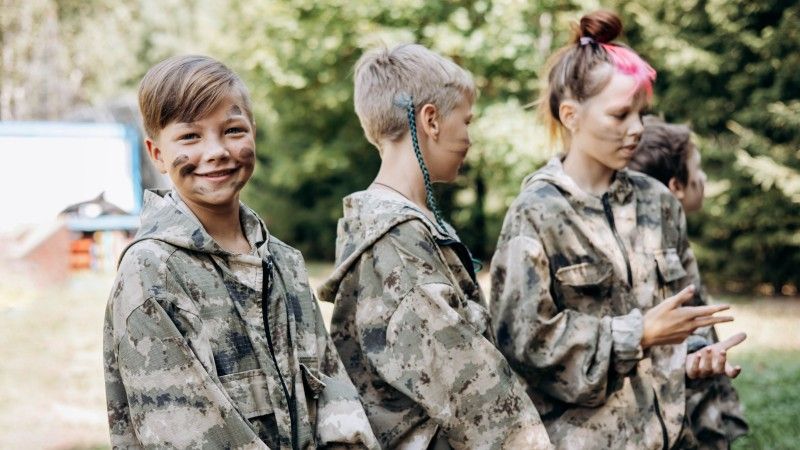
As Europe enters its third year of the largest land war on the continent since 1945, a quiet but profound shift is taking place across NATO’s European societies. The generation that grew up believing conflict belonged to history books is now being confronted with the possibility that war — real, conventional war — might touch their own lives. And what Europe’s young people think about this is no small matter: they are the ones who would fight, or refuse to.
Across NATO Europe, the attitudes of the under-30s form a mosaic rather than a single picture. Support for Ukraine remains high, yet willingness to take up arms varies sharply — shaped by history, political culture, economic precarity and the role of national education systems. In some states, the readiness to defend one’s homeland is rising; in others, the idea feels remote, unthinkable or morally ambiguous.
But beneath the surface lies a deeper tension: can democratic societies prepare young citizens for the reality of defence without slipping into coercive patriotism?
A continent of contrasts
Support for NATO has risen across Europe since Russia’s invasion, but the picture becomes more complicated when the question turns personal:Would you fight for your country?
In Finland, where conscription is universal and broadly supported, the war next door has strengthened a sense of collective duty among the young. Many Finns in their twenties describe defence not as nationalism but as „preserving a way of life”.
Sweden, NATO’s newest member, occupies a unique position in this landscape. Long defined by neutrality and an almost sacred belief in diplomacy, the country reintroduced selective conscription in 2017 — a move driven partly by rising geopolitical tensions. Swedish youth now find themselves navigating a cultural shift: they tend to be socially progressive, sceptical of traditional militarism, yet increasingly aware of the strategic risks in the Baltic region. Patriotism often takes the form of defending liberal values rather than military tradition.
In Poland and the Baltic states, historical memory is a force of its own. The threat of Russian aggression feels immediate, even personal. Unsurprisingly, these states record some of the highest levels of willingness in Europe to defend their countries.
Western Europe tells a different story. In Germany, young adults tend to support Ukraine politically and materially, but their readiness to enlist is far lower. The legacy of militarism casts a long shadow.
In Italy and Spain, economic precarity and political fragmentation shape attitudes. Young Italians and Spaniards are more globally minded and sceptical of militarisation.
France sits somewhere in between — historically confident in its geopolitical role, yet wrestling with youth distrust toward political institutions.
See also 

Education as the quiet front line
Across Europe, classrooms have become unlikely battlegrounds for debates about war, peace and civic responsibility.
The Baltic states and Poland have moved quickly. Schools now teach media literacy, resilience and the basics of civil defence. Lithuania includes practical emergency skills in its curriculum; teachers say students understand the stakes.
Sweden is quietly reshaping its civic curriculum as well. Schools increasingly address preparedness, hybrid threats and crisis management — reflecting a cultural shift from neutrality to vigilance. The emphasis remains characteristically Swedish: practical, cooperative, and socially grounded rather than militaristic.
Finland, by contrast, has long integrated security awareness into everyday schooling. Even before joining NATO, Finnish education included lessons on resilience, emergency readiness and „whole-of-society defence” — a uniquely Finnish concept that blends civic responsibility with social solidarity. Young Finns grow up with a normalised understanding of preparedness: not fear, but competence. Teachers often describe it as „practical citizenship”. The approach mirrors the country’s universal conscription model — widely accepted, civic rather than ideological, and aimed at ensuring society can function even under pressure.
Germany continues to protect its education system from anything resembling militarisation. Civic instruction focuses on democracy, human rights and critical thinking; the Bundeswehr’s presence in schools is regulated and often contested.
In Italy and Spain, peace education dominates. Avoiding any romanticisation of war is the priority, though critics argue this leaves young people underprepared for a newly dangerous Europe.
France meanwhile debates reviving universal civic service — not military conscription, but a mandatory programme aiming to strengthen cohesion and basic readiness. Young people remain divided.
See also

Patriotism without pressure?
European democracies face an uncomfortable paradox: collective security depends on the willingness of individuals — many barely adults — to defend it. Yet democratic ethics demand freedom of conscience, including the freedomnot to fight.
A quiet, but significant, warning is being voiced by youth organisations across NATO: do not treat us as a „capability gap” to be filled. Treat us as citizens with agency.
Across Europe, young people tend to reject patriotism understood as blind loyalty. But they respond to appeals framed around defending shared values: the rule of law, human dignity, democracy itself.
What they resist most is coercion. Moves to revive conscription or expand defence obligations often provoke scepticism. Solidarity, they argue, cannot be legislated — it must be earned through trust.
Crucially, young Europeans want to contribute to defence innon-military ways as well: cyber-security, humanitarian aid, civil protection, disinformation monitoring. For them, patriotism is evolving — more civic than martial.
A generation still forming its answer
If Europe is to avoid either denial or fatalism, it must listen to its young citizens. Their scepticism is not apathy; it is a demand for honest politics. Their fear is not weakness; it is a reminder of what is at stake.
Across NATO Europe, young people are renegotiating the meaning of duty, identity and democracy. What does it mean to belong to a democratic society? What does it mean to protect it? And how far should that protection go?
The answers are still forming — but they will shape the future of European security long after today’s wars fade. A continent entering its most uncertain decade in memory will need not just armies, but imagination, conviction and a generation ready to choose what kind of Europe they wish to inherit.


