












- WIADOMOŚCI
- ANALIZA
Finnish intelligence will be able to strike on Russian territory

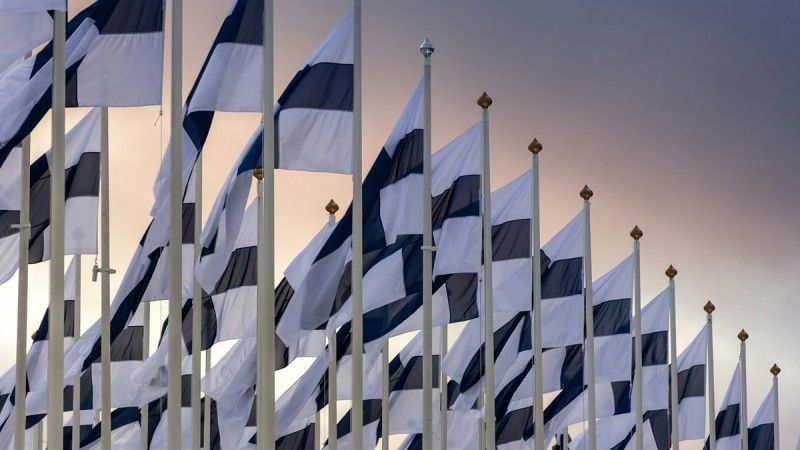
Finland is preparing a significant expansion of the powers of its military intelligence. The new regulations are intended to allow the services not only to increase the scope of their activities outside the country, but also to act offensively against an adversary. In practice, it is the Russian direction that gives this reform its greatest significance.
This is not a change for the civilian security service SUPO, although that reform is also coming. This time, it concerns military intelligence operating within the Finnish Defence Forces. Helsinki is therefore strengthening the instruments of the state exactly where the risk of rivalry with Moscow is now greatest. This encompasses classic reconnaissance, cyber operations, drones, hybrid attacks, and actions below the threshold of war. Finland is preparing to confront Russia directly.
The most important element concerns cyber warfare and information systems. Finnish military intelligence would receive the ability to block, disrupt, and modify such systems if they pose a serious threat to Finland’s defence or national security. In practice, this means the possibility of also acting against infrastructure located outside Finland, including on the territory of the Russian Federation.
See also 

The justification for the reform includes the example of a drone attack. If unmanned systems were to be used against Finland, a more effective response could be interference with the control system or the digital infrastructure that enables such an attack to be prepared. This clearly demonstrates Helsinki’s thinking. A threat does not have to be stopped only once it is already over national territory. It is possible to strike earlier, against the system that enables it. A similar discussion is taking place in Poland on how to respond to a threat before it appears over NATO territory.
Importantly, the changes go even further than cyber operations. The draft also covers intelligence activity outside Finland, reconnaissance, and greater possibilities for using human sources. Significantly, basic activity with human sources could also be conducted by the land forces, the navy, and the air force. This also concerns an offensive presence beyond the country’s borders. This represents an expansion of the way military intelligence works.
Such actions would be decided upon by the Head of Intelligence of the General Staff of the Finnish Defence Forces. Beforehand, consultations between the relevant state authorities would be necessary, and in justified cases, the matter could also be considered at the level of the President and the Government Committee on Foreign and Security Policy. Finland is aware that such operations carry the risk of exposure and escalation. They may therefore have military, political, and escalatory significance.

The Russian context is quite obvious. Finland has more than 1,300 kilometres of border with the Russian Federation, while Moscow uses infrastructure reconnaissance, cyberattacks, migratory pressure, intelligence activities, and the rebuilding of military potential directly on the border against NATO. That is why the new regulations should be understood as preparation for a situation in which a threat begins far from the border but can very easily strike at Finnish security.
Formally, the draft is still undergoing parliamentary review, but the political direction is quite clear. Finland does not want only to observe Russian preparations and strengthen its own intelligence networks. It wants to build offensive capabilities and have the ability to disrupt a system that may be used against it. For a state bordering Russia, such as Poland, this is a change far more important than a simple correction of intelligence legislation.
Will Poland and the Baltic states decide on a similar move?


