












- WIADOMOŚCI
- WYWIADY
Major General Sami Nurmi: “We are not at war, but we are certainly not at peace either” [INTERVIEW]

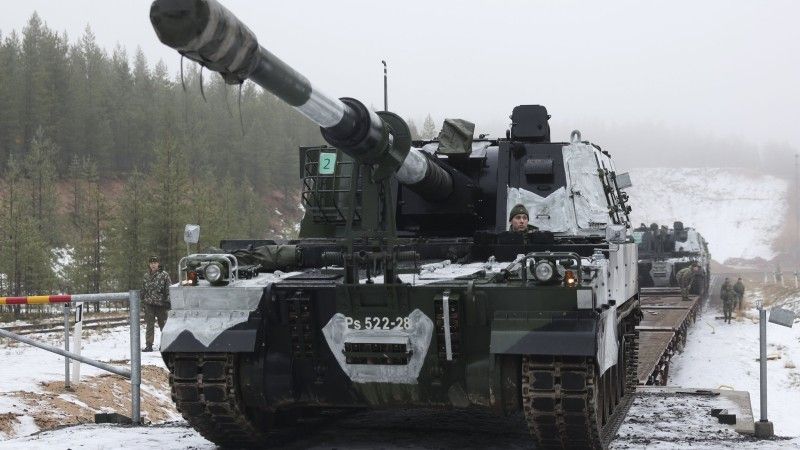
Russia is already expanding military infrastructure close to Finland’s border and preparing to adapt its force posture to the new strategic reality created by Finland and Sweden joining NATO. At the same time, Helsinki is drawing lessons from the war in Ukraine, integrating unmanned systems, preparing for the transition from the F/A-18 to the F-35, strengthening air and missile defence and reconsidering the future shape of its land forces.
In an interview with Defence24.com, Major General Sami Nurmi, Deputy Chief of Staff, Strategy at the Finnish Defence Command, discusses Russia’s military capabilities, NATO’s northern flank, defence cooperation with Poland, the key lessons from the war in Ukraine, the future of tanks and infantry fighting vehicles, Finland’s conscription system, and the increasingly blurred line between peace and war.
Dr Aleksander Olech: General, how do the Finnish Defence Forces currently assess the military challenge posed by Russia?
Major General Sami Nurmi: The security environment in Northern Europe has changed fundamentally. Finland and Sweden joining NATO completely altered the military geography of the region. Russia’s unlawful attack on Ukraine ultimately made that possible, and in Finland the political decision-making process was extraordinarily fast. Within roughly three months we decided that NATO membership was the right solution.
Whether that surprised Moscow is difficult to say. Perhaps it did to some extent. What is clear, however, is that Russia now has to adapt to a very different strategic situation in the north. At the moment, a considerable part of its ground-force potential is tied down in Ukraine, but the war will eventually end in one way or another. When that happens, Russia will have to react more comprehensively to the fact that both Finland and Sweden are now NATO members.
We can already see the first elements of that reaction. Russia has announced organisational changes. It is expanding some brigades into divisions and creating new units close to our borders. Infrastructure is also being constructed, and we monitor these developments closely. At the moment, however, much of this remains infrastructure without the corresponding personnel because a large share of the available manpower is committed to Ukraine.

At the same time, we should not look only at the Russian Army. The Russian Air Force and Navy remain very capable, while the Kola Peninsula and the Murmansk region remain absolutely vital for Russia because of the concentration of strategic assets, including nuclear forces. We also have to consider the Baltic Sea, the shadow fleet and the broader military and hybrid activity taking place around us.
Our own eastern border is currently calm, but it remains closed. This is significant because the Estonian and Norwegian borders with Russia are still open and they are not experiencing the same kind of orchestrated migration pressure that Finland faced. The message we have received from the Russian side is effectively that if we reopen the border, that pressure could resume. Under those circumstances, keeping the border closed remains the responsible decision.
Finland is now part of NATO’s northern defence architecture. How should the Allied military presence in Finland develop? Should it remain predominantly Nordic?
There is naturally a very strong Nordic dimension. Cooperation between Finland and Sweden did not begin with NATO. We had already spent more than a decade developing very close operational cooperation, so NATO membership is in many ways a continuation and institutionalisation of something that already existed.
But the future model cannot consist only of Finland and Sweden working together. If NATO wants a credible forward presence in the north, more Allies need to commit. By commitment I do not mean only participating in exercises or coming here to test equipment and learn about the operating environment. The real question is whether forces would also be available operationally during a crisis.
That is why broader Allied participation matters. France has shown interest, as have Italy and Türkiye, and Poland is also becoming increasingly relevant. For Finland, this is important because NATO’s strength comes precisely from the fact that responsibility for deterrence and defence is shared among 32 Allies.
You mentioned Poland. How important is Poland becoming for Finland from a military perspective?
The United States remains one of our most important bilateral partners, and the Defence Cooperation Agreement gives that relationship additional depth. Sweden is obviously extremely important, Norway is essential because of geography, and Estonia is a very close partner. But I would say that Poland is becoming something of a new rising star in Finnish defence cooperation.

There are very practical reasons for that. Finland and Poland operate some of the same systems. The K9 self-propelled howitzer is one example. Finland will have roughly 200 K9s, while Poland is building an even larger fleet. That creates possibilities for training, maintenance, logistics and potentially broader cooperation.
Finland can also offer excellent training conditions in the north. Polish troops have already exercised here, including with MLRS systems, and the feedback was very positive. The soldiers involved wanted to continue. The Polish Chief of Defence also visited Finland recently, so I see considerable potential not only for bilateral Finnish-Polish cooperation, but potentially also for formats involving Finland, Sweden and Poland together.
The war in Ukraine has triggered an enormous discussion about drones and the future of warfare. What has Finland actually learned from the conflict?
Sometimes I am almost tired of the drone discussion because it can dominate everything else. Of course, unmanned systems are extremely important, and we follow the war in Ukraine very closely. Their use is changing the way we think about organisation, equipment and training. We have to consider how conscripts are trained, how units are structured and how unmanned capabilities are integrated into existing formations.
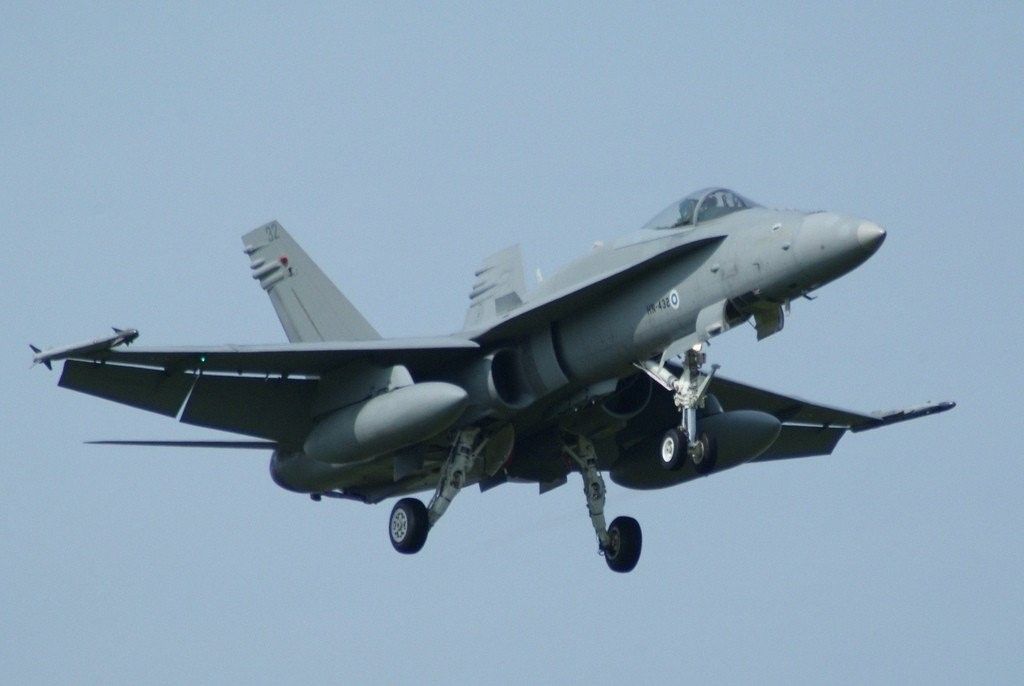
But I would not call this a complete revolution in warfare. It is a major transformation, certainly, but Finland has to learn from Ukraine without simply copying Ukraine. Our starting point is different. Finland is a NATO member, we have very significant artillery capabilities and we possess a capable air force. Today we operate around 60 F/A-18 Hornets, and we are transitioning towards a fleet of 64 F-35s. Our military system therefore looks very different from that of Ukraine in February 2022.
The key lesson is balance. We need new technologies, but we also need traditional capabilities. If you look at Russia’s way of war in Ukraine, you see both. There are drones, electronic warfare and modern precision weapons, but at the same time Russia is still using very old tanks and enormous quantities of conventional equipment. It remains a war of mass, steel, artillery and attrition. The right conclusion is therefore not that everything old has suddenly become irrelevant, but that new and traditional capabilities have to be combined in the right proportions.
Where do unmanned systems fit into Finland’s defence model?
I often describe Finnish defence as a triangle. At its base you have conscription, the reserve and now NATO membership. That is the foundation. Above that you have the broader military capabilities, while at the top there are the most advanced and expensive key systems, such as the future F-35 fleet and our new naval vessels. We cannot possess enormous numbers of those high-end systems, but they have to be extremely capable.
Unmanned systems are different because they cut horizontally across almost the entire triangle. They influence reconnaissance, targeting, logistics, fires, infantry operations and command and control. That is why they will increasingly become an organic part of units rather than something separate. I expect that in the future an infantry formation will routinely include an unmanned-systems element. We are not fully there today, but that is clearly the direction of development.
Again, this means adaptation rather than abandoning the existing structure. Finland should learn from Ukraine, but it must adapt those lessons to Finnish geography, Finnish capabilities and the wider NATO framework.
Finland was neutral before joining NATO, although it already cooperated closely with Western partners. How has membership changed Finland’s role in the Baltic Sea region and the Arctic?
First, it is important to say that Finland was militarily non-aligned, not neutral. We were already an EU member and had extensive international defence cooperation. Today, Finland’s role has to be seen simultaneously through the Baltic and Arctic dimensions. You cannot really separate them because developments in one theatre affect the other.
Finland is an Arctic country, and this sometimes has to be emphasised because the Arctic debate can become too focused on blue-water naval operations. For Finland, the land dimension is equally important.
We have already contributed to NATO air-policing activities outside Finland. Finnish F/A-18s have operated in Romania and Iceland. However, the coming years will be demanding because we are introducing the F-35. That transition will consume resources and attention, so our participation in missions abroad may temporarily be somewhat lower.
In the Baltic states, another question is what Estonia, Latvia and Lithuania themselves want. Finland and Sweden have significant capabilities close to the region, but there is also value in having aircraft and forces from Türkiye, Germany, France and other Allies deploying there. That demonstrates that the Baltic states are defended by the entire Alliance, not simply by their closest Nordic neighbours. So this is not only a military calculation; there is also an important political and strategic-signalling dimension.
Finland is increasing its defence budget. What are the most urgent capability priorities?
The first issue is responsibility. Defence spending is increasing, but the Finnish economy is not in an easy situation. It is improving somewhat, but at the same time that we invest more in defence, savings are being made elsewhere, including in parts of the social welfare system. Therefore, the Finnish Defence Forces have to demonstrate that every additional euro is used responsibly.
In the short term, I would highlight ISR – intelligence, surveillance and reconnaissance – as one of the key areas. Modern command and control is another. Everybody talks about multi-domain operations, but that concept requires a C2 architecture capable of connecting different domains and processing enormous amounts of information. Artificial intelligence will clearly have a role there.
Layered air defence is equally important. Integrated air and missile defence is a very large challenge, and no European country can solve it independently. Cooperation is essential, particularly because ballistic-missile defence remains an area in which European capabilities are limited. We have to look very seriously at how to improve that.
Space is also becoming increasingly important. Here Finland has an interesting advantage because a company such as ICEYE is already producing capabilities that are directly relevant to contemporary defence and intelligence requirements.
How does Finland plan the development of its armed forces over such a rapidly changing period?
We work with a twelve-year development horizon. The detailed plan is classified, of course, but conceptually it can be divided into approximately three four-year periods. The first four years are relatively fixed because much of the funding is already tied to specific projects. The middle period provides more flexibility, while the final four years give us considerably more room to respond to changes.
The problem is that the security environment now changes faster than traditional procurement cycles. We cannot identify a capability gap today and simply say that we will solve it in 2036. That is too late. So we are constantly reviewing the long-term plan and asking which capabilities need to be accelerated.
Does that also apply to heavy land forces? Finland still has around 200 Leopard tanks. Will tanks remain relevant after 2035?
That is one of the questions we will eventually have to answer. Our Leopard fleet will be ageing by the middle of the 2030s. Around 2035 we will therefore have to consider what comes next: whether we buy another generation of tanks, modernise existing platforms or whether the operational role of the tank will have changed fundamentally by then. I do not have the answer today, and that is exactly why long-term planning has to remain flexible.
The same discussion applies to infantry fighting vehicles. They remain a very important part of the land forces. The CV90 is clearly one of the strongest products on the market, and Sweden is naturally an important partner, but Finland is capability-driven rather than supplier-driven.
If France or Poland produced the best infantry fighting vehicle for Finnish requirements, we could buy it from France or Poland. The same principle would apply to tanks. Germany, South Korea and other producers may all have relevant solutions in the future. The first question is not which country we buy from; the first question is what military capability Finland will actually need.
See also 

Finland has also purchased major systems from Israel. Does politics complicate military procurement?
Procurement is ultimately about providing the Finnish Defence Forces with the tools required to defend the country. We buy a considerable amount of equipment from the United States and we have also acquired important capabilities from Israel because some Israeli systems are highly capable, affordable, combat-proven and suited to Finnish requirements. David’s Sling is a good example.
Of course, defence procurement does not exist outside politics. There has been political debate in Finland about cooperation with Israel. But the military’s responsibility is to identify the capabilities needed to defend Finland and make recommendations based on military requirements. Political decision-makers then decide whether a particular acquisition can proceed. In that sense, there are two different levels: the Defence Forces define the capability requirement, while the political leadership makes the final decision.
Unlike many European countries, Finland did not dismantle its mass-defence system after the Cold War. How important was that decision?
It was fundamental. After the Cold War, many European countries reduced their armed forces, abolished conscription and assumed that large-scale territorial defence was becoming less important. Finland took a different path because we still had a very long border with Russia. Geography did not disappear simply because the political environment had improved.
We have a Finnish expression that Russians remain Russians even if you fry them in butter. It sounds humorous, but the strategic meaning is quite simple: geography and long-term national interests remain. Finland therefore maintained conscription, retained a large reserve and continued investing in defence even when spending was only around 1.4 to 1.6 per cent of GDP. That gave us a strong foundation when the security situation deteriorated.

Today, as spending rises, we also have to remember that defence investment cannot consist only of tanks, artillery, aircraft and ships. We need people, infrastructure, ammunition, training and readiness. A sophisticated platform without trained personnel, maintenance, infrastructure and ammunition is not a complete military capability.
Conscription therefore remains more than simply a manpower system?
Absolutely. It is also one of the foundations of the Finnish will to defend the country. Almost every Finnish family has some connection with national defence. A son or daughter may have completed military service, parents or grandparents may have served, and in many families earlier generations fought in Finland’s wars. That means defence is not something distant from society.
Finland has a population of roughly 5.5 million, and within the coming years close to one million people will have completed military service. That creates enormous societal resilience and gives us a very large pool of trained personnel.
Our present wartime strength is 280,000, and we have also been tasked with reassessing what the wartime strength should be in the future. What I can say is that it is not going to decrease.
Beyond the conventional Russian military threat, what concerns Finland most in the hybrid domain?
Hybrid activity is one of the central security challenges because it takes place in the space between the responsibilities of different authorities. The police, Border Guard, Defence Forces, intelligence services and other institutions all need the legal powers, capabilities and procedures required to operate in that environment, and they also have to be able to support one another.
Can the police handle every security incident alone? Probably not. In some circumstances they may need military support. In another situation, the Defence Forces may require assistance from the Border Guard or another authority. The challenge is therefore not simply identifying individual hybrid threats such as sabotage, cyber operations or instrumentalised migration, but creating a national security system that can react quickly when an incident does not fit neatly into the traditional categories of peace or war.
That is where the real difficulty lies. War is relatively easy to understand and peace is relatively easy to understand. The difficult part is everything in between – the grey zone.
Some analysts argue that Europe is already effectively at war with Russia. Would you describe the current situation in those terms?
No. I would not say that we are at war in the classical sense, but I would also not describe the current situation as normal peace. We are operating in an environment in which military pressure, hybrid activity, cyber operations, sabotage, coercion and strategic competition increasingly overlap, which makes the threshold between peace and conflict much less clear than it used to be.
So no, I would not say that we are at war. But we are certainly not at peace either.


