- ANALIZA
- WIADOMOŚCI
Sweden buys HIMARS. 7 billion kronor for rocket artillery and closer cooperation with Finland

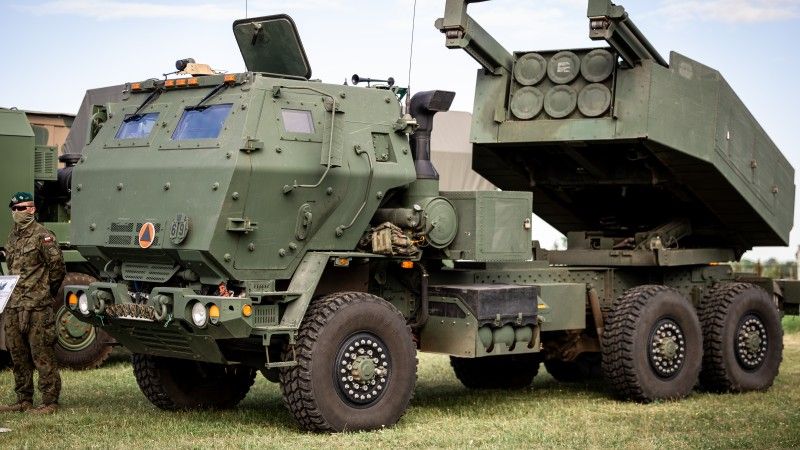
Photo. Robert Suchy/Defence24.pl
Sweden has decided to purchase American HIMARS rocket artillery systems for around 7 billion kronor, or approximately $729 million. Stockholm will buy around ten launchers from Lockheed Martin along with a substantial stock of ammunition, with the first deliveries expected to begin in 2027. At the same time, Sweden and Finland are deepening their cooperation in rocket artillery, creating capabilities that are intended to strengthen both countries on NATO’s northern flank.
The HIMARS purchase is part of a broader overhaul of the Swedish armed forces following the country’s accession to NATO. Stockholm needs to be prepared not only to defend its own territory, but also to operate as part of allied military operations. The Swedish government says the new launchers will increase the country’s ability to conduct precision strikes at longer ranges and complement its existing artillery capabilities. The purchase therefore represents more than the addition of another weapons system. It gives the Swedish army a new layer of rocket artillery that can engage targets well beyond the range of conventional artillery.
There is also a clear political dimension to the timing. The Swedish government announced the purchase on September 7, just six days before the parliamentary election scheduled for September 13. The campaign is closely contested, while national security has become one of the central issues in Swedish politics alongside immigration, crime and the cost of living. Announcing a 7 billion kronor weapons contract immediately before voters go to the polls is therefore difficult to separate entirely from the election calendar. It can be seen as a form of election sausage, although this is not an empty promise. The contract is real, but the first systems will not arrive until 2027.
That does not mean the HIMARS decision was made solely for electoral purposes. Sweden has been increasing defence spending for several years, while Russia’s war against Ukraine has accelerated the rebuilding of Swedish military capabilities. The timing is nevertheless politically convenient. Prime Minister Ulf Kristersson’s government can point to a concrete decision, a concrete amount of money and a specific weapons system rather than simply promising higher defence spending. With the election approaching, that is a particularly useful political message.

HIMARS will complement the Archer
Sweden already operates modern Archer self-propelled howitzers. They are designed primarily to provide artillery support using shells fired from a gun barrel. HIMARS works differently. It is a mobile rocket launcher capable of using different types of ammunition and engaging targets at considerably greater distances. The result is not a replacement for Archer, but an expansion of the area in which Swedish forces can deliver firepower.
That distinction matters because modern artillery is no longer used only against enemy positions close to the front line. Longer-range rocket systems can be used against targets further behind the immediate battlefield, including command posts, logistics facilities, ammunition depots and other infrastructure supporting military operations. For Sweden, HIMARS therefore changes the scale of its artillery capability. The country is not simply acquiring more launchers. It is adding a system designed to reach targets that conventional artillery may not be able to engage.
The initial purchase is relatively modest in numerical terms. Stockholm is acquiring around ten launchers, so it is not immediately creating a large rocket artillery force. The significance of the deal is broader because the purchase also includes ammunition and brings Sweden into the American ecosystem of training, maintenance, spare parts and logistics. In rocket artillery, the number of launchers alone says little about the actual capability of a military. A launcher is useful only if there are enough missiles, trained crews, maintenance capacity and a reliable system for replenishing ammunition.
The ammunition matters almost as much as the launchers
This is why the industrial element of the Swedish decision is important. Lockheed Martin and Swedish defence company Saab are expected to cooperate on ammunition capabilities, including the integration and production of systems that can be used with HIMARS and other weapons. For Stockholm, this creates the possibility of building more of the supporting industrial base in Europe instead of relying entirely on supplies transported from the United States. In peacetime this is largely a question of logistics and cost. During a conflict, the ability to replenish ammunition quickly can become one of the most important constraints on military operations.
The war in Ukraine has demonstrated how quickly artillery ammunition can be consumed during intensive fighting. NATO countries have consequently begun looking at weapons purchases more broadly. The question is no longer simply how many guns, launchers or tanks a country owns. It is also how many rounds are stored, how quickly additional ammunition can be produced, where it is manufactured, how it can be transported and whether the armed forces have enough personnel to operate and maintain the equipment. For Sweden, HIMARS is therefore the beginning of a broader capability rather than the end of the process when the first trucks arrive.
Training is another part of that equation. HIMARS crews need to operate not only the launcher itself, but also within a wider network involving reconnaissance, command systems and logistics. Information about a target must reach the unit quickly, the launcher must move into position, conduct the mission and then relocate. The effectiveness of the weapon therefore depends on the entire chain operating efficiently. Cooperation with countries that already use comparable systems can help Sweden build these capabilities faster.

Stockholm is looking to Finland
The most interesting part of the decision may be the parallel move to deepen cooperation with Finland. The two countries have signed a joint declaration covering rocket artillery cooperation, including capability development, training, maintenance, supply security and potential industrial cooperation. The partnership is logical. Sweden and Finland are now both NATO members, they operate in the same northern European security environment and both have an interest in strengthening the alliance’s northern flank.
Finland already operates the M270 multiple launch rocket system. The M270 and HIMARS belong to the same American family of rocket artillery systems and use compatible ammunition within the same broader family. This means Sweden does not have to build all of its expertise from scratch. It can draw on Finnish experience in training, maintenance, unit organisation and ammunition stockpiling. Over time, this could also make it easier for the two countries to conduct joint operations and coordinate their logistics.
The cooperation is about more than putting Swedish and Finnish launchers together during military exercises. Rocket artillery depends on reconnaissance, communications, command systems and logistics. If both countries use compatible systems and develop common procedures, they can make it easier to exchange information and coordinate operations. In the Baltic Sea region, this is particularly important because a potential conflict would not necessarily remain confined to a single front. Military activity could affect a much wider area of northern Europe.
The election timing is politically significant
For the Swedish government, the timing of the announcement is exceptionally favourable. The election takes place on September 13, while recent polling shows a narrow gap between the government camp and the opposition. A Novus poll published on September 7 put the centre-left bloc at 50.3 percent and the governing parties together with the Sweden Democrats at 47.9 percent. The position of the Liberals is particularly important because the party is hovering around the four percent threshold required to enter parliament and could influence the formation of the next government.
In such an environment, any issue that allows the government to demonstrate credibility on national security carries political value. Announcing a weapons purchase worth $729 million gives the prime minister and defence minister a very concrete argument. The government can show voters that it is not merely talking about higher defence spending, but is actually signing contracts and adding new military capabilities. At the same time, it would be misleading to describe HIMARS simply as an election prop. The purchase fits into a longer-term military buildup, and its implementation will take place over several years. The political benefit, however, arrives immediately because the decision is being presented to voters just days before they cast their ballots.
Security has become an especially useful issue for the government because Sweden’s strategic position has changed dramatically in recent years. The country joined NATO after abandoning decades of military non-alignment, while Russia’s invasion of Ukraine transformed the security debate across northern Europe. Defence policy is therefore no longer an abstract foreign policy question for Swedish voters. It is about military spending, national preparedness, NATO membership and the ability to respond to a potential conflict in the Baltic and Nordic region. HIMARS allows the government to connect all of those issues to one tangible decision.
See also 

Sweden is building the ability to strike at greater distances
The most important military change resulting from the HIMARS purchase concerns how Sweden will use artillery. Archer will remain a key system for supporting ground forces, while rocket artillery gives Sweden the ability to move part of its firepower further away from the immediate battlefield. This allows the military to put greater pressure on an opponent’s rear areas without relying exclusively on conventional artillery.
Mobility is equally important. HIMARS is mounted on a wheeled vehicle, allowing the launcher to move relatively quickly between firing positions. On a modern battlefield, this matters because artillery units can become targets soon after firing. A system that can conduct a mission and then relocate is harder to find and strike than a fixed launcher. Mobility does not replace reconnaissance, air defence or other forms of protection, but it increases the chances that the unit can survive and be used again.
For Sweden, this capability has particular significance because of the country’s geography and its role in northern European defence. Swedish forces have to be able to operate across a large territory while also cooperating with Finland, Norway and other NATO members. Mobile rocket systems can be moved between different areas depending on operational requirements. Ten launchers will not transform the military balance in the region, but they give Sweden a capability that becomes increasingly important as the country builds a larger and more integrated defence structure.