












- ANALIZA
- WIADOMOŚCI
Finland joins France’s nuclear deterrence

Finland has decided to join France’s Forward Deterrence initiative. This is an important change because Helsinki was initially cautious and did not immediately commit to the French proposal. Now Finland is combining one of Europe’s strongest conventional militaries with participation in an additional European nuclear deterrence framework. For France, the decision is equally important because Paris is becoming increasingly present not only on NATO’s eastern flank, but across the entire Nordic region.
President Emmanuel Macron presented the concept of Forward Deterrence in March 2026, developing the idea that France’s vital interests have a European dimension. Finland showed interest relatively quickly, but Helsinki did not rush its decision. Nuclear issues remain politically sensitive, particularly for a country that spent decades outside NATO and only joined the Alliance after Russia’s full-scale invasion of Ukraine.
That hesitation is now over and Finland has formally joined an initiative in which Sweden, Norway and Denmark are already involved. The broader European discussion around French deterrence also includes Poland, Germany, Belgium, the Netherlands and Greece. The United Kingdom occupies a different position because it possesses its own nuclear arsenal, but French-British nuclear cooperation has also become significantly closer. London and Paris have increasingly stressed that their independent deterrents can contribute to the security of Europe as a whole.
The Nordic dimension is particularly important. Sweden, Denmark, Norway and Finland are now all part of the French discussion. Only a few years ago, France was not one of the first countries associated with security in the High North. Today Paris is developing conventional, political and nuclear cooperation from the Baltic Sea to the Arctic. For France, this is a major geopolitical gain.
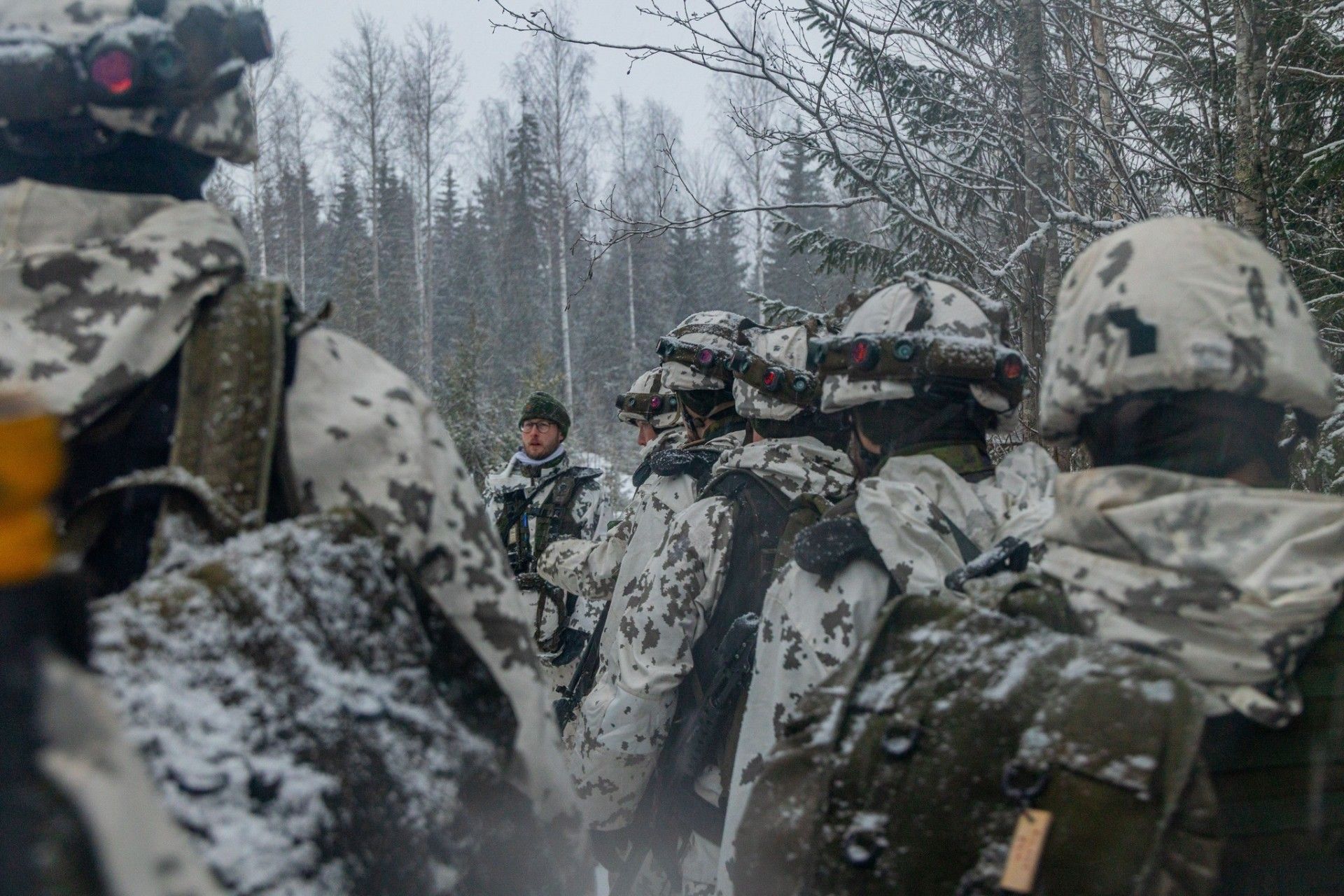
Finland is also a particularly important partner. It has a long border with Russia, a large reserve system, substantial artillery capabilities and a society prepared for national defence. NATO is simultaneously strengthening its conventional presence in the country. Helsinki is therefore not looking at French deterrence as an alternative to building its own military capabilities. It is doing both.
This is exactly how European deterrence should develop. Nuclear weapons cannot compensate for insufficient conventional forces, and conventional forces cannot replace nuclear deterrence. Finland is strengthening its army, integrating with NATO and at the same time creating another channel of strategic cooperation with France.
The French offer also needs to be understood correctly. Paris is not proposing to station French nuclear warheads permanently in Finland, Poland or other participating states. France retains sovereign control over its nuclear arsenal, and participating countries are not being asked to finance it. The initiative also does not create an automatic French equivalent of NATO’s Article 5.
The next step will be the establishment of a bilateral Nuclear Steering Group between France and Finland. Cooperation may include participation in exercises, initially as an observer, strategic consultations and potentially temporary deployments of the French Strategic Air Forces to Finland. This last element would be particularly significant.
France possesses an independent arsenal of roughly 290 nuclear warheads. Its deterrent rests on two pillars: the oceanic component based on fourLe Triomphant-class ballistic-missile submarines armed with M51 missiles, and the airborne component using Rafale aircraft with ASMPA nuclear missiles. France also regularly exercises the airborne element, including through the POKER exercises.
The possibility of French strategic aircraft operating temporarily from or over Northern Europe therefore has a meaning that goes beyond symbolism. It would demonstrate that French nuclear forces can be connected with the defence of allies much further east and north than France itself. Permanent deployment is not necessary to achieve this effect. Exercises, temporary presence and the ability to move strategic forces rapidly are already part of deterrence.
This is also important because Russia has enormous military and nuclear infrastructure in its north-western regions. The Kola Peninsula remains one of the most important areas for Russian strategic forces. Finland’s accession therefore extends the political geography of French deterrence towards an area that is crucial for Moscow.

At the same time, the French initiative does not replace NATO’s nuclear umbrella or the American nuclear guarantee. This distinction remains essential. The United States remains the central nuclear power within NATO, and European states continue to depend heavily on American capabilities. French deterrence should therefore be treated as an additional layer rather than an alternative.
That has also been the most realistic direction for Poland. The objective should not be to choose between the United States and France. European security is stronger when American, French and, where possible, British nuclear capabilities reinforce one another. Joint exercises, strategic signalling and the presence of nuclear-capable aircraft on NATO’s eastern and northern flanks can strengthen deterrence without transferring control over nuclear weapons.
Finland’s decision shows that this discussion is moving from political declarations towards practical cooperation. First came the debate about whether France could contribute more directly to European nuclear deterrence. Now Nuclear Steering Groups, exercises and possible deployments are beginning to appear.
For Paris, Finland is therefore more than another country joining Macron’s initiative. With Sweden, Norway, Denmark and now Finland involved, France is becoming a much more important military actor in Northern Europe. It is increasingly connecting its independent nuclear deterrent with conventional cooperation from the Baltic region to the High North.
For Finland, the logic is equally clear. Helsinki was cautious, assessed the proposal and ultimately decided to participate. It now has NATO membership, a powerful national army, a growing allied military presence and an additional channel of nuclear deterrence cooperation with France. Russia will have to take all four elements into account.


