












- ANALIZA
- KOMENTARZ
- WIADOMOŚCI
Nordic nuclear shift: Finland opens, Sweden seeks its own umbrella

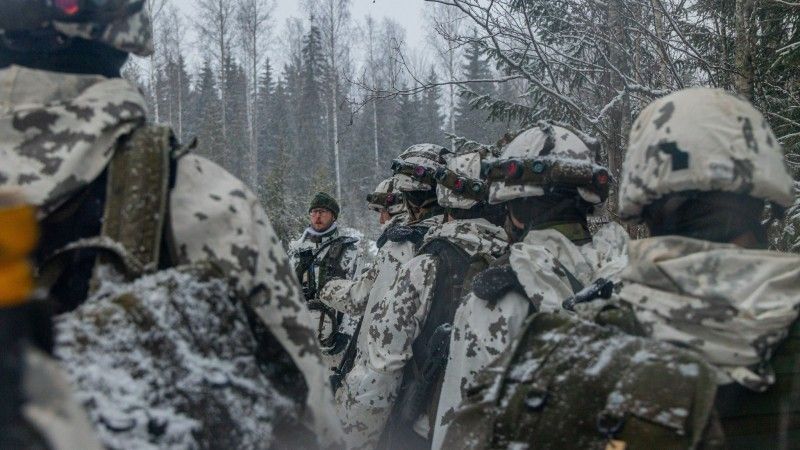
For decades, Finland and Sweden built their security on neutrality, staying outside military alliances and maintaining strict national restrictions on nuclear weapons. That era ended in 2023 and 2024 when both countries joined NATO in response to Russia’s full-scale invasion of Ukraine. Now, two years later, the two Nordic neighbors are moving at different speeds to adapt their laws and defence postures to the new reality.
Finland’s current legislation, dating back to the Cold War, prohibits the import, storage and transit of nuclear explosives on its territory. After joining NATO, the Finnish government realized that this law created a problem for alliance cooperation. In peacetime, NATO does not permanently station nuclear weapons on Finnish soil, and Helsinki repeatedly stated that it does not intend to host such weapons. However, in a crisis or war, the alliance might need to move nuclear-capable aircraft or transport nuclear components through Finnish territory.
– Finland is changing its law to remove barriers for nuclear cooperation within NATO. After joining the Alliance, the existing ban blocked, among other things, overflights of aircraft with nuclear weapons and transport of such cargo – Finnish officials explained.
The government proposed amendments that would allow such operations during war or in the context of collective defence under Article 5. At the same time, Finnish authorities stressed that the changes do not mean consent to permanent peacetime storage of nuclear weapons on their soil.
– The goal is full adaptation to NATO standards and active participation in the Alliance’s deterrence strategy – said Finnish Prime Minister Petteri Orpo.
The legal change requires parliamentary approval, which is expected in the spring of 2026. Most major parties support the move, seeing it as a necessary step to integrate Finland fully into NATO’s defence planning. Opposition from leftist and pacifist groups remains, but it lacks the numbers to block the bill.
Sweden goes further
Sweden’s approach is more ambitious. Already in January 2026, Prime Minister Ulf Kristersson confirmed that Sweden is conducting preliminary talks with France and Britain – Europe’s two nuclear powers – regarding possible cooperation in the field of nuclear weapons. These discussions are not about buying nuclear bombs, but about exploring how Sweden could contribute to or benefit from a European nuclear deterrent, independent of the United States.
– Sweden is leading discussions on its own nuclear umbrella. Prime Minister Ulf Kristersson confirmed in January 2026 that his country is conducting preliminary talks with France and Britain on possible cooperation in the field of nuclear weapons – according to official statements.
Swedish Defence Minister Pål Jonson went a step further, expressing the opinion that nuclear weapons should be allowed to be deployed on Swedish territory during war. That statement would have been unthinkable just a few years ago, but the security landscape has changed dramatically.
– Nuclear weapons should be able to be deployed on Swedish territory during war – said Pål Jonson, Sweden’s Minister of Defence.
Stockholm has not yet decided to seek its own nuclear arsenal. However, the very fact that such discussions are taking place shows how profoundly the war in Ukraine and the uncertain commitment of the United States have shifted Swedish thinking. Sweden, which abolished its own nuclear weapons program in the 1960s and signed the Non-Proliferation Treaty (NPT) as a non-nuclear state, is now openly considering nuclear cooperation.
See also 

European nuclear concerns
Behind both countries« moves lies a growing debate in Europe about greater independence from the American nuclear umbrella. The United States still deploys an estimated 100 B61 nuclear bombs in Europe – in Belgium, Germany, Italy, the Netherlands and Turkey – and provides nuclear sharing via NATO’s Dual-Capable Aircraft (DCA). However, the stability of this arrangement is under question.
Former President Donald Trump, during his campaign and after returning to office, repeatedly questioned America’s commitment to European defence. In 2025, he suggested that allies should not count on automatic US protection if they do not pay enough for their own militaries. Then, in February 2026, the US became embroiled in a war with Iran in the Persian Gulf, diverting its military resources and attention. European leaders began to ask: will America always be there?
France has long been the loudest voice for European strategic autonomy in nuclear matters. President Emmanuel Macron has repeatedly offered to open a „strategic dialogue” on the role of French nuclear deterrence for European partners. Britain, which also possesses its own nuclear arsenal (Trident missiles on Vanguard-class submarines), has been more cautious, traditionally focusing on NATO. However, the war in Ukraine and the US-Iran war have prompted London to be more open.
Sweden’s talks with both Paris and London suggest that a new European nuclear framework could emerge – one where non-nuclear states like Sweden, Finland, and perhaps Poland contribute capabilities (e.g., conventional forces, intelligence, basing, anti-submarine warfare) in exchange for nuclear protection.

Finland's different choice
Finland, for now, is not joining Sweden in nuclear-sharing talks. Helsinki’s priority is to integrate into existing NATO structures, not to build a separate European capability. The Finnish government believes that the American nuclear umbrella remains the most credible deterrent and that any European alternative would take years to develop. Moreover, Finland shares a 1,340-kilometer border with Russia – the longest of any NATO ally. Hosting permanent nuclear weapons would be a major provocation that Helsinki wants to avoid in peacetime.
– Finland is changing its law to enable nuclear cooperation in crisis, but it does not seek to host nuclear weapons in peacetime – summarized Finnish Foreign Minister Elina Valtonen.
Still, Finland’s legal change is significant. It removes a potential obstacle to the deployment of nuclear-capable NATO aircraft, such as the B-61 delivery by F-35 or F-16, during an armed attack. In wartime, Finland could become a rear base for allied nuclear operations, even if no bombs are stored there permanently.

Russian reaction
Russia has condemned both countries« moves as destabilizing and a violation of the Nuclear Non-Proliferation Treaty’s spirit, if not its letter. Moscow’s Foreign Ministry issued a statement on April 15, 2026, warning that „steps to lower the threshold for nuclear use by new NATO members will be met with appropriate countermeasures.” Russian state media have already begun referring to Sweden and Finland as „nuclear targets” – rhetoric that was previously reserved for the United States and Britain.
However, Russia’s ability to respond without escalating into a direct conflict with NATO is limited. The Russian army is still bogged down in Ukraine, suffering heavy losses. Its northern flank, bordering Finland, is guarded by a weakened force. Moscow can protest and threaten, but it cannot easily attack.
US reaction
The United States has publicly welcomed Finland’s legal adjustments as a positive step for alliance unity. The Pentagon issued a statement saying that „any NATO ally that removes obstacles to collective defence strengthens the alliance.” On Sweden’s talks with France and Britain, the US reaction has been more muted. Officially, Washington supports European efforts to increase defence spending and capabilities, as long as they complement, not replace, NATO.
Unofficially, some US officials are concerned. If Sweden – a close US partner – moves toward a French or British nuclear umbrella, it could signal that European allies have lost confidence in the American guarantee. That would weaken the very foundation of NATO.
– It’s a delicate balance. We want Europeans to take more responsibility, but we don’t want them to doubt our commitments – said a senior US diplomat (as reported by Reuters, April 20, 2026).
Pressures from the war
Both Finland and Sweden are accelerating their nuclear policy changes because of the war that began on February 28, 2026 – the US-Israeli bombing of Iran and Iran’s retaliation. The conflict in the Gulf has shown how quickly global stability can unravel. Oil prices have tripled, sea lanes are under threat, and the US, the traditional guarantor, is distracted.
European leaders now realize that they cannot rely entirely on America’s nuclear shield. Finland, with its long border, and Sweden, with its strategic island of Gotland in the Baltic Sea, feel particularly exposed. Both countries are building up their conventional forces – Sweden has reintroduced conscription; Finland operates one of Europe’s largest artillery arsenals – but they know that against a nuclear-armed Russia, conventional strength is not enough.
That is why Helsinki is changing the law, and Stockholm is talking to Paris and London. Not because they plan to use nuclear weapons, but because they want to ensure that in a future crisis, they are not left unprotected.
What happens next?
Finland’s parliament is expected to vote on the nuclear law amendment in May 2026. Approval is likely. The new law would enter into force shortly thereafter, removing the barriers.
Sweden’s process will take longer. Talks with France and Britain are still at an exploratory stage. Any concrete agreement would require a national debate, parliamentary approval, and probably a referendum. That could take years. However, the very fact that the discussion has begun signals a major shift in Swedish defence policy.
Both countries are moving in the same direction – toward deeper integration with NATO and higher readiness for nuclear cooperation. But they are taking different routes. Finland is removing obstacles; Sweden is building options. Together, they are redefining the Nordic security landscape, not by abandoning their identity as responsible, non-proliferation states, but by adapting that identity to a more dangerous world. And the world – from Moscow to Washington – is watching.


