












- ANALIZA
- KOMENTARZ
- WIADOMOŚCI
Strategic autonomy in practice: What the renewed Franco-Greek Pact really means

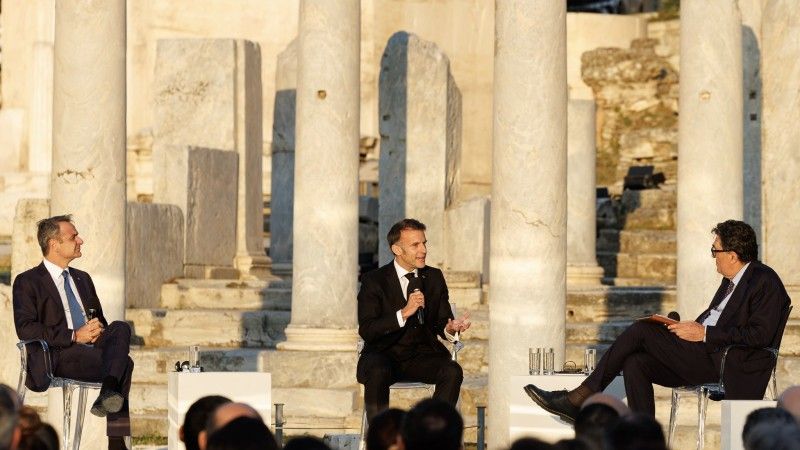
During Emmanuel Macron’s visit to Athens, France and Greece renewed their Strategic Partnership Agreement in the field of defence and security, originally signed in 2021. The agreement was extended for another five years, with an automatic renewal mechanism, giving it a long-term character that extends beyond current electoral cycles in both countries.
A key element remains the clause on mutual assistance in the event of a threat to either party’s sovereignty. Nine additional agreements were also signed, covering areas such as defence, research and development, education, energy, nuclear technologies, and digital maritime systems. The scale and scope of these documents indicate that this is not a classic military alliance, but rather an attempt to build a multidimensional strategic axis.
Strategic autonomy in practice: what does the renewed Athens–Paris agreement really mean?
Politically, this agreement is of particular importance for Greece. For years, Athens has been trying to strengthen its position in the Eastern Mediterranean, where tensions with Türkiye concern not only territorial disputes but also maritime jurisdiction, the continental shelf, airspace, the exploitation of natural resources, and the status of Cyprus. In this context, France is becoming not only an arms supplier to Greece but also a political guarantor and partner, ready to demonstrate its military presence.
The most telling element of Emmanuel Macron’s visit was his declaration regarding the potential threat to Greece. He stated that France „will be present” if Athens« sovereignty is challenged. In the Greek public debate, this was perceived as a clear signal of support for Athens. In Türkiye, however, it was seen as an indirect message directed at Ankara. In reality, in the context of Greek–Turkish tensions, it was a de facto declaration of deterrence, although formally framed in the language of European solidarity and international law.
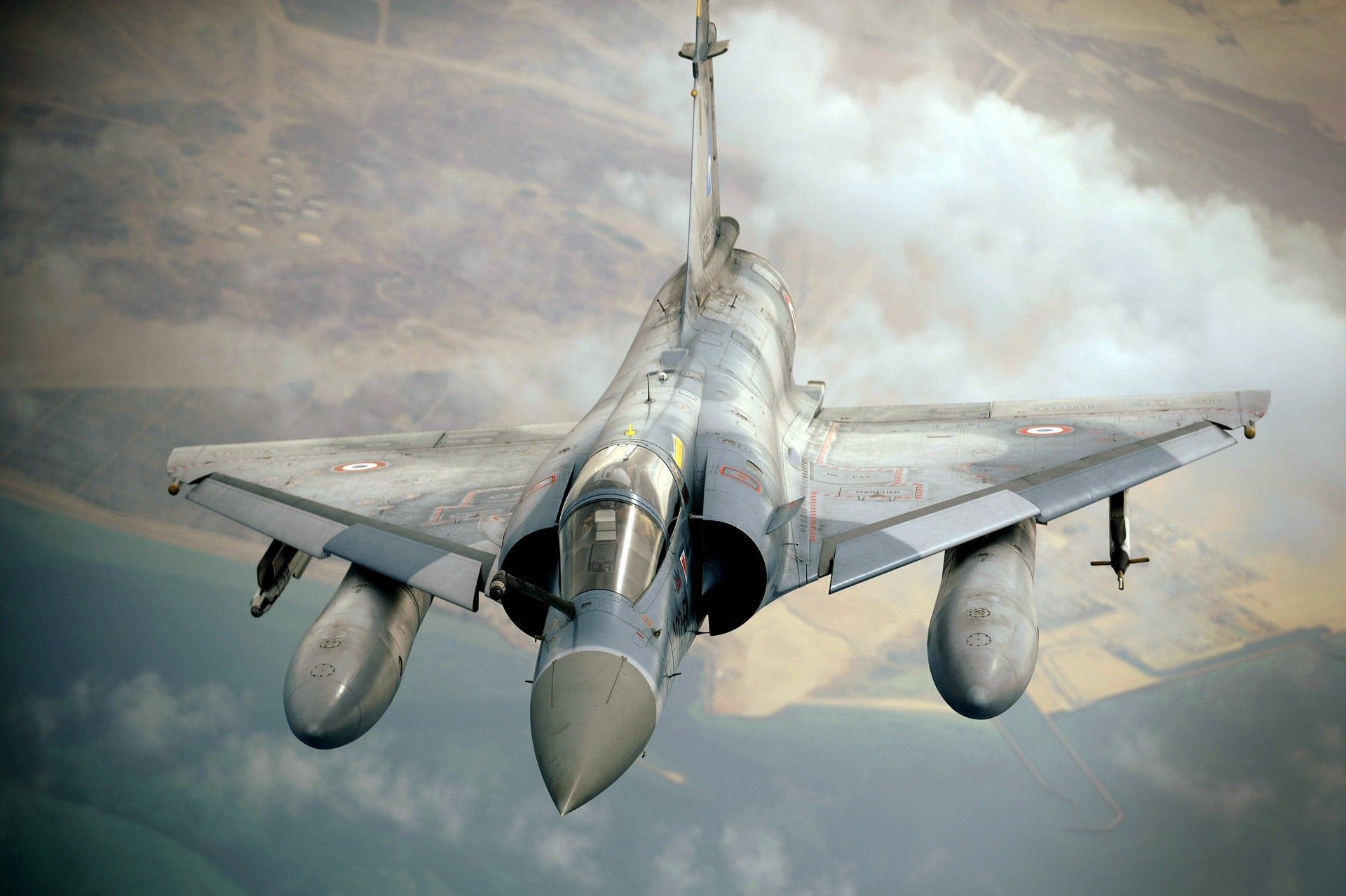
This declaration is not without foundation. Macron referred to previous episodes of French activity in the region, including the 2020–2021 crisis surrounding the Turkish research vessel Oruç Reis. At the time, Ankara maintained that the vessel was operating on its continental shelf and in accordance with its own legal framework, while Athens portrayed Türkiye’s actions as a violation of Greek interests. In the background, contact also occurred between the Turkish frigate TCG Kemal Reis and the Greek frigate HS Limnos. France then deployed Rafale fighter jets and warships to the region, signalling its readiness to support Greece. The current agreement institutionalizes this logic.
For Athens, this represents a clear strengthening of deterrence. Greece has long functioned as a frontline state in southeastern Europe, vulnerable to migratory pressures, tensions with Türkiye, and instability in the Mediterranean. Partnership with France increases its capacity to respond and may enhance its standing within the EU. For Paris, this is an opportunity to reaffirm its role as a key promoter of European strategic autonomy.

From Military Alliance to Strategic Axis
The new package of agreements clearly demonstrates that Franco-Greek relations go beyond classic military cooperation. The documents signed in Athens show that Greece and France do not intend to limit their partnership to arms purchases or joint declarations. The new „Enhanced Comprehensive Strategic Partnership” includes, among other things: a renewed strategic defence partnership, a cooperation plan between the foreign ministries, a declaration on vocational training and lifelong learning, an action plan for higher education and scientific research for 2026–2030, a declaration on cooperation in nuclear technologies, an agreement on the development of digital ocean systems, a declaration on defence research and innovation, and a framework agreement on support for the MICA IR/RF missiles manufactured by MBDA France.
This last element is particularly important, as it demonstrates that the political partnership translates into concrete industrial-military ties. It is worth noting that Greece has previously purchased French Rafale fighter jets and Belharra-class frigates. Emmanuel Macron’s visit symbolically included an inspection of the frigate Kimon in the port of Piraeus. This ship provides clear evidence of Greece’s growing reliance on French technology for military modernization.
From France’s perspective, this is also a form of influence projection. Paris is strengthening its presence in the Mediterranean region, increasing its defence industry exports, and building a network of partners who share France’s approach to European security. For Greece, this cooperation means access to advanced technologies and political support. Together, the two countries form an axis that could become a benchmark for other EU members. Therefore, this is not just about Greece. It is about a model that France can present to other EU countries as an example of practical strategic autonomy.

Article 42.7 as a Political Tool
A key element of Emmanuel Macron’s narrative was a reference to Article 42.7 of the Treaty on European Union, the EU’s mutual assistance clause. For years, it remained overshadowed by NATO and its Article 5. Today, it is beginning to be seen as a potential cornerstone of European defence policy.
This provision stipulates that if an EU member state becomes the victim of armed aggression on its territory, other states are obliged to provide assistance by all available means. Macron emphasized in Athens that for France and Greece, this clause is not empty rhetoric. The French president described it as unequivocal, and Kyriakos Mitsotakis emphasized that strengthening European defence should complement NATO, not replace it.
Macron is trying to give this process a practical dimension. His message can be summarized as follows: Europe cannot be a mere consumer of security provided by the United States. It must build its own capabilities, its own industry, its own deterrence instruments, and its own response mechanisms. The Greek-French pact thus becomes an example of „strategic autonomy in practice.” The problem is that such a process is not geopolitically neutral and can be interpreted differently depending on the country and the broader geopolitical context.
Cyprus as the Second Pillar of French Presence
An additional element strengthening the agreement’s significance is the parallel agreement between France and the Republic of Cyprus. It enables an expanded French military presence on the island and fits into a broader strategy of building French power projection in the region.
Cyprus plays a key role here. It is not a member of NATO, but it is a member of the European Union. This makes any French military activity on the island doubly significant: on the one hand, it strengthens the position of the Republic of Cyprus, and on the other, it demonstrates that the EU can conduct security operations outside the traditional NATO framework. However, it also increases tensions with Türkiye, which does not recognize the Republic of Cyprus in its current form.
Türkiye: Partner or Adversary?
Türkiye remains the most sensitive piece of the puzzle. Formally, the Franco-Greek agreement is not directed against any country. In practice, however, its regional context is clear.
For years, Ankara has viewed cooperation between Greece, Cyprus, Israel, and other countries as part of a broader attempt to limit Türkiye’s room for manoeuvre. This applies to both the Aegean Sea and the Eastern Mediterranean. In Turkish strategic thinking, cooperation between Greece, Cyprus, Israel, France, and some Western countries could create a structure that not only fails to stabilize the region but also puts pressure on Türkiye. Statements by Turkish Foreign Minister Hakan Fidan at the 2026 Antalya Diplomacy Forum fit this narrative. He argued that new arrangements in the region could lead to destabilization and create the impression that Türkiye is being „encircled.”
This clearly illustrates the difference in perception. For Athens and Paris, the new agreement is an instrument of deterrence. For Ankara, it could be evidence of the formation of an anti-Turkish axis. For Cyprus, it could serve as a security guarantee. For Russia, it could be seen as an element of broader European militarization. Therefore, the Greek–French pact is not merely a local agreement – it is part of competing security narratives.
See also 

Russia's Response and the Nuclear Dimension
An additional nuclear dimension emerges in the context of France’s plans to expand its deterrent role. Emmanuel Macron has been promoting discussion about a possible European role for France’s nuclear deterrent for months. In March, he announced the development of France’s arsenal and the possibility of temporarily deploying nuclear-capable aircraft in partner countries. Among the countries mentioned in this context were the United Kingdom, Germany, Poland, the Netherlands, Belgium, Greece, Sweden, and Denmark.
However, it should be noted that any strengthening of deterrence by the EU would likely provoke a Russian response, increasing the risk of escalation at the level of perception. Moscow has previously warned that countries hosting French systems could become targets in the event of a conflict.
Alexander Grushko, Russia’s Deputy Foreign Minister, warned that European countries hosting French nuclear-capable aircraft would become potential targets for Russian forces in the event of a conflict. Reuters reported that Moscow considers such a scenario to be part of an „uncontrolled expansion” of NATO’s nuclear capabilities. In the Greek public debate, this signal is particularly significant. On the one hand, the possibility of being placed under a broader French deterrence umbrella could be perceived as an additional guarantee against Türkiye. On the other hand, it could increase Greece’s exposure to threats from Russia. In practice, Athens could find itself in a situation where increased security in one strategic direction generates new risks in another.
This dynamic is typical of the current phase of European security policy. States seek to increase resilience and deterrence, but any new defensive instrument is interpreted by adversaries as escalation.

Between NATO and Strategic Autonomy
The greatest challenge remains the relationship between European autonomy and NATO. Emmanuel Macron and Kyriakos Mitsotakis have emphasized that their actions do not weaken the Alliance but rather strengthen its European pillar. This argument makes sense, but it does not eliminate all tensions.
First, Türkiye is a NATO member. If Ankara interprets the Franco-Greek cooperation as directed against it, we are faced with a paradox: countries belonging to the same alliance strengthen mutual deterrence through additional bilateral agreements.
Second, Cyprus is not a NATO member but a member of the EU. This means that European security mechanisms can be activated in situations where NATO is unwilling or unable to act decisively due to conflicting interests among its members.
Third, France’s nuclear ambitions and the discussion on European deterrence may raise questions about the division of competences between the US, NATO, and the EU. France’s nuclear arsenal remains national, not EU-wide. Despite this, Macron is trying to give it a European dimension. This may strengthen the sense of security of some countries, but at the same time, it may trigger new disputes over control, responsibility, and guarantees.
Conclusions
The renewed Greek-French defence pact is one of the most important examples of European strategic autonomy in practice. The greatest significance of this agreement lies in its redefinition of the concept of European solidarity. However, the question arises: is Europe moving toward a strengthened European pillar within NATO, or rather toward a network of regional alliances capable of independent action?
The Greek-French pact does not solve Europe’s security problems. However, it points to the direction in which Europe can move, i.e., toward more selective, regional, and efficient coalitions of states unwilling to wait for full consensus within the EU.


