












- WIADOMOŚCI
- KOMENTARZ
- ANALIZA
Adapting to Russia’s growing non-military threats

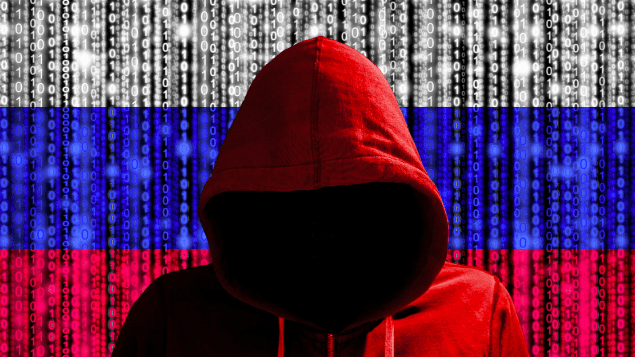
Russia’s escalating information and cyber warfare requires a coordinated, systemic response across national, regional, and international levels, combining technological edge with stronger public awareness.
The evolving nature of non-military threats
Proposed changes to mechanisms designed to counter non-military threats in Central and Eastern Europe should reflect the fact that such threats have evolved in scale, nature, and in the tools used by hostile actors. Information warfare, cyber threats, and social destabilisation have become central instruments used by both states and non-state actors to advance their strategic objectives. Their multidimensional nature means that an effective response requires a comprehensive approach, combining regional cooperation, technological development, and stronger public awareness.
Central and Eastern European states face a range of challenges stemming from non-military threats, above all information warfare, which poses a serious risk to political, social, and economic stability. Its purpose is to destabilise societies and erode public trust in state institutions. By deepening internal divisions, such efforts weaken social cohesion and make democratic systems less effective and more vulnerable to disruption.
In particular, information warfare involves coordinated disinformation campaigns designed to manipulate public opinion and disrupt democratic processes. In Poland, false narratives have been disseminated around issues such as migration and energy security, deepening political polarisation and fuelling tensions between social groups.
A clear example is the disinformation surrounding the migration crisis on the Polish-Belarusian border, where Russian and Belarusian narratives promoted harmful claims blaming the West for provoking the situation, accusing it of double standards, and framing the response as racist. The broader aim was to weaken Poland both internally and internationally while further exacerbating domestic divisions.

Disinformation in escalation: the Ukrainian case
In Ukraine, these operations took on a particularly aggressive form in the context of the conflict with Russia, where false information was used both to justify military action and to stir anti-Ukrainian sentiment among international audiences. One particularly notorious example came in 2014, when Russian disinformation channels spread the fabricated story of a boy allegedly „crucified” by Ukrainian soldiers in Sloviansk. Russian media outlets, including the state television channel Russia 1, aired a report featuring a woman presented as a local resident, who claimed that Ukrainian troops had publicly nailed a child to a cross in the city square in front of his mother.
The story was entirely fabricated, with no evidence or witnesses to support it. Its purpose was to demonise Ukraine’s armed forces, incite hatred against Ukraine, and help justify Russia’s intervention in the region. The disinformation campaign gained enormous traction across pro-Russian media and social platforms, fuelling anti-Ukrainian sentiment not only in Russia but also among international audiences, especially in the Global South, where knowledge of the conflict’s realities was often more limited. It remains one of the clearest examples of how false information was used to manipulate emotions during the Russian-Ukrainian war.

Building resilience against information warfare
Information warfare poses a major threat to contemporary societies in Central and Eastern Europe, as its effects carry far-reaching political and social consequences. Countering such threats therefore requires coordinated action at multiple levels, including the national, regional, and international ones.
International cooperation, along with the development of technologies to counter disinformation and information manipulation, forms a key pillar of societal resilience against such threats. In this context, education and public awareness are particularly important, as they enable citizens to better understand the mechanisms behind disinformation campaigns and respond more effectively to the risks posed by information warfare.
Given the growing importance of non-military threats such as information warfare, investing in defensive technologies has become especially essential. Modern information technologies, particularly in artificial intelligence, data analytics, and cryptography, can provide effective tools for countering disinformation. Protecting critical infrastructure, safeguarding citizens« personal data, and strengthening resilience against cyberattacks are all areas that require particular attention and sustained investment.
Addressing such a complex challenge requires a comprehensive and systemic approach. It is essential to develop rapid-response mechanisms capable of detecting, analysing, and correcting false information in real time. One example is the creation of regional fact-checking platforms that can verify content circulating in the public sphere as it emerges. In Poland, initiatives such as Demagog, Konkret24, and Demaskator24 focus on fact-checking and improving public awareness of disinformation. At the European level, the European Digital Media Observatory (EDMO) supports cooperation between fact-checkers, researchers, and other stakeholders to counter disinformation more effectively.

Inside Russia's information strategy and operations
Russia has developed advanced forms of propaganda targeting public opinion in Western states. These efforts are carried out by specialised media outlets such as Russia Today, as well as directly by state institutions. The highest levels of political leadership are personally involved in this process, including Foreign Minister Sergey Lavrov, President Vladimir Putin, and members of the Russian parliament.
A key element of this propaganda is the use of fear and coercive messaging about the consequences of armed conflict, including the spectre of nuclear escalation, should the West resist Russia’s strategic ambitions. Such information operations may be built around deliberately provoked military incidents, military exercises, or carefully calibrated messaging about the development of Russia’s military capabilities.
A concrete example was the disinformation surrounding the 2018 fallout from Russian military activity near the Estonian and Latvian borders. In the aftermath of the Zapad 2017 exercises, whose media impact extended well into 2018, Russia deliberately promoted claims that NATO was preparing „provocations” in the region and that Russian forces were therefore compelled to raise their combat readiness.
At the same time, Russian media outlets and official statements portrayed NATO exercises in Eastern Europe as a direct threat to Russia, with the aim of alarming Western public opinion and driving wedges between allies. False claims about NATO’s „aggressive plans” were reinforced by announcements regarding the expansion of Russia’s arsenal, including Iskander missile systems, creating the impression that Moscow was merely „defending itself” against an escalation it had in fact helped provoke.
See also 

In the information domain, hybrid activities are likely to focus on projecting an image of the Russian state and its policies that serves Moscow’s interests. At the same time, the Kremlin’s diplomatic efforts will seek to draw previously unaligned states into closer cooperation and broader ties, including through hydrocarbons supplies via so-called energy diplomacy.
At the same time, information operations may aim to erode public support for the authorities in states targeted by such campaigns. This has included false narratives designed to reduce support for Ukraine, stigmatise immigrants, and undermine NATO’s credibility. The broader objective has been to discourage public backing for Ukraine while weakening trust in both national and international institutions.
Another example was the disinformation campaign targeting Poland, which spread false claims about a supposed suspension of fuel deliveries in order to trigger public panic and undermine confidence in the state. In 2023, Russian and pro-Russian online media also pushed disinformation related to Polish and Ukrainian history, manipulating historical facts to stir tensions between the two countries and further erode trust in their governments.
Russia also exploits social divisions by promoting the idea of a broader Russian cultural sphere through selective historical narratives and references to its scientific, technological, and economic achievements. The goal is both to deepen divisions within EU states and to rally certain groups around Moscow’s agenda. This approach reflects Aleksandr Dugin’s vision of a world split between the Euro-Atlantic and Eurasian spheres. Its main tools are mass media, especially digital platforms, reinforced by Russia’s diplomatic apparatus.

The potential effects of future information warfare
In the future, information warfare may be waged by states that develop their capabilities in the information domain to such an extent that they can impose their will or compel others to meet their demands without resorting to military force, by generating:
- political effects with far-reaching consequences, including destabilising and fragmenting the European Union and helping install governments and leaders more favourable to the Russian Federation;
- military effects, above all by weakening defence readiness and reducing operational capabilities;
- economic effects in the form of disruption to the functioning of the economy, particularly in sectors such as transport, energy, and banking.
Cyberwarfare: a major front in the new Cold War
Cyber threats are one of the most important challenges facing contemporary societies, and their significance for Central and Eastern Europe’s security continues to grow. Technological progress and rapid digitalisation have made critical infrastructure, including energy systems, water supply networks, telecommunications, and transport, increasingly dependent on advanced IT systems.
This dependence creates new vulnerabilities, as cyberattacks can have serious consequences for national security, economic stability, and the functioning of society. In this context, Russia’s activities target a broad spectrum of vulnerabilities, from state institutions, critical infrastructure, and major industrial facilities to military assets and society itself, including through the potential use of biological or chemical attacks.
An important part of building resilience against cyber threats is the development of national and regional computer incident response teams, or CERTs. Equally essential are regional mechanisms for sharing threat intelligence, enabling faster detection and more effective mitigation of attacks. Such cooperation should cover both the exchange of technical data, including malware signatures and hackers« methods, and joint threat assessments addressing risks that may affect entire regions.

One example of such a mechanism is Poland’s National Cybersecurity System (KSC), which brings together operators of essential services, digital service providers, and the national CSIRT. It coordinates cyber defence and incident response while supporting international cooperation within the European Union.
Operations in cyberspace are likely to become increasingly important. Their appeal lies in the difficulty of attribution, which allows them to cause significant disruption, and even damage, to Western states in a covert and largely unpunished manner. As a result, cyber conflict may become the feature that most clearly distinguishes the day-to-day reality of a hybrid cold war from its classical twentieth-century form.


