












- KOMENTARZ
- WIADOMOŚCI
Baltic Sea as an arena of information warfare

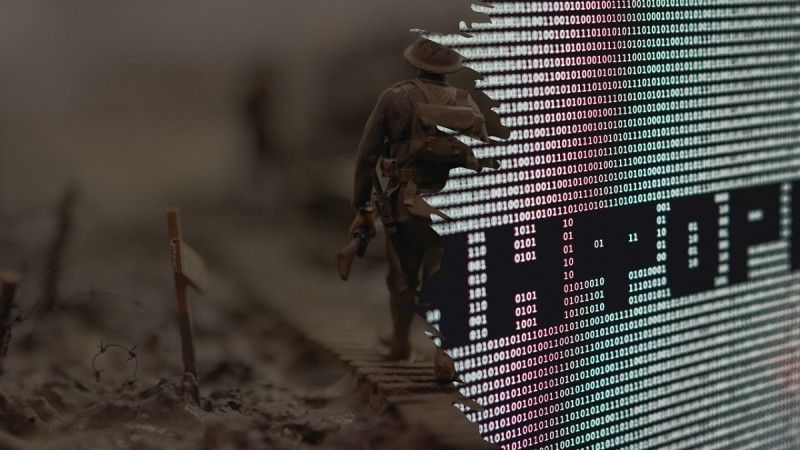
The Baltic Sea has long ceased to be merely a space of military competition. It has also become one of the main fronts of information warfare in Europe – a conflict conducted not with tanks or missiles, but through narratives, emotions, disinformation and precisely targeted influence campaigns designed to destabilise societies. In a region characterised by cultural, linguistic and historical diversity, societal resilience has become a central pillar of security.
From the perspective of actors conducting disinformation campaigns, the Baltic region offers an almost ideal operational environment. Several structural factors make it particularly susceptible to influence operations: high energy vulnerability, past economic dependencies, complex historical memory, the presence of national minorities, a strong NATO footprint, rapid technological transformation, extensive social media penetration and significant political polarisation in some countries. These conditions create fertile ground for campaigns designed to exploit fear, uncertainty and social fragmentation.
Narratives about alleged secret agreements, incompetent governments, inevitable blackouts, NATO as a threat to peace or the “militarisation of the Baltic” are designed to create the impression that the state is ineffective and incapable of protecting its citizens.

Second, such campaigns often target strategic energy investments. Offshore wind farms, LNG terminals, subsea cables and major energy infrastructure projects frequently become the subject of environmental, financial or geopolitical narratives aimed at slowing or blocking their development.
Third, disinformation seeks to intensify political and social polarisation. A divided society becomes less capable of making collective decisions, particularly during crises. Finally, information operations often aim to obscure responsibility for incidents. Whenever sabotage, infrastructure failure or unexplained technical disruptions occur, a cloud of competing explanations is quickly generated – from technical malfunction to natural causes or alleged Western provocations. This ambiguity is deliberate: uncertainty weakens regional cohesion.

The evolution of information warfare
Although the overall pattern of information pressure is regional, the specific vectors of attack differ from country to country. Estonia remains one of the global leaders in cyber resilience, having built advanced digital security systems after the cyberattacks of 2007. However, it continues to face persistent influence campaigns targeting its Russian-speaking population.
Latvia is frequently exposed to narratives aimed at undermining NATO’s presence and questioning energy security policies. Lithuania’s geopolitical position near Kaliningrad makes it particularly vulnerable to propaganda surrounding developments in the Suwałki corridor. Poland is a major target of energy-related and social disinformation campaigns, often amplified by domestic political polarisation.

Finland, despite strong institutional resilience, faces narratives centred on the alleged loss of neutrality after joining NATO. Sweden is frequently targeted by messaging portraying increased defence activity in the Baltic as unnecessary militarisation. Germany remains susceptible to energy-focused narratives, particularly in the aftermath of the European gas crisis.
At the same time, information warfare itself has entered a new technological phase. Deepfake audio and video technologies make it possible to imitate press conferences, government orders, crisis communications or statements by political leaders. The main risk lies in the confusion such fabrications could create during real emergencies.

Meanwhile, new-generation bot networks are far more sophisticated than traditional troll farms. They adapt to local linguistic contexts, imitate dialects and simulate authentic social debates online. The emergence of advanced language models has also enabled the large-scale generation of articles, analysis and commentary tailored to local audiences, creating highly convincing disinformation ecosystems.
Despite these challenges, the Baltic region also offers examples of effective societal resilience. Finland has integrated media literacy into its education system from primary school, which significantly increases public resistance to manipulation.
See also 

Sweden and Finland continue to benefit from relatively high levels of social trust, an important factor in resisting disinformation. Estonia has developed advanced cyber capabilities and institutional expertise in digital security. Another important lesson from the Nordic countries is the speed of response: false narratives are addressed immediately rather than allowed to circulate for days. In the most resilient systems, cooperation between government institutions, media organisations and technology companies takes place in real time.
A more integrated regional framework could help expand these practices across the Baltic Sea area. Possible initiatives might include a joint centre for analysing disinformation narratives in real time, coordinated crisis communication systems, integrated cybersecurity warning networks, shared standards supporting independent public media, common media literacy programmes and joint hybrid exercises involving not only the military but also civil society and communication institutions.

Ultimately, the experience of recent years has demonstrated a fundamental reality of modern security. A region may possess advanced ports, powerful navies, sophisticated sensors and resilient supply chains, yet remain vulnerable if its citizens lose trust in institutions. Information resilience has therefore become one of the foundations of Baltic security. Without it, hybrid attacks become not only easier but also significantly cheaper for adversaries.


