












- WIADOMOŚCI
Major overhaul of NATO’s force commands

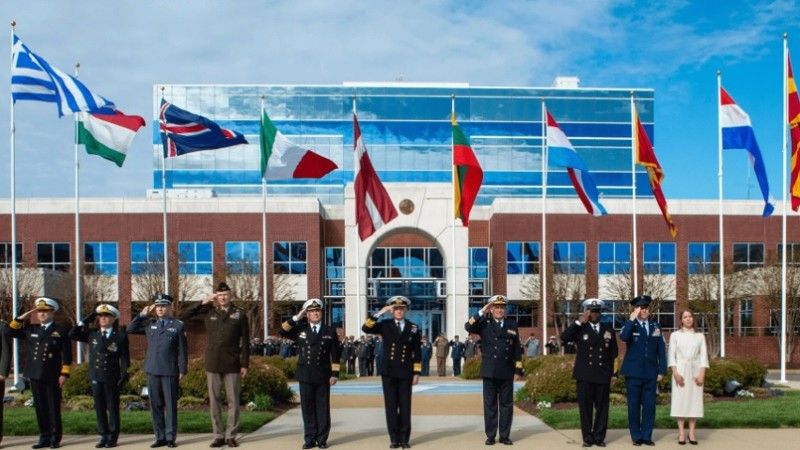
In a major restructuring of NATO’s military command system, the United States will cede leadership of the Alliance’s two Joint Force Commands to Europeans.
According to yet publicly unconfirmed information from La Lettre and Politico, the United States will transfer command of NATO’s Joint Force Commands in Naples and Norfolk to Europeans, respectively Italian and British officers. Meanwhile, an American commander will assume leadership of Allied Maritime Command in Northwood, currently held by the United Kingdom.
This means that after the reshuffle, all three NATO joint operational-level headquarters in Brunssum, Naples, and Norfolk will be led by Europeans. Notably, the leadership of Joint Force Command Brunssum, which is responsible for the eastern flank, will alternate between German and Polish generals.
On the other hand, by taking Allied Maritime Command, Washington will hold leadership of all three NATO domain-specific operational commands responsible for air, land, and maritime components. This is because American commanders will remain at the head of Allied Air Command in Ramstein and Allied Land Command in Izmir. Even more crucially, the United States will retain the Alliance’s most senior military post, the Supreme Allied Commander Europe, who provides strategic direction and oversight for NATO military operations in Europe.

Rebalancing command, not relinquishing control
The reported changes align closely with the Trump administration’s plans to recalibrate U.S. force posture and activities in the European theatre, as outlined in the 2026 U.S. National Defense Strategy. The document calls for greater burden-sharing, with European allies expected to assume primary responsibility for their own conventional defence.
While this staff reshuffle may bring that vision closer, they do not signal a U.S. abandonment of Europe. In fact, Washington will retain the top strategic leadership and the domain-specific capability commands, while Europeans will lead the regional joint operational headquarters. This is in line with the National Defense Strategy, which states that the United States „will remain engaged in Europe … with critical but more limited support”.
Such a command composition also suggests that Washington aims to retain decisive influence over the Alliance’s strategic direction and escalation dynamics vis-à-vis Russia, but at lower cost and with less skin in the game. The U.S. appears to recognise that relinquishing all pivotal commands and making the Alliance fully European-led would significantly reduce its ability to shape military responses to Russian actions on the eastern flank, particularly in scenarios where European and American interests diverge.
In the medium and long term, it will be worth watching whether Europe’s growing share in the Alliance’s conventional military power translates into adequate representation in its top command positions. If it does not, the growing mismatch between continued U.S. control over strategic direction and Europe’s assumption of the bulk of the conventional burden could reignite debates over further command and staff adjustments.


