- WIADOMOŚCI
- ANALIZA
Qatar and hosting the World Cup as a pretext for arms modernization


Photo. Adnen1985/Wikimedia
After FIFA’s decision on 2 December 2010 to award the World Cup to Qatar, the country launched an army modernization program, increasing defense spending by 434% over the following decade. By 2021 the arms budget reached USD 11.6 billion — almost 5% of GDP. This was not a one-off investment but a long-term strategy focused on protecting gas terminals, deterring Iran and terrorist groups, and building international standing. The 2022 World Cup was one stop on the path of developing military capabilities, not the end point. In the coming years the defense budget is expected to rise to USD 19 billion, which will translate into even greater ambitions and a larger role for Qatar in the region.
Between 2010 and 2022 Qatar built modern armed forces. It purchased 96 fighters in three packages — from the United States, France, and the United Kingdom — to avoid dependence on a single supplier and to diversify contacts. The air force was supplemented with a fleet of helicopters and unmanned aerial systems, and the land forces were strengthened with German Leopard tanks and PzH 2000 self-propelled artillery.
At sea a new fleet was created: seven combat vessels from Italy’s Fincantieri, including four modern corvettes, two patrol ships and a landing ship. Together they form the core of the Qatari navy and a protective umbrella for LNG ports. Air defence was reinforced by Patriot batteries and an ADOC (Air & Missile Defense Operations Center), which integrates all radars and missile systems into a single defence architecture. Between 2014 and 2018 alone, contracts worth more than USD 50 billion were signed.
The World Cup — a fortress state
In 2022 Qatar underwent its most serious test. Nearly 20 countries were involved in the tournament’s security, including most NATO allies. Deployed on the ground were soldiers and police, counterterrorist units, and specialists in counter-drone operations, CBRN, VIP protection and cybersecurity.
Qatar then became one of the safest, if not the safest, countries in the world. Standby aircraft, ships armed with anti-air missiles, Patriot batteries and anti-drone systems operated in concert to create a multi-layered defence of the entire territory. The World Cup also had an economic dimension. During the energy crisis, securing LNG exports was directly equivalent to securing the state’s political safety. For that reason Qatar treated the tournament primarily as a national security operation and only secondarily as a sporting event.
Post-World Cup investments
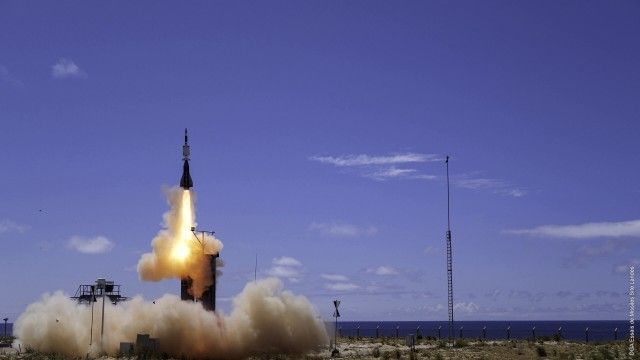
Modernization did not stop after 2022. A priority became defence against drones. Qatar ordered ten fixed systems with roughly two hundred interceptor missiles intended to protect cities and LNG terminals from unmanned aerial threats. The second priority was intelligence and deterrence, given how small a country Qatar is (roughly the size of Poland’s Świętokrzyskie Voivodeship). A contract for eight large MALE-class (Medium Altitude Long Endurance) drones, worth USD 1.96 billion, provided capabilities for continuous surveillance and precise strikes.
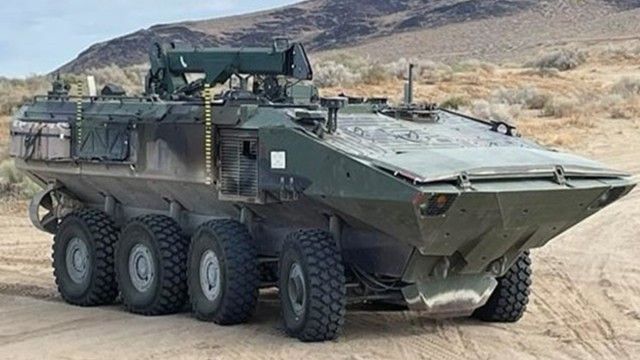
Deliveries of NH90 helicopters and surface vessels from the Fincantieri package continue, and politically the option to buy an additional twelve Typhoon fighters has been preserved, although the deal has not yet been finalized. Plans also include further strengthening of air defence and modernization of ground forces with new combat vehicles; French VBCI, German Boxers and Turkish designs are all being considered.
At the same time Qatar rotated some equipment. It sold 12 PzH 2000 howitzers back to Germany, which, after overhaul, began transferring them to Ukraine, the first units have already reached the front and more are due to be delivered this year. For Qatar this was a way to maintain relations with the defence industry and acquire new systems. By 2027 the defence budget is expected to reach USD 19 billion, nearly 6% of GDP on arms.
Threats to state security
Qatar’s most serious threat remains Iran, which is consistently building its position in the Gulf and conducting destabilizing activities toward its neighbours. At the same time concerns are growing about terrorist groups operating in the region, which are capable of using drones, cruise missiles, carrying out cyberattacks or sabotaging ports. The threat also includes attacks on LNG tankers, mining of shipping lanes and disruptions to terminal operations.
In the background is the Israel–Hamas war, in which Qatar plays a mediator’s role. Israel’s rocket strike on representatives of Hamas in Doha in September 2025 showed that even mediator status does not guarantee security. This is a new level of rivalry that Qatar must confront.
Sport as an element of rivalry
Concurrently, sport is becoming an arena of competition. Qatar actively supports initiatives within UEFA aimed at suspending Israeli national teams and clubs from European competitions. These efforts are backed by a majority of states and demonstrate that football has become an element of political pressure. Moreover, this voting process reveals how Middle Eastern conflicts are increasingly penetrating not only European public debate but also sporting structures.
The 2022 World Cup showcased Qatar’s enormous potential and marked the beginning of a new phase of rivalry. Two years later FIFA awarded the 2034 World Cup to Saudi Arabia. That is another signal that sport has become a geopolitical battleground for influence on the Arabian Peninsula. Consequently, Qatar uses sport in the same way it uses gas investments or arms purchases — as an instrument of foreign policy.
Big events, big purchases
Qatar is not the only country to invest ahead of major sporting events. Saudi Arabia also uses sport as a factor in modernizing its armed forces. After the decision to award the 2034 World Cup and a series of major events — Formula 1 in Jeddah, boxing matches, e-sports tournaments — Riyadh simultaneously launched the largest arms contracts in decades. In 2022 it announced the purchase from the United States of a package worth roughly USD 3 billion, including Patriot air-defence systems, PAC-3 missile ammunition and F-15 upgrade packages.
There were also contracts with European and Israeli firms for radars and Skylock anti-drone systems. In practice this means that sports and energy infrastructure (stadiums, hotels, LNG ports) are incorporated into Saudi Arabia’s multi-layered defence. Sport, and especially hosting the football World Cup, has become a political justification for accelerating rearmament and investment in the Saudi military.
India applied a similar logic. When it hosted the 2010 Commonwealth Games in Delhi, it spent USD 1.9 billion on securing the event, buying CBRN systems, Israeli anti-drone suites and more than 5,000 urban surveillance cameras. That was the largest security operation since the Mumbai attacks in 2008. At the same time it launched an air force modernization: the contract for 36 Dassault Rafale fighters from France, worth EUR 8.7 billion, had not only a military but also an image dimension, showing that a state hosting major sporting events must be militarily capable.
Today Delhi, considering a bid for the Summer Olympics after 2036, is again preparing for increased spending on counter-drone measures, cyberdefence and critical infrastructure protection. Suppliers of armaments are expected to include France and Turkey.
This is not the end
Qatar has come a long way: from competing with Saudi Arabia and the United Arab Emirates and being a customer of global arms hegemonies, to a state that built its own defence capabilities from the ground up. Modernization covered all key levels — from reconnaissance systems and layered air defence to rapid reaction forces, the navy and ground troops. This was not a fragmentary process but a coherent strategy that in a short time provided Qatar with military deterrence capabilities.
The 2022 World Cup proved that Qatar can not only buy equipment but also coordinate defensive operations in practice and cooperate with partners abroad, including NATO. Today’s challenges remain regional: tensions with Iran, the war in Gaza, and rivalry for sporting — and increasingly e-sports — primacy on the Arabian Peninsula.
Doha, however, possesses the tools to conduct foreign and security policy at a much higher level than anyone predicted 15 years ago. That is the World Cup’s most important legacy.
Polish version available at: https://pids.pl/analiza/katar-i-organizacja-ms-jako-pretekst-do-modernizacji-uzbrojenia/