












- WIADOMOŚCI
Spain answers NATO criticism with its own defence model

Spain is trying to push back against criticism inside NATO by arguing that defence policy cannot be reduced to one spending figure. Madrid wants to show that it delivers capabilities, supports Ukraine, strengthens NATO missions and invests in industry, while rejecting a 5% of GDP target that it sees as economically unrealistic and politically damaging.
The Spanish document is a direct response to the debate around defence spending before and after the NATO summit in Ankara. Its message is simple: Spain does not accept the argument that it is a weak ally only because it questions the 5% target. Madrid presents itself as an ally that delivers, leads, strengthens European defence industry and protects fiscal sustainability. This is a political defence of Spain’s position, but it is also an attempt to shift the NATO debate from percentages to capabilities.
The figures are central to the Spanish argument. Spain says it has moved from 0.9% of GDP on defence in 2018 to 2% in 2025 and 2026. In nominal terms, defence expenditure has more than tripled, rising from €11.172 billion to €35.419 billion in 2026. Madrid also argues that since 2020 it has recorded the fourth-largest real increase in defence spending in NATO, with expenditure up by 146% after inflation. The point is clear: Spain wants to be judged by the speed and structure of its rearmament, not only by a future political benchmark.
Madrid also stresses that it is investing „better”, not just more. Around 44% of Spain’s defence budget is now allocated to equipment, technology and innovation, compared with 22% in 2018. That matters because NATO’s own benchmark for equipment spending is 20%. Spain is therefore trying to argue that its spending profile produces real military modernisation and that its level of compliance with NATO Capability Targets is above the average for European allies and Canada.

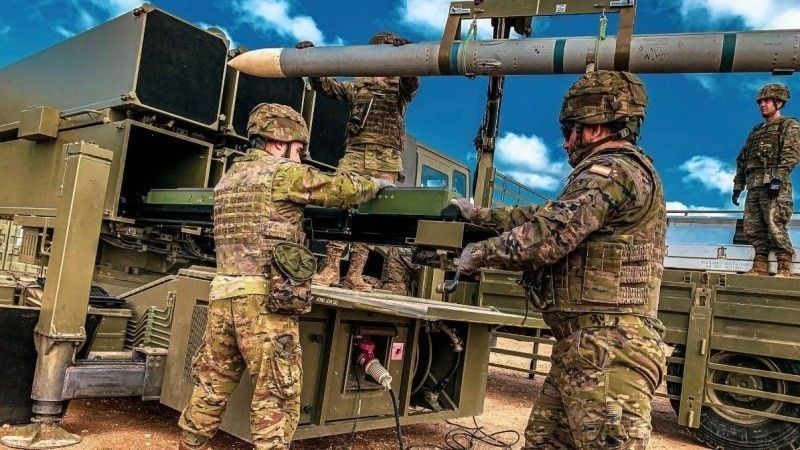
Photo. Government of Spain
Spain also wants to show that it is not absent from NATO operations. According to the document, it is the third European country by number of personnel deployed in NATO missions, operations and deployments, with close to 3,000 troops, rising to almost 4,500 when EU and UN missions are included. Madrid highlights its role in the Mediterranean, Operation Sea Guardian, the NATO Mission in Iraq, the Allied Reaction Force, and the eastern flank. As of June 2026, Spain presents itself as the NATO ally with the largest number of troops deployed outside national territory on the Alliance’s eastern flank, including its leadership of the Multinational Brigade in Slovakia, a mechanised contingent in Latvia, Marine Corps units in Romania and air-defence support for Estonia, Latvia, Lithuania, Romania and Türkiye.
Ukraine is another part of the Spanish answer. Madrid says it has committed €3.795 billion in military assistance to Ukraine between 2022 and 2026 and trained more than 9,000 Ukrainian soldiers, around one in every ten troops trained in Europe. In 2025, Spain says it allocated more than €1 billion to equipment, assistance and training for Ukraine, ranking as NATO’s eighth-largest contributor and the EU’s fifth-largest provider of military assistance. It also points to €150 million for the PURL mechanism and €215 million from SAFE funds to reinforce support for Kyiv.
The industrial argument is equally important. Spain presents its Industrial and Technological Plan for Security and Defence as proof that rearmament should build European capacity, not only generate urgent purchases from outside Europe. The plan includes 66 budgetary programmes and 35 Special Modernisation Programmes, with investments in equipment, cybersecurity, deterrence assets, emergency management and overseas operations. Madrid claims that eight out of every ten euros invested flow back into the Spanish economy, that the modernisation programmes could generate around 22,000 direct and indirect jobs, and that the broader plan could create around 96,000 jobs.
The most political part of the document is Spain’s rejection of the 5% target. Madrid argues that reaching this level would require around €600 billion over the next decade, or even more than €780 billion if broader security expenditure is included. Spain says this would threaten its welfare model, social spending and fiscal balance. It also argues that rapidly increasing defence expenditure can push prices up, increase dependence on non-European suppliers and fail to produce real capabilities. This is Spain’s core message to NATO: more defence is necessary, but not at the cost of destroying public support, fiscal stability and European industrial sovereignty.
This is why Spain’s position matters. Madrid is not saying that Europe should spend less on defence or ignore the Russian threat. It is saying that NATO must ask what money buys, where it is spent, whether it strengthens European industry and whether societies can sustain it over time. This will not satisfy allies who believe that only a much higher spending target can deter Russia. But Spain is trying to define its own model: 2% of GDP, higher equipment spending, stronger missions, support for Ukraine, industrial investment and a refusal to turn defence policy into a race for one symbolic number.


