












- OPINIA
- WIADOMOŚCI
„You are a part of Sweden’s total defence”

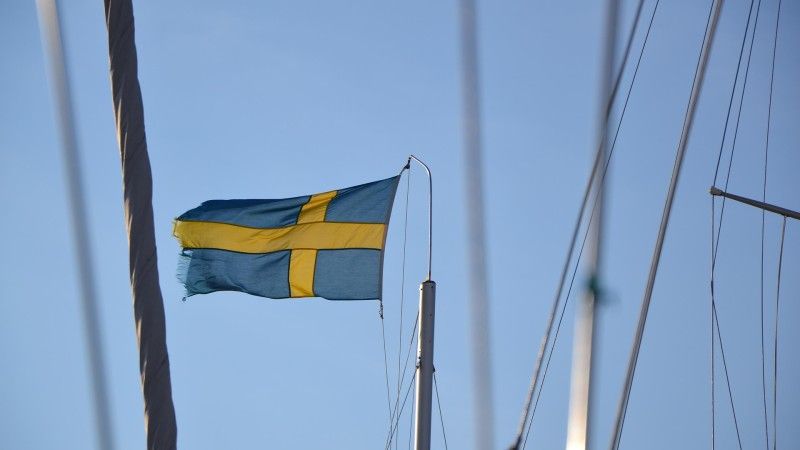
Photo. Pixabay.com
„You are a part of Sweden’s total defence,” was the slogan of this year’s crisis preparedness week, the nation-wide annual event, organized by the Civil Contingencies Agency (MSB). But it is more than just a slogan. It is a foundational concept that is now being implemented as Sweden rebuilds and invests in civil defence.
In September, the Swedish Armed Forces and the Swedish Civil Contingencies Agency (MSB, responsible for civil defence) released new guidelines for the country’s total defense planning. The document is notable in that it provides a concrete threat assessment for regional and local governments, the private sector, and civil society, outlining what organizations should be preparing for across seven scenarios:
- Hybrid attacks;
- NATO Host Nation Support;
- Limited attack against northern Sweden;
- Invasion of Gotland;
- Long-distance strikes;
- Reinforcement of NATO's northern flank;
- Reinforcing the Alliance in the Baltic Sea
What NATO membership has changed?
Each of the seven scenarios, building on previous Armed Forces analysis, are described in detail with examples of what the civilian sector should prepare for. Though the descriptions may be stating the obvious for military planners and the security policy community, the target audience are those who may have little to no experience with defence and NATO issues.
Formalizing the scenarios in an official document makes them actionable for Swedish bureaucracy and private industry. „All actors who receive this document need to analyze it in relation to their role, area of responsibility, tasks, and geographical conditions – and then incorporate it into their own planning and preparations,” writes MSB.
A central message is that NATO membership has fundamentally changed the conditions for Sweden’s total defence concept, with Swedish authorities and society needing to take measures and carry out activities that fulfill NATO’s three core tasks. Civilian agencies« NATO duties are reiterated, as are the deteriorating trends in the security environment. Lessons from the war against Ukraine are taken into account and the implications of Sweden’s geography as a NATO member are outlined.
As a long-established baseline, Sweden’s total defense must plan to confront and manage a war for at least three months. This includes transitioning from peacetime to wartime footing for a longer war.
In the initial two weeks of a war, civilian agencies and the private sector are expected to keep vital societal functions (e.g. food, water and telecommunications) running primarily from their own resources. This can include stockpiling or emergency plans for personnel. At the same time, civil defense must serve as a key enabler for the military defence. A large number of civilian actors are part of the Armed Forces operational planning and are expected to support, for example, basing and transiting Allied forces. To that end, the now famous” In Case of Crisis or War ” will be republished with guidance specifically for the private sector in 2026.
See also 

Role of private industry
Private industry is taking note. After Russia’s full-scale invasion, many businesses struggled to adjust to the security environment, lacking the necessary knowledge, guidance, and financial incentives. While knowledge and guidance are now in place – private business has a key role to play in Sweden’s total defence – the financial aspect is a remaining challenge.
Critical infrastructure companies, for example, often have in-place plans for protection against ground-based threats, but little to no capacity for protection against aerial threats. Who pays for the defence against drones? National or local government? Do the Armed Forces allocate resources for infrastructure vital for the population? Even if a private company has a financial incentive to foot the bill in order to maintain operations during a crisis or war, legal issues remain. There are heavy restrictions on operating equipment that interfere with air traffic, precisely what is needed to knock drones out of the sky. And even if commercial anti-drone technology is available, will it be enough to defend against military grade systems?
Currently, there are more questions than answers – ones that all NATO allies need to begin figuring out.
While there is still much work to be done, Sweden’s joint civil-military guidance indicates a clear shift from analysis to implementation. Efforts made over the past 3,5 years are beginning to culminate in genuine civil defence capacity as a NATO ally.
Author: Eric Adamson


