- KOMENTARZ
- WIADOMOŚCI
American pressure on India and the growing role of France

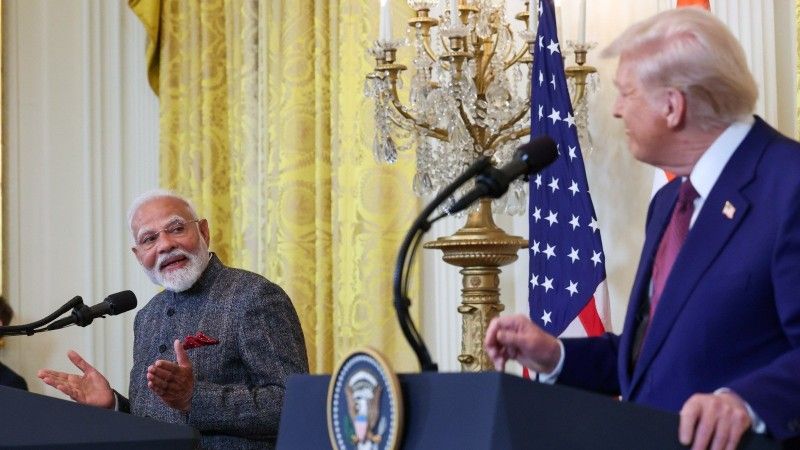
Photo. Narendra Modi/X
Washington’s new trade policy towards India is weakening a long-standing strategic partnership and, paradoxically, strengthening the position of Russia, China and France in New Delhi’s foreign relations.
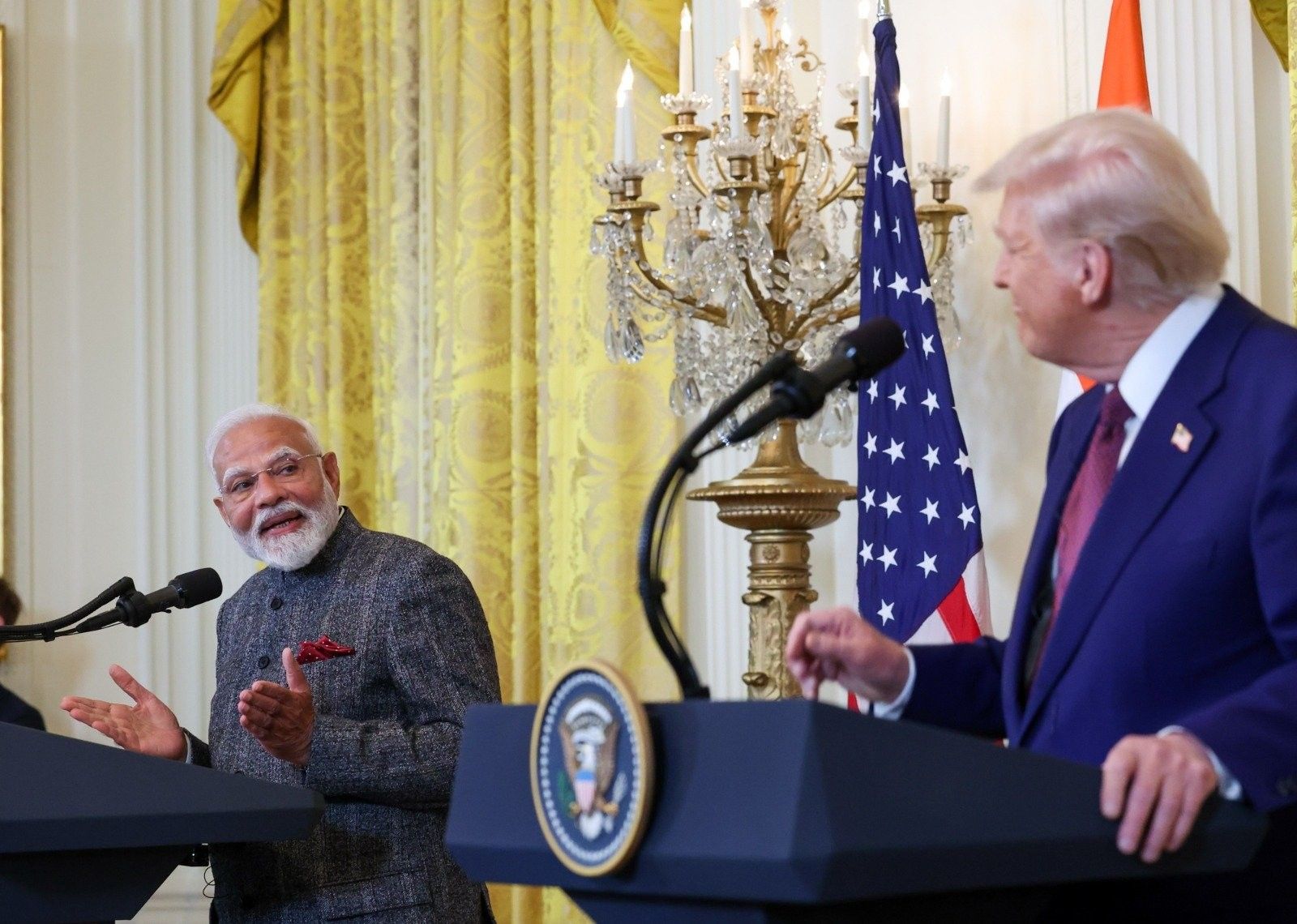
The relationship between the United States and India has in recent years been constructed as a cornerstone of Washington’s strategy to balance China in Asia. Cooperation in technology, defence and supply chain diversification suggested a period of unprecedented convergence. Yet the decision of the current administration to impose high tariffs has undermined confidence and injected uncertainty into a partnership once considered stable.
India anticipated that by increasing imports of American energy and military equipment it would ease the trade imbalance and demonstrate a willingness to compromise. From New Delhi’s perspective, however, these gestures have not been recognised, and the tariff regime is interpreted not merely as an economic measure but as a political signal that the consistency of the partnership is in question.
As a result, India has sought alternative options. Russia has become a key supplier of discounted oil, with energy flows anchoring renewed political dialogue at the highest level. The Kremlin is thus reinforcing its role as a reliable partner, while at the same time diplomatic channels with China have been reactivated. Although bilateral tensions remain, India’s engagement with Beijing reflects a pragmatic calculation to widen its room for manoeuvre in response to Western pressure.
Against this backdrop, France has emerged as an active and credible partner. Paris has steadily cultivated its relationship with New Delhi, but the current rift with Washington opens new opportunities. Defence cooperation, naval exercises and ambitious technological projects under the Horizon 2047 framework confirm France’s position as a stable and forward-looking ally. In practical terms, France is occupying ground once held by Russia, but offers solutions closer to Western standards and compatible with India’s pursuit of strategic autonomy.
The consequence is that American policy, rather than consolidating an Indo-Pacific coalition to counterbalance China, has produced the opposite effect. India is tightening its ties with Moscow, reopening channels with Beijing, and at the same time deepening its strategic partnership with Paris. This illustrates how the absence of a coherent strategy in Washington leads to a loss of influence in a region where any misstep is swiftly exploited by competing powers.