












- ANALIZA
- WIADOMOŚCI
Beyond aesthetics: The art market as a vector of organized crime and financial risk

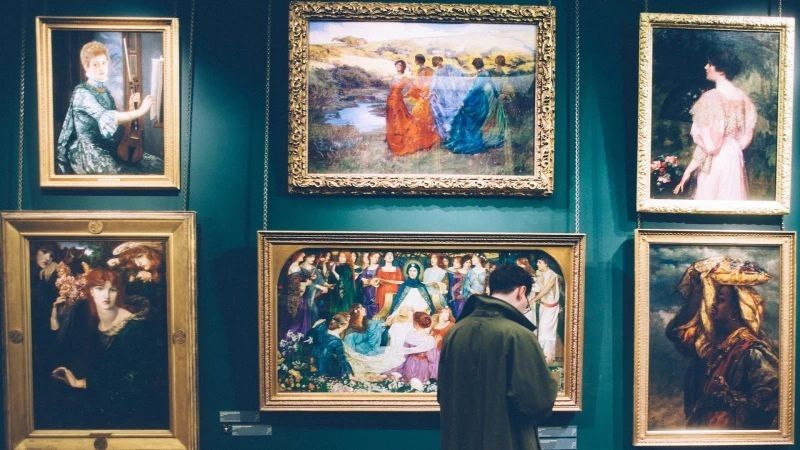
The global art market — now valued at more than $60 billion a year according to theleading economic analyses — is one of the most ambiguous and paradoxical sectors of the modern economy. It blends domains of culture, finance, geopolitics and prestige with criminal and covert activity, producing a complex ecosystem that operates simultaneously in the official and the clandestine spheres.
FATF reports (the Financial Action Task Force), notably Money Laundering and Terrorist Financing in the Art and Antiquities Market, consistently identify the art and antiquities market as among the most vulnerable to money laundering and value-transfer manipulation. This vulnerability stems from a combination of key characteristics: subjective valuation, lack of transactional transparency, the global nature of trade, the prevalence of private sales, and the existence of storage zones outside public oversight.
The value of an artwork is not created on objective criteria but through social consensus among experts, the prestige of institutions, ownership history and market context. As FATF stresses, a work priced at tens of thousands of euros in one setting can command many times that amount elsewhere — creating a pretext for justifying large financial flows. That same absence of objectivity, a natural feature of the market’s cultural character, is simultaneously its greatest financial weakness, because it allows criminals to manufacture fictitious gains, conceal losses or inflate asset values in ways that do not automatically trigger suspicion.
A second major risk factor is structural opacity. Industry analyses estimate that as much as 70–80 percent of transactions take place privately — outside the supervision of regulators, compliance systems and public registers. Private sales allow the buyer’s and seller’s identities and the provenance of funds to be completely obscured.
In practice, one of the most valuable segments of the global luxury goods market operates under a model where transparency is the exception, not the rule. As the OECD notes in „Trade in Free Ports and Illicit Financial Flows”, even where auction houses implement ever-more sophisticated AML procedures, much of the turnover remains beyond their reach.
When archaeology, finance, the mafia and intelligence services weave together into a single global market
Illegal trade in works of art is not limited to the financial mechanisms described above. UNESCO’s report „Illicit Trafficking of Cultural Property” finds that more than 80 percent of archaeological sites in the Middle East have been looted in recent decades. Armed conflicts in Iraq, Syria, Afghanistan, Libya and Yemen have turned entire regions into zones of systematic pillage: illicit excavations are conducted by impoverished local communities as well as by organized criminal groups and terrorist structures.
Interpol’s Assessing Crimes Against Cultural Property indicates that organizations such as ISIS treated antiquities as an economic resource comparable to oil or arms — a source of revenue used to finance military operations. Archaeological artefacts from Palmyra, Apamea and Dura Europos subsequently appeared in European auction houses, often after several ownership changes and repeated provenance forgeries, demonstrating a direct link between looting and the legitimate market.
In Europe and North America, the illegal market in cultural goods is complemented by a hidden segment of links to the financial, legal and political worlds. FATF describes it as an „industrial ecosystem” of transactions involving galleries, private banks, law firms, tax advisers and foundations. Offshore structures in Liechtenstein, Panama, the British Virgin Islands or Jersey are tools to conceal the ultimate beneficiary — a key element of money laundering.
Intelligence services also matter. Although modern intelligence services no longer remunerate agents with works of art, numerous investigative reports confirm that galleries and auction houses are sometimes used as operational covers and channels for fund transfers in states subject to sanctions.
Analyses by the Financial Times and Reuters suggest that Russian and Chinese influence networks have exploited the art market as a tool for infiltration and foreign-currency acquisition. North Korea’s Mansudae Art Studio, cited in sources referenced by UNESCO, functions as a state center for art export whose revenues have financed the apparatus of power.
The art market is the meeting point of many forms of covert and criminal activity — from archaeological looting to money laundering, from intelligence operations to sanctions evasion. From this perspective, the actions of international institutions gain significance. Europol and Interpol operations such as Pandora, Athena and Odysseus play a particularly important role: their aim is to dismantle smuggling networks, recover stolen artefacts and monitor digital and physical flows. In recent editions of these operations tens of thousands of objects were seized — one of the most tangible indicators of the problem’s scale.
Illegal art market as a systemic structure
The contemporary illegal art market is not merely a collection of individual transactions or criminal episodes but constitutes a systemic structure in which distinct segments — from archaeological looting, through smuggling, to money laundering — operate as interconnected elements of a global financial architecture.
FATF analyses show that artworks are among the most mobile assets yet the most weakly regulated, making them ideal vehicles for value transfer processes, particularly those conducted outside the banking system. This is reinforced by the fact that, unlike most luxury goods, artworks lack a unified identification system or a standard for recording owners. That gap creates space for provenance manipulation, value inflation and the fabrication of transactional histories.
Hidden infrastructure of the illegal market
As the OECD notes, one of the market’s most structural problems is that a significant share of operations occurs entirely beyond the reach of state institutions. Private sales, the primary exchange mechanism in the high-end segment, are not subject to information obligations or reporting. Thus, transactions worth hundreds of millions of euros can pass unnoticed by financial supervision systems.
Unlike banks, galleries and dealers were for decades not subject to AML obligations, creating an environment conducive to abuse. Only in the last decade have regulatory changes begun — primarily in Europe and the United States — yet a substantial asymmetry remains between jurisdictions, which criminals exploit in so-called regulatory shopping.
Within this complex structure the role of free ports is particularly important. They function as centers for storing, trading and concealing high-value assets, and their legal status can allow works to be removed entirely from the public — even legal — sphere.
In Geneva, one of the world’s largest free ports, the OECD estimates that hundreds of thousands of objects are stored — paintings, sculptures, archaeological artefacts and antiquities — with a combined value reaching billions of dollars. These facilities are used for „layering” funds: a work can change ownership without leaving storage, and its value can be reassessed on the basis of documentation provided by experts operating outside oversight. For law enforcement, this makes reconstructing the real chain of custody and identifying the ultimate beneficiary almost impossible.
Such operations would not scale, however, without the parallel development of organized-crime structures that regard artworks as a special asset class. Europol reports indicate that the Italian mafia, Balkan groups, Latin American cartels and criminal networks in Central Europe actively use art as a vehicle to place capital and move it between continents.
In many documented cases works of art have been used to guarantee drug transactions, settle inter-group accounts and secure debts. Artistic crime thus becomes part of a broader financial ecosystem in which cultural assets replace cash or precious metals because of their discretion and high value-to-weight ratio.
International operations by Europol and Interpol
One cannot omit the role of transnational operations, which in recent years have become among the most important tools in combating crimes against cultural heritage. Europol and Interpol run regular actions targeting smuggling networks, the largest and best-known being the Pandora series.
Pandora I–IX, conducted since 2016, led to the seizure of more than 200,000 artefacts and the arrest of hundreds of suspects involved in smuggling, forgeries and illegal trade. In Pandora IX, according to an Interpol statement from May 2025, 37,727 objects were secured and 80 people arrested across 23 countries, illustrating the scale of international cooperation and the growing importance of digital analytics and online patrols.
These operations are not limited to physical searches of storages or galleries. Cyber patrols and data analyses carried out jointly by Europol, Interpol and member-state customs authorities play an increasing role. During Pandora VIII, hundreds of coordinated checks of online platforms revealed thousands of listings for objects with suspicious provenance.
At the same time, operational efforts often focus on local markets in Asia, Africa and South America, from where artefacts are subsequently routed to Europe. These findings corroborate UNESCO’s observations that cultural-goods crime has both local and global dimensions, and that effective elimination requires cooperation across borders.
It is important to emphasize that Europol’s and Interpol’s actions do not eradicate the phenomenon but reveal its magnitude. Every confiscation exposes only a fraction of the real market, as many objects are never registered and their origins remain undocumented.
The black market in art as part of the global financial system
As Europol’s and Interpol’s operations disclose ever more complex arrangements in the trade of illicit cultural goods, there is growing recognition that the contemporary black market in art no longer operates in isolation but is embedded in a global financial system characterized by high flexibility and deep opacity. Artworks — both high-market pieces and archaeological artefacts of unclear provenance — have become full-fledged components of criminal infrastructure, used to hide capital, construct money-laundering mechanisms and transfer funds across different segments of organized crime. FATF reports emphasize that while the art market has historically been associated with culture and intellectual elites, it is now one of the most rapidly expanding areas of financial risk.
A key mechanism driving the illegal market is the use of art as an asset for layering financial flows. Unlike traditional investment instruments, artworks lack transparent transactional histories, and their value can be modified relatively easily by reference to expert opinion — which, as the OECD notes, is not regulated to the same degree as financial markets.
A major challenge in combating art-related crime is the absence of uniform provenance standards. Provenance documentation is often fragmentary or deliberately distorted, and registry systems in different countries remain incompatible.
As UNESCO points out, many states do not even have a formal requirement to report the theft of artefacts, meaning an object stolen from a museum or private collection may reappear years later at auction as an „item with an incomplete history.” These legal gaps create space exploited by both smugglers and legitimate intermediaries — galleries, auction houses, art foundations and law firms.
These financial flows operate at the borderline of legality, enabling a legal narrative to be attached to objects originating from looting, illicit digs or smuggling. This is particularly evident in contexts of armed conflict. Wars in the Middle East and Africa, as well as Russia’s aggression against Ukraine, have created conditions for looting on an unprecedented scale. According to UNESCO reports, many museums, archives, libraries and monuments have been ransacked, and looted goods enter the international market through networks stretching from local militias to professional intermediaries in Europe and Asia.
Developed countries — Switzerland, the United Kingdom, the United States and the United Arab Emirates — remain key distribution and storage hubs for artworks, often via institutions with opaque legal character. Free ports in these states function as safe harbours not only for art but also for capital of dubious origin.
In response to these phenomena, states and international organizations are introducing progressively more sophisticated regulatory measures. The EU adopted the Regulation on the Import of Cultural Goods (2019/880), which imposes obligations to certify provenance and to verify the age of archaeological artefacts imported from outside the Union. Although this regulation is groundbreaking, it has been criticised by parts of the antiquities trade that warn excessive bureaucracy could push commerce to more loosely regulated Asian or Middle Eastern markets.

Systemic gaps in combating the illegal art market
All these elements — incomplete regulation, capital mobility, transaction secrecy, weak documentation and the growing role of technology — create an environment where combating illicit trade in art requires coordinated intervention at the global level. As Europol and Interpol stress, no single operation or legal reform can stop the phenomenon on its own. Building a durable international architecture of cooperation that includes law enforcement, the financial sector, cultural institutions and the private market is necessary.
In the Pandora operations — particularly in editions VIII and IX — a notable shift in smuggler tactics has become visible: they moved from traditional physical trade to digital sales via e-commerce platforms and social media. Europol has reported that the number of objects offered online rose by several dozen percent year on year, and smugglers increasingly use accounts created with false data, cryptocurrency payments and courier shipments disguised as low-value decorative items.
Europol’s and Interpol’s actions also show that illicit trade in artworks is closely linked to other forms of crime — drug trafficking, arms trafficking, human trafficking and financial crime. The success of these operations depends not only on arrests and seizures but also on data-collection and analysis capabilities. Both institutions have repeatedly stressed the lack of full harmonization among states on reporting losses, cataloguing objects and sharing data.
Free ports as nodes of global financial infrastructure
Free ports in Geneva, Luxembourg, Singapore and Dubai play a special role in the architecture of opacity. They are quasi-exterritorial spaces where works of art can be stored for years without disclosure requirements of owners or origin, and where ownership transfers occur through document changes rather than physical movement. OECD and FATF have identified them as among the most impenetrable elements of the global financial infrastructure.
Smugglers adapt faster than regulations, shifting trade to new channels — cryptocurrencies and NFT marketplaces. Pandora VIII and IX confirmed cases of icons, coins and archaeological artefacts being sold via cryptocurrency transactions.
Money-laundering mechanisms in the art sector resemble multilayered schemes known from tax havens: intermediaries, private transactions, galleries, foundations, offshore structures, free ports and cryptocurrency payments are all used. The process follows the classic three stages — placement, layering and integration — which in the art market take forms particularly hard to detect.
Future prospects
Operations such as the Pandora, Athena and Odysseus series demonstrate that crime involving cultural goods is mass-scale and dynamic. The most important conclusion is the need to view illicit art trade as a bona fide element of global security. Protecting cultural heritage is no longer solely an ethical concern but also an economic, political and strategic one.
The future of international efforts against the illegal art market must be based on: global harmonization of AML rules, mandatory provenance documentation, greater market transparency, digital registry systems and strengthened operational cooperation among states. Only a shared normative and operational infrastructure can create a real barrier to transnational criminal networks. For this reason, illicit trade in works of art will remain one of the most demanding areas of international policy so long as the market continues to operate in the shadow of luxury and hidden value.


