


- WIADOMOŚCI
- ANALIZA
- KOMENTARZ
Bosnia’s war after the war: How sacred memory sustains wartime politics

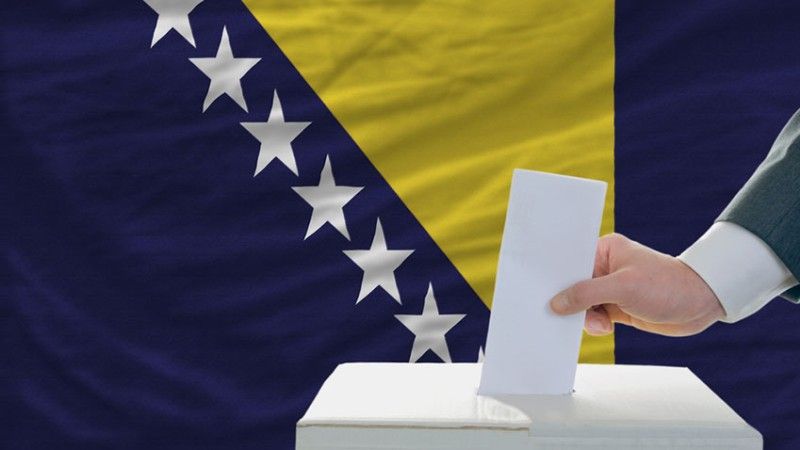
Photo. Council of Europe
Bosnia’s 4 October elections reshaped the presidency while leaving established ethnic parties in a strong position. Ratko Mladić’s funeral helps explain how wartime political objectives can still be pursued through law, education and sacred memory.
Bosnia and Herzegovina’s 4 October election results reshaped the presidency without resolving the struggle over the nature of the Bosnian state. The Central Election Commission confirmed the results on 3 November. Denis Bećirović of the non-nationalist Social Democratic Party (SDP) retained the Bosniak seat and Željka Cvijanović of the Alliance of Independent Social Democrats (SNSD) retained the Serb seat. Darijana Filipović of the Croatian Democratic Union (HDZ BiH) defeated the non-nationalist Democratic Front (DF) candidate Slaven Kovačević for the Croat seat and is set to succeed Željko Komšić.
Bećirović’s victory over Bakir Izetbegović of the Bosniak nationalist SDA denied nationalist parties a clean sweep. The SDA nevertheless topped the state parliamentary vote in the Federation, while SNSD remained the largest party in both the state parliamentary contest in Republika Srpska and the entity’s assembly election. Fewer than half of registered voters turned out, and no single national project emerged with a mandate.

Coalition bargaining has already brought attention back to constitutional disputes. On 12 October, Milorad Dodik and Dragan Čović reaffirmed the SNSD–HDZ partnership, while Čović put electoral legislation on the agenda for talks on forming a government. Their cooperation gives them substantial bargaining power in the talks. The OSCE’s 5 October preliminary assessment recognised genuine electoral competition and generally orderly polling. Political narratives rooted in wartime divisions still shaped the campaign. Whatever the coalition talks produce, the contest over what Bosnia is and whom its institutions serve continues.
Private mourning, religious ritual and public honour
Ratko Mladić died in detention in The Hague on 27 August while serving a life sentence. His state-assisted Belgrade funeral on 7 September brought together the Serb nationalist ecosystem. Church, military and political representatives, including those from Republika Srpska and Russia, converged to recast the image of a convicted war criminal before the nation.
During the funeral service, Patriarch Porfirije, head of the Serbian Orthodox Church, prayed for all victims of the war. He also described Mladić as standing „at the head of the army of his people”, sacrificing himself for its „freedom, defence and survival”. Christian language of judgement, mercy and reconciliation sat beside what came close to a nationalist canonisation of the „Butcher of Bosnia” as a self-sacrificing defender of the Serbian people.

Serbian troops accompanied the cortège. Serbian and Republika Srpska flags draped his coffin, and an army honour guard fired a gun salute. Serbian ministers attended alongside SNSD leader Milorad Dodik, Republika Srpska president Siniša Karan, Cvijanović and Russia’s ambassador.
The Hague tribunal established what Mladić had done. The funeral offered a competing verdict on what he should symbolise for Serb nationalists. Within a narrative of perpetual victimhood and innocence, the public was asked to remember a convicted criminal as a hero. A court can determine responsibility. It cannot dictate collective memory.
Clausewitz described war as the continuation of policy by other means. Bosnia offers the reverse.Peace has become the continuation of wartime politics by other means. Ballots may not be bullets and obstruction is not ethnic cleansing, yet struggles over territory, sovereignty and communal security endure. Laws, vetoes, educational curricula and religious rituals now occupy the terrain over which armies once fought.
Peace built from war
The Dayton Agreement stopped the bloodshed, preserved Bosnia’s borders and divided authority between two entities, the predominantly Bosniak and Croat Federation of Bosnia and Herzegovina and the predominantly Serb Republika Srpska. Bosniak, Croat and Serb identities have historically been associated with Islam, Catholicism and Orthodoxy respectively. Bosnia’s constitution defines Bosniaks, Croats and Serbs as constituent peoples, with safeguards for each. After ethnic cleansing, displacement and genocide, none could be expected to trust simple majority rule. Yet Dayton carried over wartime territorial and communal tensions into peacetime, allowing ethnonational parties to prosper as self-appointed guardians of their communities.
The result is a constitutional security dilemma. Serb nationalists depict a stronger central Bosnian state as a threat to their autonomy. Bosniak advocates of a stronger, multi-ethnic state see deeper entity autonomy as preparation for dismemberment. Croat demands for electoral reform reflect fears that their numbers in the Federation weaken their ability to choose their representatives. For some, that is an argument for a separate entity. The claims carry different moral weight. Yet each group’s maximal demands confirm another community’s fears. Is Bosnia a state of citizens, an agreement among constituent peoples, or a provisional balance awaiting revision?

The High Representative’s 69th report, covering October 2025 to April 2026, says Bosnia needs a state-level property law, while Republika Srpska authorities reject binding Constitutional Court decisions. Control of land, forests, infrastructure and former military assets determines whether Bosnia possesses enforceable sovereignty or merely surrounds autonomous territories. Secession need not begin with a radical declaration. It can be constructed administratively, one refusal and one procedural manoeuvre at a time.
Schools are another place where political authorities can shape how the next generation understands the state. In October 2024, the Constitutional Court suspended a Republika Srpska curriculum module portraying Radovan Karadžić and Mladić as central state-building figures, ruling it unconstitutional in January 2025. Borders need not change if schools teach children that the entity is the moral achievement of its „heroic” wartime founders. The curriculum gives that project strategic depth. Bosnia needs no single authorised memory, but shared institutions cannot endure if future citizens inhabit incompatible versions of the past.
When Political Claims Become Sacred
Religion did not cause Bosnia’s war, nor does religious identity predetermine voting. It matters strategically because it can make compromise harder. Sacred narratives turn territory into inheritance and concessions into betrayal. Religious institutions transmit these ideas across generations, even where observance is weak. Theology can give political claims sacred authority.
Take the Kosovo Covenant, rooted in the Battle of Kosovo in 1389. In the tradition, Prince Lazar chooses the heavenly kingdom over earthly survival and sacrifices himself for his people. Defeat becomes sacred sacrifice. Suffering proves righteousness, and national loss becomes a moral victory and a sign of divine election. The tradition leaves room for more than one political reading. Yet Mladić’s rehabilitation fits into a narrative in which guilt gives way to victimhood and political objectives become sacred communal duties.

Svetosavlje, or Saint-Savahood, is a contested fusion of Serbian Orthodox faith, history and national identity. It differs from Moscow’sRusskiy Mir, but nationalists can likewise invoke it to present Church, nation, territory and historical mission as parts of a single sacred community. YetSvetosavlje can also express a universal Orthodox faith through Serbian tradition, resisting nationalist reduction.
Patriarch Porfirije officiated at the 2026 Banja Luka liturgy marking Republika Srpska’s 9 January Foundation Day. The date falls on the Serbian Orthodox feast of St Stephen, the first Christian martyr and the entity’s patron saint. The tradition ofkrsna slava honours a family’s patron saint each year. In the home, it ties Orthodox faith to kinship and a shared Serbian inheritance. At entity level, the same ritual brings that language of belonging into public institutions.
Bosniaks, Croats and other citizens can find themselves cast as outsiders in institutions meant to represent them equally. Bosnia’s Constitutional Court found the official observance of 9 January discriminatory against non-Serbs. Once this account of the entity’s founding takes on sacred authority, even constitutional compromise can be cast as a betrayal of communal obligations. Continuing the official celebrations despite the Court’s rulings makes the day a statement of resistance to Bosnia’s constitutional authority.

Former Illinois governor Rod Blagojevich, pardoned by Donald Trump in 2025 and now lobbying Washington for Republika Srpska, attended the service and the parade. His presence linked the sacred anniversary and the assertion of entity statehood to efforts to gain influence in Washington.
Neither the Kosovo Covenant nor the patronal feast demands separatism. But bringing clergy, politicians and soldiers together can make Republika Srpska appear older than and morally superior to Dayton. Nationalist strategy works to make Church, nation and state appear inseparable.
Religious authority and restraint
In a joint statement, Bosnia’s Catholic bishops defended Croat representation while affirming peace, dialogue and equality for all peoples and citizens. Darijana Filipović’s election may ease the longstanding grievance over Croat representation that the bishops« statement addressed. The test is whether her election opens the way to compromise and cross-community cooperation. Religious leaders can defend their communities without becoming chaplains to a party’s agenda. Their credibility depends on their willingness to challenge their own side.
The Islamic Community speaks from a different moral and legal position. Srebrenica was genocide, established by the courts, and its consequences remain a living reality for surviving families. Burial at Potočari restores names and dignity to the murdered. It cannot be equated with honouring Ratko Mladić, the commander convicted for his role in the genocide. That distinction must remain clear in any analysis of Bosnia’s competing cultures of remembrance.
See also 

In his July sermon, Grand Mufti Husein Kavazović called remembrance „an act of worship (ibadah)” and described genocide prevention as „a profound religious and moral obligation”. He also insisted that hatred must not displace justice. Religious conviction can sustain remembrance while placing moral limits on the response to suffering.
The danger during coalition negotiations is that every constitutional disagreement becomes another struggle for communal survival. Once compromise is treated as betrayal, there is little room left to negotiate. Religious leaders have a responsibility to preserve the memory of what happened while allowing their communities a political future beyond it.
What the West should watch
Western governments should watch for political leaders, state institutions and religious authorities advancing the same political cause. Mladić’s funeral brought them together around his recast image as a protector ofhis people. Similar coordination over laws, school curricula, religious celebrations and memorials may signal an escalating confrontation.
Judge new coalitions by what they do. Do they respect binding court decisions, resolve disputes over state property lawfully and comply with education rulings? Does representation of Bosnia’s different communities help secure agreement, or give their leaders a permanent means of blocking it?
Pay attention to disagreements within religious communities. Clergy and theologians who challenge nationalist claims reveal where the use of faith for political ends is contested. Speaking out may cost them appointments, influence and standing. Policymakers should examine how much support these competing voices actually command before treating any one of them as the voice of the whole community.

Ask three straightforward questions. What is the political objective? How is it being pursued? Who is giving it religious authority? The answers show how a political demand can become something people believe they have a moral or existential duty to defend.
Western governments must also understand how their actions will be presented. Sanctions against particular leaders can be portrayed as persecution of an entire community. Explain which actions prompted the measures and who is responsible, keeping the distinction between leaders and their communities clear. Defend established facts without expecting a shared memory of the war to follow.
The immediate danger is the steady weakening of Bosnia’s institutions without a return to open war. That becomes easier when leaders present obstruction as self-defence and compromise as betrayal oftheir community’s heroes. The Dayton settlement can distribute power, courts can uphold the law and EUFOR, the EU’s military force in Bosnia, can deter renewed violence. None can determine which account of the past commands people’s loyalty.
The election has renewed political mandates without settling the deeper argument over the state itself. Its consequences will be measured by the institutions those leaders preserve or erode. The guns have thankfully remained silent. The struggle over what Bosnia is and whom it serves continues.


