












- KOMENTARZ
- WAŻNE
- WIADOMOŚCI
Estonia drops €500m armour plan and shifts to drones

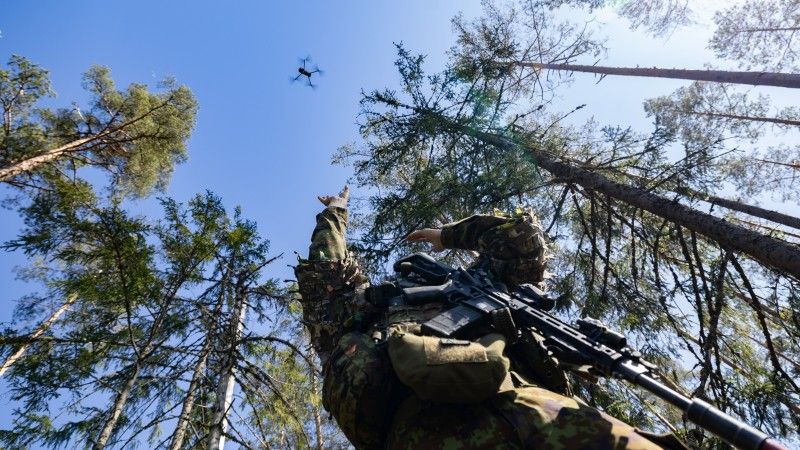
Estonia has suspended a €500 million combat vehicle procurement programme and redirected the funds towards air defence, drones and situational awareness. The decision reflects lessons from the war in Ukraine, rising costs of heavy equipment and updated military advice. Tallinn is prioritising flexibility and capabilities linked to detection, interception and long-range effects.
The Estonian government halted the procurement of new infantry fighting vehicles worth over €500 million, which were originally planned for delivery in 2029–2030. The decision was taken before any funds were spent, meaning no financial losses from cancellation. Instead, Estonia will extend the service life of its existing CV90 vehicles by at least 10 years, accepting additional costs but significantly lower than full replacement.
The shift follows direct military advice from the commander of the defence forces and observations from the war in Ukraine. The role of heavy equipment is assessed as decreasing over a 10-year horizon, while the importance of long-range fire, unmanned systems and situational awareness is increasing. Estonia is adjusting its force structure accordingly rather than replacing platforms designed for a different battlefield model.
Funds will be redirected to air defence, counter-drone capabilities, unmanned systems and improving „eyes and ears” functions. The focus is on detection, tracking and response, with an emphasis on mobility and firepower. A new four-year defence investment plan will be approved after updated military recommendations are finalised.
The decision is also driven by rapid technological change. Estonia points to developments such as laser weapons already deployed in Israel and the evolution of drone technologies, including rocket-powered and electric-motor systems. These changes reduce the effectiveness of existing detection methods, including acoustic sensors, and require constant adaptation of procurement priorities.
Recent incidents confirmed the urgency of this shift. Drones targeting Russian infrastructure entered Estonian airspace, including a crash on March 31 in Tartu County and a strike on March 25 against infrastructure in Narva. These events exposed gaps in detection and interception capabilities and reinforced the need for immediate investment in counter-drone systems.
The cancellation also affects the defence industry. The €500 million programme included requirements for industrial investment in Estonia, which will now not take place. Competing bidders included BAE Systems, General Dynamics (UK and EU) and South Korea’s Hanwha. Planned investments, including a €100 million package linked to procurement, are now effectively cancelled.
Estonia is not excluding a return to heavy equipment procurement in the future. The decision depends on the development of the regional security environment, Russian actions and the outcome of the war in Ukraine. For now, the priority is clear: shift resources from heavy platforms to systems that increase detection, response speed and adaptability.


