












- ANALIZA
- WIADOMOŚCI
The true cost of war is not measured in money

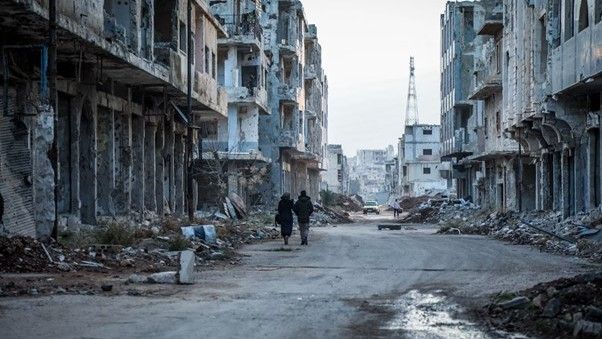
While destroyed infrastructure and buildings can be rebuilt, losses in lives, human capital, and national heritage are often irreversible, the new report shows.
War speaks in big numbers, and so do the calculations that follow it. Few things capture the scale of destruction more forcefully than estimates of casualties and economic loss. In Ukraine, the death toll has already reached hundreds of thousands, while recovery costs are estimated at more than half a trillion euros. Yet even these staggering figures still fall short of the total destruction Poland suffered during the Second World War.
The new report by the Defence Institute and ZPP indicates that a war with Russia could today cost Poland more than one trillion euros in destroyed infrastructure, industry, housing, and public assets. Yet the authors’ most important point goes beyond any single price tag, showing that the far greater hidden cost of war lies elsewhere, in its immaterial consequences across the social, psychological, and cultural fabric of the nation.
The immeasurable human, social, and cultural cost of war
Gen. Jarosław Gromadziński, author of the report’s foreword, warns that “the largest and most severe cost of armed conflict is always the social one.” War destroys human capital and social trust, the very foundations of modern, prosperous societies.
He also draws attention to a less visible but deeply damaging consequence, namely the destruction of museums, memorials, and monuments, which sustain national identity and historical continuity. “Physical reconstruction is possible, but reconstructing meaning and memory is more difficult,” he writes.

Lost generations, lost decades
Demographically, a Russian occupation of eastern Poland would trigger a massive wave of internal displacement westward, placing enormous pressure on the country’s housing, welfare, healthcare, and public-service systems. In Ukraine, 3.7 million people remain internally displaced because of the war. In Poland’s case, the authors estimate that nearly 2 million citizens could be displaced internally, while millions more could flee the country altogether.
While the first process would generate scarcity and social tensions, the second would produce a massive brain drain. As after the partitions of Poland and the Second World War, a large share of intellectual elites, specialists, and highly skilled workers could emigrate, many of them never to return. Prof. Konrad Trzonkowski, the report’s co-author, warns that this would cause lasting damage to Poland’s long-term total factor productivity, drastically limiting the country’s post-war recovery prospects for decades. This shows how immaterial losses can deepen and prolong material destruction.
But the lives and productivity of those who remained in Poland would be damaged even more deeply. The experience of death, suffering, displacement, fear, and a general collapse in living standards would leave permanent psychological scars across society, affecting civilians, soldiers, children, displaced people, and the families of those killed. The authors describe this as a “massive social trauma tsunami” and a “drastic collapse of the sense of security” that would cut across all generations.
The most affected could be Gen Z: teenagers, students, and young adults in their twenties whose education would be disrupted, whose early careers would be derailed, and many of whom could be conscripted into the army. They would become a new “lost generation,” perhaps the most tragic one, because the greatest burden of post-war reconstruction would fall precisely on those whose formative years had been destroyed by the war.

Irreparable harm only time and society can heal
The term that perhaps best captures these immaterial losses is irreparable harm, meaning damage that cannot be fully compensated, reversed, or restored by any amount of money. Such losses can only be healed by time and by society itself, through the gradual rebuilding of population, trust, culture, and collective meaning.
This will be one of the greatest challenges facing the Ukrainian people. One can only hope that other European societies, including Poland, will never again have to confront it on their own.
The report “Economic Costs of War for Poland” was published by the Związek Przedsiębiorców i Pracodawców (ZPP) and the Polish advisory think tank Defence Institute, under the media patronage of Defence24. It was authored by Prof. Konrad Trzonkowski and Jakub Palowski, with a foreword by Gen. Jarosław Gromadziński, and edited by Miłosz Marczuk. The full report (available in Polish only) can be accessed via the following link.


