












- KOMENTARZ
- WIADOMOŚCI
EU security mechanisms vis-à-vis Russia

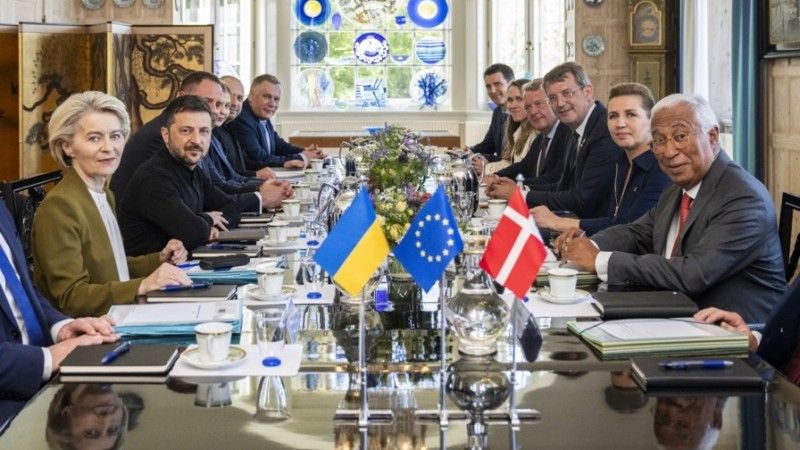
The war in Ukraine exposed weaknesses in Europe’s security architecture and compelled the European Union to act swiftly. Has EU cooperation — rather than military strength alone — become Europe’s principal shield against Russia?
Mechanisms of cooperation within the European Union that strengthen Europe’s regional security against threats from the Russian Federation The Russian Federation’s aggression against Ukraine in 2022 was an event that permanently altered the security architecture in Europe. For the European Union it constituted not only a military challenge but, above all, a test of the political, institutional and solidarity capacities of the European community in the face of an external threat.
UE and security
Faced with the unprecedented destabilisation of the international order, the Union was forced to accelerate integration processes in the area of security and defence and to reinforce its strategic autonomy in relation to NATO and the United States. In this context, intra-EU cooperation on security acquired not only a political dimension but also a practical one — it became a mechanism that tangibly shapes regional stability in Europe.
The importance of EU cooperation mechanisms in the face of Russian aggression is expressed primarily in the political and institutional consolidation of member states« responses to the crisis. In the first weeks of the war the EU demonstrated unprecedented unity already, adopting packages of economic sanctions against Russia, financing arms deliveries to Ukraine, and strengthening internal resilience in the energy, information and cyber domains.
For the first time in its history the Union utilised financial instruments of an explicitly defence-related character, such as the European Peace Facility (EPF), which enabled direct financing of weapon deliveries to a state embroiled in armed conflict. This action symbolically broke the previous barrier between the civilian and military dimensions of EU policy, illustrating that the Union can be a real security actor and not merely an institution responding diplomatically.
A second key dimension of the Union’s cooperation mechanisms is the Common Security and Defence Policy (CSDP), which after 2022 gained new developmental momentum. Although its roots reach back to the Maastricht Treaty and subsequent stages of integration, only recent events have given it an operational character. The Strategic Compass adopted in March 2022 attempts to define a common security vision for the coming decade. It identifies four principal pillars — respond, invest, partner, and secure. Each of these elements refers to practical cooperation mechanisms — from building crisis response capabilities through developing a common defence industry to strengthening relations with NATO and regional partners.
The Strategic Compass, while not replacing national security strategies, provides a coherent framework for member states« actions, harmonising their efforts toward greater resilience and interoperability. Another important tool of EU security cooperation remains Permanent Structured Cooperation (PESCO), initiated in 2017. After 2022 it acquired renewed significance, focusing on projects aimed at strengthening territorial defence and military infrastructure.
PESCO currently encompasses several dozen initiatives covering, among other areas, military mobility, the development of a common command system, cybersecurity and counter-drone defence. Although often technical in nature, these projects lay the foundations for mutual trust and raise the level of interoperability of member states« armed forces. PESCO also enables smaller countries — such as Lithuania, Slovakia or Estonia — to participate in endeavours that would be financially and technologically unattainable for them alone.
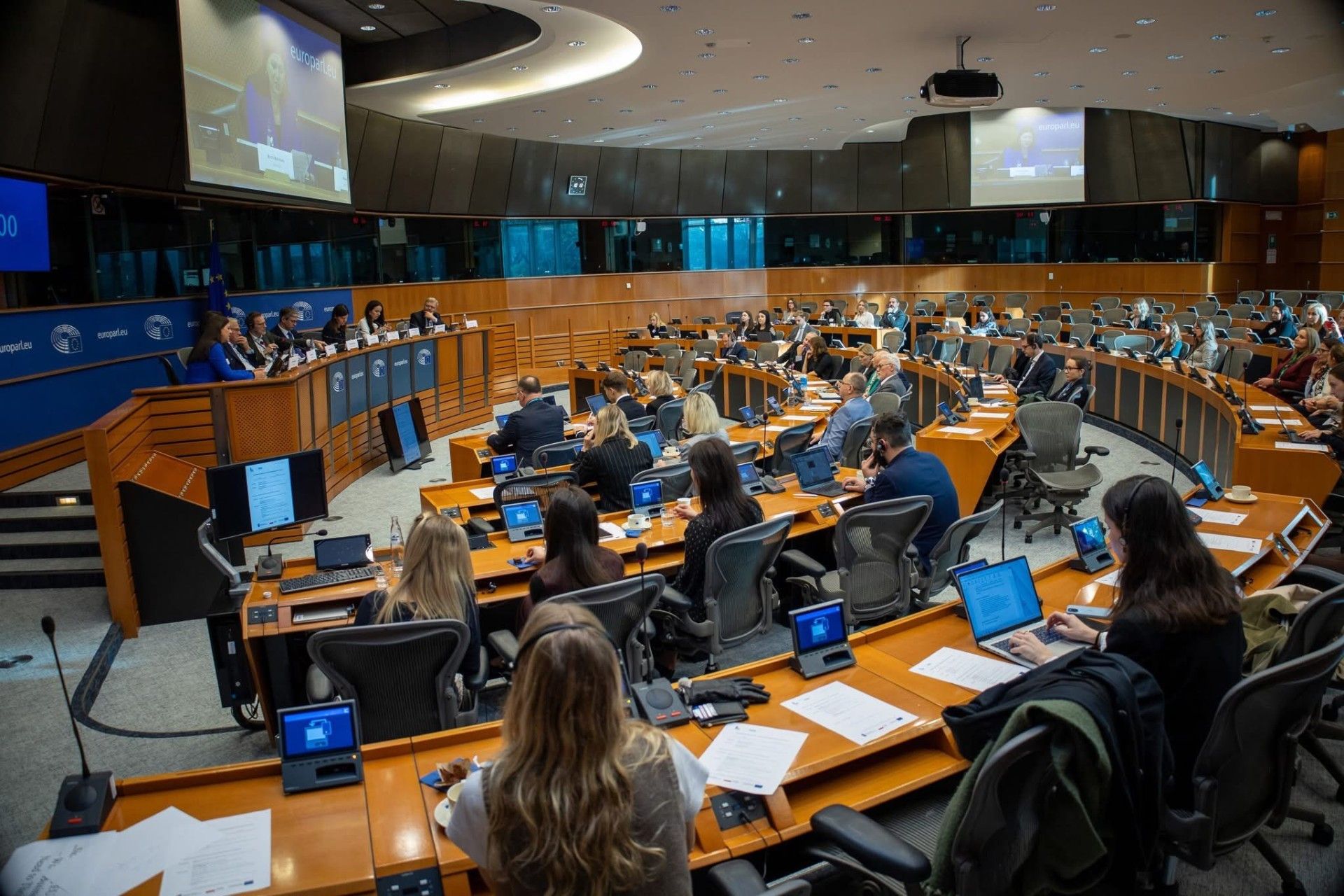
In this way, cooperation within the Union translates directly into increased defence potential on Europe’s eastern flank. Another important cooperation mechanism is the development of the European Defence Fund (EDF), which after 2022 became one of the principal instruments for supporting the defence industry and research into new military technologies. The EDF allows financing of joint projects in ammunition production, satellite technologies, reconnaissance systems and cyber protection. In practice it constitutes the economic backbone of European strategic autonomy, reducing dependency on external supplies, notably from the United States.
In response to the war in Ukraine the fund was substantially increased and its resources directed, among other things, to support the defence industry in countries bordering Russia. This mechanism therefore has a dual significance — on the one hand it strengthens common production and research capabilities, and on the other it becomes an instrument of economic solidarity and security among member states. Equally important is the political and normative dimension of EU cooperation.
As a community of values, the European Union combines security actions with the protection of human rights, the rule of law and democratic order. In this sense European security is not understood solely in military terms but also encompasses institutional, informational and social resilience. After 2022, actions in the field of energy security acquired particular importance and became one of the pillars of strategic resilience.
Mechanisms of energy solidarity, such as joint gas purchases or the development of LNG infrastructure, have not only reduced Russia’s influence in the energy sector but also contributed to member states« independence from resource pressure as a levers of political influence. The integration of energy policy with security illustrates how sectoral cooperation can enhance the Union’s defensive capacity without recourse to military means.
The significance of coordination in cybersecurity and counter-disinformation must also be emphasised. In the face of Russian aggression the information space became one of the principal arenas of confrontation. The EU launched a range of mechanisms aimed at strengthening member states« resilience to cyber-attacks and countering media manipulation.
Through initiatives such as the EU Cyber Solidarity Act and programmes like StratCom East, the Union supports development of common defensive capabilities in cyberspace and is building an early-warning system against disinformation campaigns. These activities have not only a technical dimension but also a political one, as they contribute to the maintenance of social stability and citizens« trust in democratic institutions during a security crisis.
Partnership with NATO
Attention should also be drawn to the evolution of the EU’s approach to partnership with NATO. Although the two organisations long operated in parallel, the events after 2022 led to a tightening of their cooperation. The Union began to more consciously complement NATO’s activities, concentrating on the civilian, logistical and infrastructural aspects of security. Joint EU–NATO declarations in 2022 and 2023 confirmed that Europe’s security requires synergy between the two structures while respecting the principle of complementarity.
In practice this means that the Union, through its cooperation mechanisms, bolsters the resilience of societies and civil structures, while NATO remains the principal guarantor of military defence. This interplay creates a new quality of regional security in which the Union plays the role of political and economic coordinator of security, complementing the Alliance’s military potential.
In summary, the importance of EU cooperation mechanisms for Europe’s regional security vis-à-vis threats from the Russian Federation lies in their capacity to transform the Union from a normative actor into a strategic one. Thanks to new instruments such as the Strategic Compass, the EPF and PESCO, the Union has become more able to respond to military threats, support partners and strengthen its internal resilience.
See also 
The cooperative dimension is not limited to defence policy but covers a broad range of actions — from the economy and energy to cybersecurity and information warfare. As a result these mechanisms contribute to building a coherent and flexible regional security system that enables member states to respond more effectively to the challenges of the contemporary world. By integrating its resources, norms and institutions, the European Union is creating the foundation for a new European security architecture in which solidarity, cooperation and shared responsibility form the principal pillars of stability.
Ultimately, it can be argued that after 2022 the capacity to cooperate — not merely military potential — became the key measure of Europe’s strength in the face of threats from the Russian Federation. When assessing the significance of EU cooperation mechanisms for regional security, it is important to stress that their effectiveness derives from the conjunction of three dimensions: institutional, political and solidaristic.
The institutional dimension is manifested in the development of structures such as PESCO, the EDF and the European Defence Agency (EDA), which create frameworks for joint action. The political dimension reflects the ability to build consensus and to react swiftly in crises. The solidaristic dimension is expressed in member states« readiness to shoulder common security costs — a factor that had previously been a weak point in European integration.
It is precisely this three-dimensional character that makes EU cooperation mechanisms more than bureaucratic structures: they constitute a dynamic system of response and mutual support.
Author: dr Agnieszka Rogozińska


