












- KOMENTARZ
- WIADOMOŚCI
New Polish President Faces Five Defence Challenges

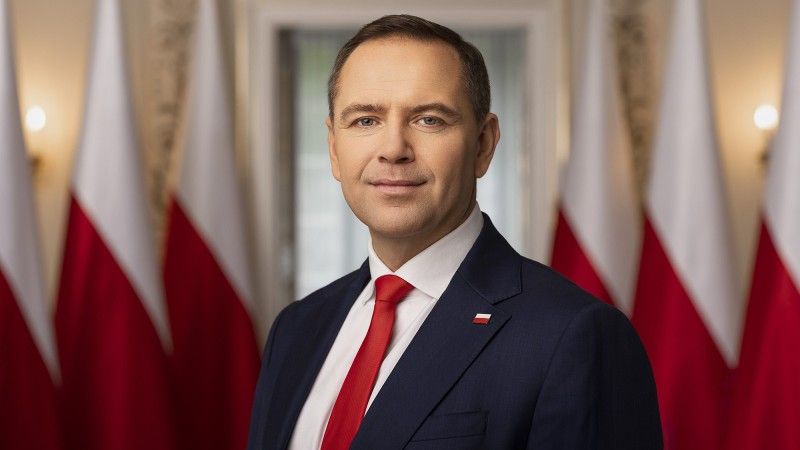
Photo. Mikołaj Bujak/KPRP
President Karol Nawrocki faces several critical challenges in strengthening Poland’s national defence. These issues will require close cooperation with both Parliament and the government, regardless of political divides.
According to the Constitution of the Republic of Poland, the President is the „supreme commander of the Armed Forces.” In times of peace, this authority is exercised through the Minister of National Defence. This structure requires a constructive relationship between the President and the government, particularly the Ministry of National Defence (MON), even when they represent different political camps.
In light of Russia’s aggressive posture—manifested through its invasion of Ukraine and open threats against NATO members, including Poland—the responsibilities of the President and the government in the realm of defence have never been more important. While many decisions, such as defence procurement, lie primarily with the government, there are several strategic areas where collaboration is not only necessary but essential to effective action.
One such area is the command of national defence during times of threat. This involves not only managing defence during a crisis but also ensuring that legal frameworks are in place to allow effective action. Existing laws are inadequate for the current threat environment. Former President Andrzej Duda proposed reforms, but these were not adopted by Parliament. As Tomasz Szatkowski, Duda’s former advisor and Polish ambassador to NATO, noted in an interview withDefence24.pl:
"Fundamental matters related to national defence leadership remain unresolved. The current Constitution and legislation introduce ambiguity that has yet to be fully clarified."
He added:
"We've also failed to introduce flexible mechanisms for reacting and raising national readiness levels before a state of war formally begins. There were presidential initiatives, but none were fully realised."
These essential reforms require not just presidential initiative, but the political will of the entire government. Political polarisation between the current administration and the President’s office will likely make this process even more difficult. A concrete example is the long-delayed National Security Strategy, recently adopted by the government—despite the National Security Bureau having submitted its recommendations over a year earlier.
Another urgent matter is the unfinished reform of the command and control system of the Polish Armed Forces. Senior commanders have repeatedly expressed the need for change, including during theDefence24 Days conference. As in the case of national defence leadership, legislative changes are needed—requiring coordination between the President and Parliament.
Financing defence remains a core issue. Former President Duda submitted a draft constitutional amendment mandating defence spending at 4% of GDP. As President-elect, Karol Nawrocki advocated raising this to 5%. Although the government bears the main responsibility for funding, the President can play a key role in pushing defence policy higher on the national agenda.
The reserve system of the Polish Armed Forces also remains underdeveloped. While the number of active-duty personnel has increased significantly over the past decade, the implementation of an effective reserve force and specialist training has moved far too slowly. This opens the door for presidential initiative. One option could be to reform the Voluntary Basic Military Service programme, for instance by requiring a two-to-three-month specialist training phase following basic instruction—without the possibility of resignation and without operational deployment, such as to border duties—followed by service within a military unit. This is a matter for debate among the President and his advisors. Notably, Brigadier General (Res.) Mirosław Bryś, former head of the Central Military Recruitment Centre, now serves as Deputy Head of the National Security Bureau.
Finally, President Nawrocki must actively engage in strengthening Poland’s ties with NATO and key international allies—above all, the United States. In this area, he is expected to continue the course set by his predecessor. As Marek Magierowski, Director of theStrategy for Poland programme at the Freedom Institute, commented forDefence24.pl:
"History, geography, and shared experience make Poland a key player in Central and Eastern Europe. Poland can gain global influence through specialisation, and must emphasise that few nations understand Putin's Russia and the post-Soviet space as well as we do. Strengthening cooperation with NATO and the US is essential—Europe faces a dire choice, and without America, it cannot defend itself. At the same time, Poland should maintain a balanced stance on Gaza, which could become both a bargaining chip and a defining feature of our foreign policy."
Perhaps the most difficult task facing President Nawrocki will be to design and implement reforms in the structure of national defence leadership and military command. This will demand not only determination, but also meaningful cooperation with the government and Parliament.
How that system should look—and why the current one remains ineffective—will be explored soon onDefence24.com.


