


- ANALIZA
- WIADOMOŚCI
France is coming back to the Sahel. Chad is too important to lose

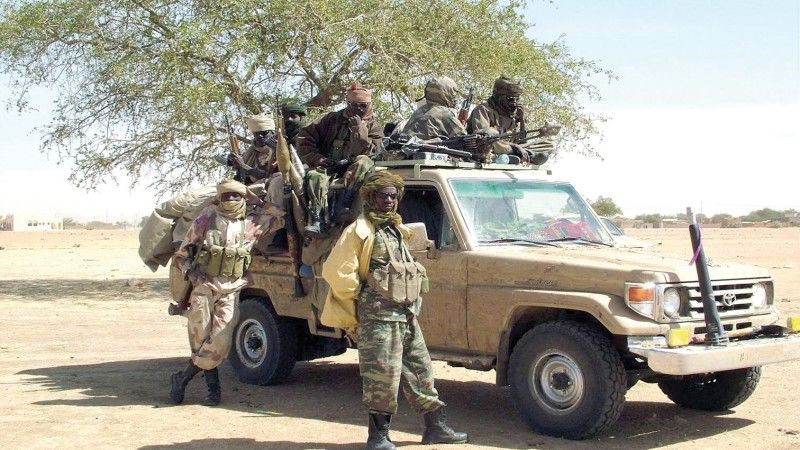
Photo. Ministerstvo obrany České republiky
France is returning to military cooperation with Chad, less than two years after being forced to withdraw its troops from the country. Paris and N’Djamena have signed a new declaration of intent covering defence cooperation, military capabilities and technological development. For France, this is an important opportunity to rebuild its position in the Sahel, where it has lost much of its military presence in recent years. Chad remains one of the most important countries for French security interests in Africa, particularly because of its location between Sudan, Libya, the Lake Chad basin and Central Africa.
The declaration was signed on 13 October by French Defence Minister Catherine Vautrin and her Chadian counterpart, Issakha Malloua Djamouss, during President Mahamat Idriss Déby’s visit to Paris. The agreement is intended to strengthen the capabilities of the Chadian armed forces, particularly through training, military expertise, defence industry cooperation and new technologies. President Emmanuel Macron described it as another stage in rebuilding bilateral defence relations. This is the first formal step towards restoring military cooperation after Chad terminated its previous defence agreements with France in November 2024.
The situation has changed significantly since the withdrawal of approximately 1,000 French troops in January 2025. As Defence24.com reported in June, Paris had already begun exploring a discreet return to Chad, with fewer soldiers, greater flexibility and an emphasis on intelligence, training and operational support. The new declaration confirms that both governments want to move forward with this model. France is not preparing to recreate its former military presence across the Sahel, but it wants to regain access to a country that has historically been central to its African operations.
For Chad, cooperation with France has become increasingly important because of the deteriorating security situation. The war in neighbouring Sudan has pushed huge numbers of refugees towards eastern Chad, while the country continues to face threats from armed groups operating around Lake Chad and instability along its borders with Libya and the Central African Republic. President Déby has strengthened relations with Türkiye, the United Arab Emirates and Russia, but these partnerships have not fully addressed Chad’s military requirements. N’Djamena still needs intelligence, air mobility, military training and the ability to respond quickly to threats across its extensive territory.
A different military partnership
The military relationship has already started to recover. According to French reporting, intelligence cooperation continued even after the withdrawal, while a small number of French instructors resumed training Chadian personnel earlier this year. Discussions have also concerned helicopters, transport aircraft and surveillance capabilities. These areas were particularly important during the previous French presence, when N’Djamena relied on French support for intelligence collection, air operations and assistance to ground forces. Paris can now offer some of these capabilities without permanently stationing hundreds of soldiers in the country.
It is very unlikely that France will restore similar relations with other Sahel countries. Africa Corps (and the Wagner Group) are too strong in Mali, Burkina Faso and Niger. Moreover, the Russian Federation is going to increase its presence in the region, not only militarily, but also with regard to projects focused on natural resources and logistics. The main goal is to create a corridor from Libya, through the Sahel, and then down to Togo.
See also 

Chad remains crucial to French interests
Chad is particularly important because it connects several regions where France has lost influence or faces growing competition. To the west are Niger and the wider Sahel, where Russian military involvement has expanded. To the north is Libya, where Moscow maintains a military presence. To the east is Sudan, where the civil war continues to destabilise neighbouring states. Further south, the Central African Republic remains an important area of Russian activity. For Paris, maintaining cooperation with N’Djamena means retaining access to military and political developments across this entire region.
This is also why the possible restoration of French access to the Adji-Kosseï air base in N’Djamena would matter. France previously used Chad as a major operational hub for its military activities in Africa. Under the new model, even limited access for transport aircraft, surveillance missions and military personnel could restore capabilities that Paris lost after the withdrawal. A smaller French presence would also be less politically sensitive for Déby, who has repeatedly emphasised Chadian sovereignty and the need for partnerships based on national interests.
The return to Chad also reflects France’s broader reassessment of its African military policy. Large permanent bases became increasingly difficult to maintain following the breakdown of relations with Mali, Burkina Faso and Niger, while Russian influence and anti-French political mobilisation complicated French operations. Paris is now pursuing cooperation based on smaller deployments, training, intelligence and specific requests from African governments. Chad offers an opportunity to test whether this approach can restore military influence without recreating the political tensions associated with France’s previous presence.
For N’Djamena, the renewed relationship provides access to a military partner with considerable experience in the region, while preserving the possibility of cooperation with Türkiye, the UAE and other states. For France, it offers something particularly valuable, and this is the possibility of restoring operational access to Central Africa after losing its principal military bases across the Sahel.
The declaration does not yet establish a new permanent French deployment, but discussions on training, aircraft and intelligence cooperation are already giving the relationship a military dimension. After the withdrawal from Chad, Paris lost one of its most important positions in Africa. It is now working to regain it, this time with a smaller military footprint and a much greater dependence on decisions taken in N’Djamena. It is necessary for other European countries to join this engagement in Africa in order to counter Russian influence.


