- WIADOMOŚCI
- OPINIA
France’s New Strategic Review (2025)

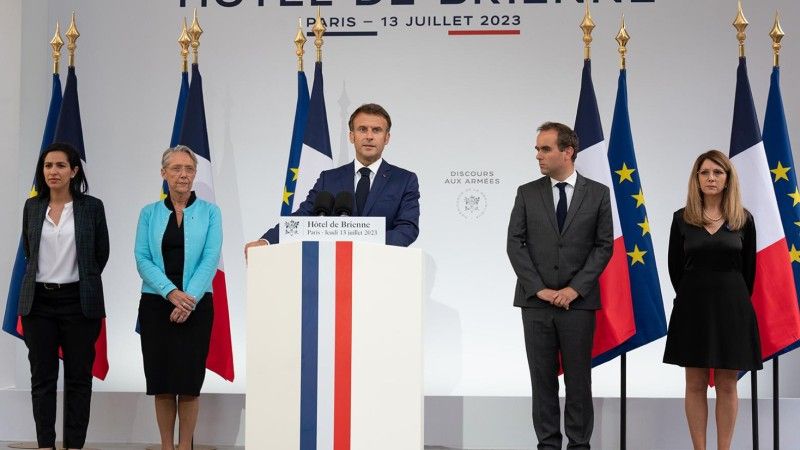
France has published a new version of the National Strategic Review, which constitutes an update to the most important document in the field of security and defence. Taking into account the events of the past two years, it assumes the necessity of full mobilisation of the state and society in the face of deepening instability.
At the centre of the analysis is Russia, clearly identified as the main threat to European security. The review assumes that by 2030, France and its allies must be ready to face a high-intensity war. At the same time, emphasis has been placed on strengthening the European pillar of NATO and the importance of cooperation with countries such as Poland.
The document was published on 14 July 2025 – on France’s national holiday. This date, deeply rooted in republican tradition, was not chosen randomly. Its symbolic meaning reflects the core message of the strategy, namely: national mobilisation in the face of immense challenges (so defined) in international relations. Paris presents the review as an action plan in an era of deteriorating security and uncertainty regarding the cohesion of the broadly understood West.
Russia as the Main Threat
Compared to the previous review from 2022, the change in tone is striking. The French strategy unequivocally identifies Russia as the main and lasting threat to the interests of France and its allies. It points to aggression against Ukraine, ongoing hybrid operations, cyberattacks, and the use of disinformation. It is explicitly stated that Moscow continues to undermine the international order, despite losses suffered on the front. It is noted that France is one of the targets of Russia’s harmful activities.
Alongside Russia, China is also identified as a source of threats, allegedly conducting activities aimed at undermining Western cohesion through, among other things: the development of military capabilities, economic expansion, cyber activities, negative influence on technological development (including its acquisition), and control over supply chains. The review also warns against Sino-Russian cooperation, which could facilitate the transfer of conflicts to the Indo-Pacific or Africa.

Separately, the destabilising potential of Iran is highlighted, which – especially after the escalation of the conflict in the Middle East in October 2023 (Hamas-Israel) – poses a threat to France’s interests. The document emphasises regional instability and its impact on European security, including through terrorism, migration, and disruptions to the energy sector.
The authors of the review draw attention to conflicts that are no longer merely regional but also global in nature. Furthermore, it is emphasised that many states are simultaneously involved in numerous crises, often seeking their escalation.
Experts in France point out that future challenges will be multidimensional – combining conventional, cyber, informational, and economic threats. This new dynamic requires a radical overhaul of the entire national security system of France and collective responses within alliances.
Deterrence
The new strategic review confirms the central role of the French armed forces as the ultimate guarantor of state security. Nuclear deterrence is described as „independent, credible and coherent – the cornerstone of France’s defence policy.” The ongoing modernisation of the nuclear arsenal (within the 2024–2030 armament plans) is emphasised, as well as the continued commitment to non-proliferation and arms control. This is relevant both for deterring Russia and for France’s broader contribution to European security.
A novelty compared to earlier documents is France’s openness to strategic dialogue with European allies regarding the potential role of French deterrence in collective European defence. On 5 March 2025, President Macron announced the initiation of such talks with interested countries. France is not proposing joint decision-making or sharing nuclear weapons – decisions remain exclusively within the president’s prerogative – but is offering greater transparency and consultations.
It is stated that this initiative does not aim to replace NATO policy but to complement it. This is an important signal to Central and Eastern European countries, including Poland, which feel a direct threat from Russia.
Mobilisation
The review assumes mobilisation not only of the armed forces but also of society, state institutions, and the private sector. A special place is given to the idea of „moral rearmament” (réarmement moral), understood as fostering civic responsibility in the face of security challenges. Strategic education and the promotion of military service among youth are to play a central role. Macron announced the launch of a special programme by the end of the year.

The review also identifies internal risks to the durability of the republican system. The authorities stress the need to counter growing social tensions, radicalisation, terrorist attacks, and distrust in state institutions. Internal stability is recognised as a key condition for effective mobilisation.
The review announces the strengthening of the reserves – the number of reservists is to be doubled in the coming years, and their equipment and training frequency significantly increased. It is signalled that military strength must be complemented by preparing society to survive and act in conditions of potential conflict.
Cyberspace, Information, Economy, and New Battlefield
One of the most extensively developed sections of the review is the assessment of threats in non-military domains. France considers cyberspace, space, the information domain, and the economy as equal battlegrounds. The state is to act not only defensively but also offensively; inflicting significant losses on opponents in the event of an attack.
The cyber-resilience architecture is to be expanded – including detection, response, deterrence, and countering disinformation (including France’s own influence operations). France will develop capabilities to conduct information operations, influence the media environment, and neutralise threats in real time.
At the same time, national cybersecurity is to become a shared responsibility of public institutions, the private sector, and citizens. In the cyber domain, this is certainly unique on a European scale.
The document also indicates the need to increase economic resilience – including the diversification of raw material and strategic component supplies, strengthening of the defence industry, and development of technological autonomy in key areas. France wants to be fully autonomous. This issue had already been raised in the context of the activated war economy.
Action Plan to 2030
The review outlines 11 strategic objectives to be achieved by the end of the decade. Each is linked to a specific dimension of national independence and sovereignty, the need to maintain security, and the concrete implementation of initiatives:
Maintaining sovereign nuclear deterrence – through modernisation of the maritime and air components.
Moral rearmament of the nation – strengthening civic spirit and social resilience.
An economy prepared for war – including increased production, deficit control, and industrial autonomy.
Critical cyber resilience – development of offensive and defensive systems.
Credibility within NATO – France as an indisputable ally in the Euro-Atlantic security system.
European strategic autonomy – support for a common EU defence policy.
Strengthening international partnerships – in Europe and beyond.
Capability for independent assessment and action – development of intelligence potential.
Conducting operations in a hybrid environment – across today’s many domains.
Capability to conduct and win high-intensity conflicts.
Supporting sovereignty through science and technology – France declares its aim to achieve technological superiority in the fields of artificial intelligence, space, biotechnology, and defence. This goal – presented as the foundation of long-term sovereignty – means full integration of science and industry with strategic policy.
Europe at the Centre
Compared to the reviews from 2017 and 2022, the new document clearly shifts the strategic focus from Africa to Europe. In particular, the eastern flank of NATO and the southern neighbourhood (southern flank of NATO) are identified as priority areas. France intends to play an active role in maintaining stability on the continent – both within the Alliance and the European Union.
The strategic review emphasises the need for NATO transformation and strengthening of its European pillar. France declares its continued deep involvement but simultaneously seeks to develop an „ambitious roadmap” aimed at enhancing NATO’s deterrence and defence capabilities and building European resilience – regardless of the future level of U.S. engagement.
The document clearly states that Europe should „take matters into its own hands” in the field of defence, by increasing armament investments, developing the defence industry, and implementing joint projects.
The review includes calls to support the creation of „European champions” in the defence sector and to promote the principle of „buying European products” in terms of military equipment. Such actions aim to strengthen Europe’s strategic autonomy, particularly in light of the possible shift in U.S. focus toward competition with China.
Africa and the Indo-Pacific
The review announces an update to France’s strategy towards Africa (possibly to be unveiled in connection with the planned France-Africa summit in Nairobi in early 2026). Paris acknowledges that the current model of military presence requires reorganisation.
In practice, this means reducing permanent contingents in favour of more flexible forms of military cooperation tailored to the needs of local partners. France now wants to offer more targeted security assistance, considering the expectations of African states and engaging European partners and international organisations. The review does not focus solely on the Russian threat in Europe but also on instability in Africa (terrorism, civil wars, increased great power rivalry) and the adjustment of French policy in response.
In the new strategy, France – as the only EU country with territories and a permanent military presence in the Indo-Pacific – recognises this region as key to the global economy and geopolitical rivalry. It plans to strengthen its engagement through the development of a network of bases and partnerships, maintaining crisis response capabilities, and demonstrating strength – e.g. by deploying aircraft carriers and combat aircraft. France sees Indo-Pacific stability as part of its national interest, recognising the impact of East Asian tensions on European security.
Poland
The new strategic review identifies Poland as one of the key partners in European security policy. It is listed alongside Germany, the United Kingdom, and Italy as a country playing an important role in building NATO’s European pillar. Warsaw is seen not only as a frontline state vis-à-vis the Russian threat but also as an active ally shaping the West’s response to threats.
A sign of this rapprochement (explicitly mentioned in the document) is the Treaty of Nancy signed in February 2024, creating a framework for long-term defence cooperation between France and Poland. It includes joint exercises, cooperation between arms industries, and permanent strategic collaboration. The treaty aims to improve coordination in NATO and the EU and strengthen Poland’s position in Europe.

Poland’s role in multilateral formats is also highlighted, especially the E5 – comprising France, Germany, Italy, Spain, and Poland. Participation in this group confirms Warsaw’s importance as a country with real military and political potential. France sees Poland as a partner capable of strengthening deterrence, supporting Ukraine, and fostering regional cooperation within the EU and NATO.
Although the review speaks favourably of most allies, it should be noted that Paris is looking for partners in Eastern Europe and wants to build its independence from Washington and Berlin. Moreover, it is keen to sell its own weapons.
Army Expansion and Strategic Review
Indeed, the new review points to the need to increase the mobilisation capacity of the French army. The main goal is that by 2027, France will be able to deploy a brigade of over 7,000 soldiers within 10 days and a full division (over 20,000 soldiers) within 30 days. Such operational readiness requires the restructuring of command and logistics systems, as well as an increase in the number of reservists and mobilisation resources. The document points to the need for better integration of civilian and military efforts and the strengthening of supply chains and power projection capabilities.
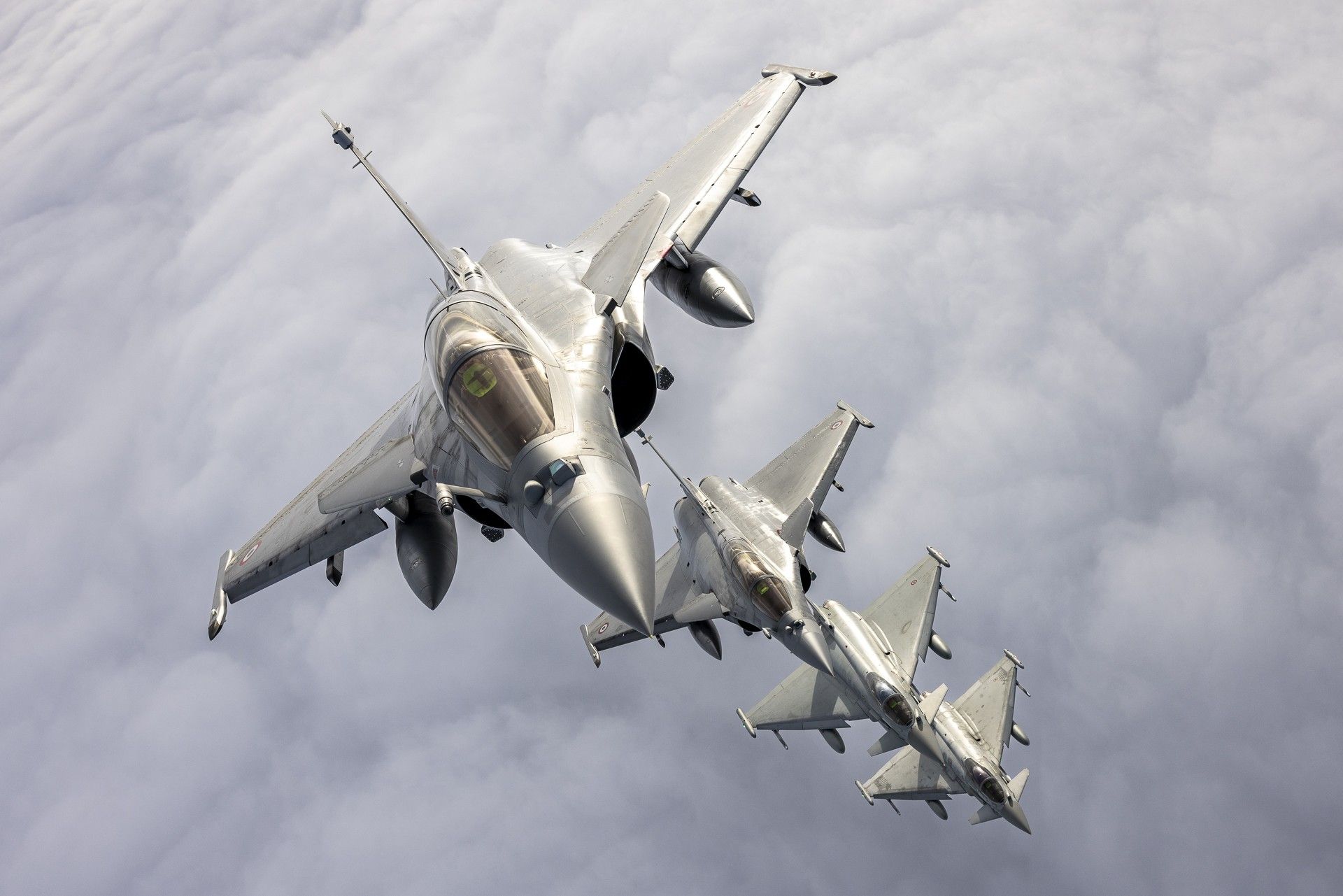
The military programming law for 2024–2030 provides for a significant increase in defence spending – around €413 billion over 7 years. This is the largest increase in decades, intended to accelerate the modernisation of the armed forces. The funds will be allocated to enhancing high-intensity conflict capabilities, modernising the nuclear and conventional arsenal (including Rafale aircraft, drones, ships, and satellites), developing cybersecurity, expanding intelligence potential, and increasing the number of reserves. The plan also includes improving operational readiness and modernising the defence industry.
At the same time, President Emmanuel Macron, the day before the document’s publication, announced a further increase in defence spending – by €3.5 billion in 2026 and another €3 billion in 2027. This is expected to raise the defence budget to €64 billion in 2030, €5 billion more than originally planned.
Emmanuel Dupuy, President of the Institute for European Prospective and Security (IPSE) and lecturer at the Catholic University of Lille, emphasises: „France’s determination to strengthen its strategic posture fits into the context of an unstable and tense global order. The pursuit of »strategic autonomy« is to be realised despite financial difficulties – with planned budget cuts of around €40 billion in 2026, public debt reaching €3.3 trillion and a deficit of 5.8% of GDP. The updated strategic review stresses the concept of »total defence«, highlighting the importance of societal resilience and cohesion, opening the debate on a potential return to universal military and civic mobilisation.”
Final Remarks
France has presented a document that accurately assesses the security environment and the main threats: the war in Ukraine, Russia’s aggressive stance towards its neighbours, destabilisation in the Sahel, tensions in the Middle East, and increased Chinese activity in the Indo-Pacific. It is stated that the state must be prepared to act simultaneously in several domains: militarily, in cyberspace, and in information warfare. France anticipates confrontation with adversaries, not merely reacting to hybrid threats – although it is still unclear who this adversary would be (Russia is unlikely to attack France directly, Germany even less so, and migration does not yet possess that level of threat). The risk of reduced U.S. presence in Europe is also highlighted, meaning European countries must assume greater political and military responsibility.
The problem is that the strategy does not answer how France intends to realise all the stated goals. An additional €6.5 billion spread over two years is far too little to achieve real capability for power projection, modernisation, and maintaining a global presence. If Paris truly wants to be a leader in Europe (as Macron wants to be a leader in European security), it cannot avoid significantly increasing spending to around €100 billion annually. For a country aiming for a constantly developing defence industry, this is not just a cost, but an investment that strengthens both the armed forces and the economy.
The French review contains good assumptions, but they must not remain just on paper (as was the case in many respects with the 2022 review). In the current geopolitical context, France’s analyses and declarations are not enough. Real action is needed: budget allocations, political decisions, and timely implementation. Only then will the defence strategy be credible in Paris, NATO, and in the eyes of the adversary.
The French review undoubtedly sets the right directions, but they must be consistently implemented. Russia is watching capabilities, not intentions. At the same time, there should be a debate in Poland about our own strategic review, which was last published in 2016. Next year marks a decade, and it is high time to propose a strategy – one that we will, of course, then implement.