- WIADOMOŚCI
Germany as NATO’s leading power in Europe? A voice from the Pentagon

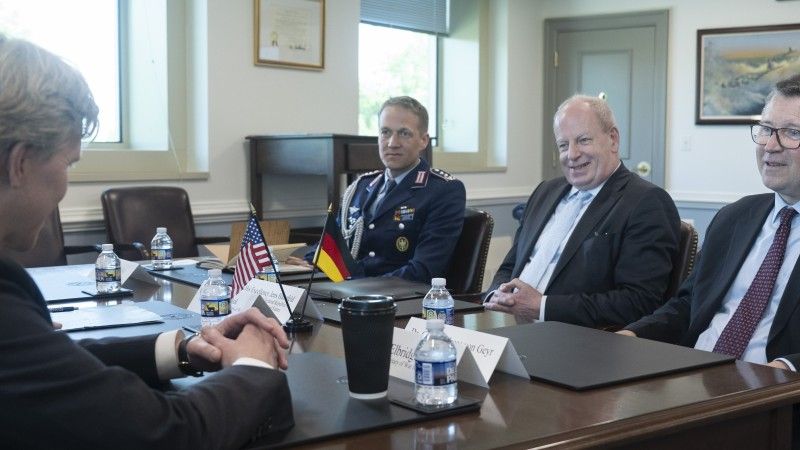
Photo. Under Secretary of War Elbridge Colby/X
Is Germany becoming Europe’s top security performer? That is the view of Elbridge Colby, co-author of the U.S. National Security Strategy and one of the most influential figures in the Pentagon.
The U.S. Under Secretary for War Policy, Elbridge Colby, commented on Germany’s recently published military strategy for the Bundeswehr. In his assessment, Germany is beginning to play a leading role in positive transformations in European security, and greater responsibility for NATO on the continent should rest with Berlin.
Germany leading NATO 3.0
Colby referred to last year’s NATO summit in The Hague, remembered primarily for establishing a historic commitment by member states to increase defence spending to at least 5% of GDP by 2035. According to the American official, the June 2025 decisions are encouraging, but must now be followed by concrete actions. At present, Colby argues, Germany is among the countries taking these commitments most seriously. As a result, Berlin is emerging as a leader in transforming the NATO into its updated model—referred to as „NATO 3.0.”
Germany’s Military Strategy represents a clear, credible way forward to NATO 3.0: A NATO in which Europe and Canada step up to meet their responsibilities within the Alliance and transform it from a paper tiger to a strong deterrent and defense.
— Under Secretary of War Elbridge Colby (@USWPColby) April 24, 2026
President Trump has provided the… pic.twitter.com/eLdIOtxZsC
What does this concept entail? As Colby explained in February during a NATO defence ministers« meeting in Brussels, it envisions an alliance resembling its early years of operation. NATO 3.0 requires the allies to make far greater efforts to assume primary responsibility for the conventional defense of Europe, Colby stated, emphasizing that these efforts must also extend into diplomacy.
In his latest remarks, Colby also cited Mark Rutte, who stressed that air defence systems, drones, ammunition, radar, and space capabilities will be central to NATO’s security. According to the Pentagon official, Germany is currently playing a particularly important role in these areas as well.
Bundeswehr as Europe's largest army?
Colby has repeatedly referenced statements by General Carsten Breuer, Inspector General of the Bundeswehr. In the introduction to Germany’s new military strategy, Breuer argued that as Europe’s largest economy, Germany should assume a comparable role in military terms. In his view, Berlin must take on greater strategic responsibility for the security of the entire continent. This commitment must be accompanied by a significant strengthening of Germany’s armed forces and the transformation of the Bundeswehr into the most powerful conventional army in Europe.
According to the latest German military document, by the mid-2030s the Bundeswehr is expected to expand to 460,000 personnel, including 200,000 reservists. Więcej na ten temat można przeczytać w tym tekście.

Tangible action would entail support
In conclusion, the Under Secretary referred again to the U.S. National Security Strategy and National Defense Strategy. He reiterated the principle that „NATO must become more European to remain transatlantic.” However, increased engagement by European allies does not mean the United States will become unnecessary. The US will continue to play a leading role, although European nations must recognize Washington’s growing strategic focus on the Western Hemisphere and the Indo-Pacific.
Colby summed the above developments up, saying that Germany’s military strategy represents a clear, credible path forward toward NATO 3.0: a NATO in which Europe and Canada step up to meet their responsibilities within the Alliance and transform it from a paper tiger into a strong deterrent and defense force. He noted that President Trump has delivered a clear and consistent message that Europe and Canada must hear. He stressed that the Department of War stands ready to engage and assist those who heed this message and take real and rapid action.